Wednesday, 27 July 2022

iOS 16 Developer Beta 4 brings message editing and mail unsend into focus

Apple's vision of user-controlled messaging is coming into focus.

On Wednesday, the iPhone maker finally dropped the long-awaited iOS 16 Developer Beta 4, which includes updates to Messages and Mail that offer a better understanding of how its new communications controls will and won't work. The newest release arrives a few weeks after Apple's first iOS 16 public beta.

On the Message front, retrieval and editing of sent messages are looking a lot more like they did when Apple announced the feature -- and iOS 16 as a whole -- at its WWDC developers' conference in June. But the company is also adding some nuances that weren't entirely obvious back then.

Messages can be edited for up to 15 minutes after you send them. On the recipient side, they see a log of your changes. This means they see both the original message and the new one, prefaced by "Edited to." Editing messages in iOS 16 is not changing history. The record of your original words remains.

There is also a limit to the number of edits you can make. You've got five. If you need more, then consider deleting the message.

As far as the message unsend function goes, the window is much smaller. You have two minutes to rethink your words. But unsend is unreliable in the current beta, and words might not disappear from the phones of those who aren't running one of the iOS 16 betas.

Mail recalled

Tools for controlling your mail mishaps are also coming together. iOS 16 Developer Beta 3 had an Undo Send preference setting that let you set it for off or for 10, 20, or 30 seconds. Gmail offers a similar 30-second unsend window.

That's a half minute to reconsider your missive and pull it back. The Undo Send appears in that timeframe at the bottom of the email screen and, with the clock ticking, it can be pretty easy to miss. 30 seconds go by pretty fast, after all. 

There's more

Other updates in this build include the ability for developers to build Live Activities through a new API. These activity windows can live on the new Lock Screen and show you, for instance, live scores from your favorite sports teams.

Early availability of the new tool would normally mean developers can have their Live Activities ready for iOS 16 when it launches in, we expect, September. However, an update on Apple's Developer page, reminds developers that "Live Activities and ActivityKit won’t be included in the initial public release of iOS 16." Developers will have more time to build out these widgets and submit them for App Store approval before Live Activities launches later this year.

All these developer updates should make their way to the next iOS 16 public beta update whenever that arrives.

If you're thinking about getting a new iPhone to support iOS 16, you should read our best iPhones roundup.

https://ift.tt/kVX5zh4

The latest Google Maps update immerses you in tourist hotspots

Google has finally rolled out the immersive Google Maps views it promised back in May, along with a few other helpful features for cyclists, and travelers in groups.

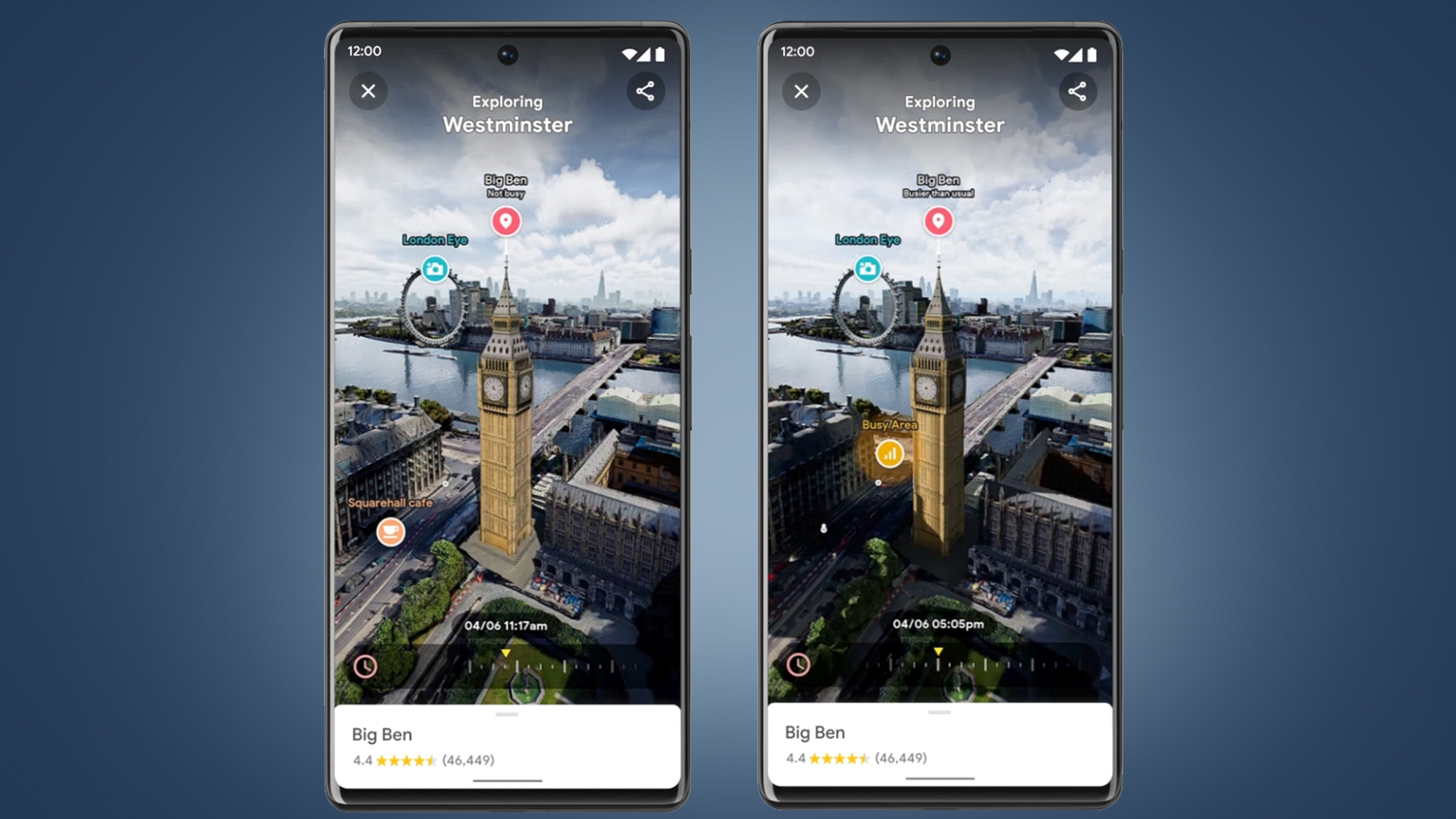
First announced at the Google I/O 2022 developer conference, immersive views will combine Google Map’s Street View, satellite, and aerial images to create 3D recreations of landmarks. This first iteration of the feature is currently incomplete, but still supports over 100 locations across major cities including London, San Francisco and Tokyo.

Eventually, the feature will go beyond traditional landmarks, and will be used to bring to life local hotspots like restaurants, to give potential tourists a better feel of the place they’re looking to visit. 

This comes as Google is trying to fight back against apps like TikTok and Instagram, which have become the most popular tools for young people looking to discover new places, ahead of Google’s services.

With Instagram itself capitalizing on this trend with its own searchable maps feature, we’ll have to see whether Google Maps’ immersive views and other future features will be enough to win back lost users.

Two phones showing Google Maps Immersive View

Two phones showing Google Maps Immersive View (Image credit: Google)

Improved bike navigation

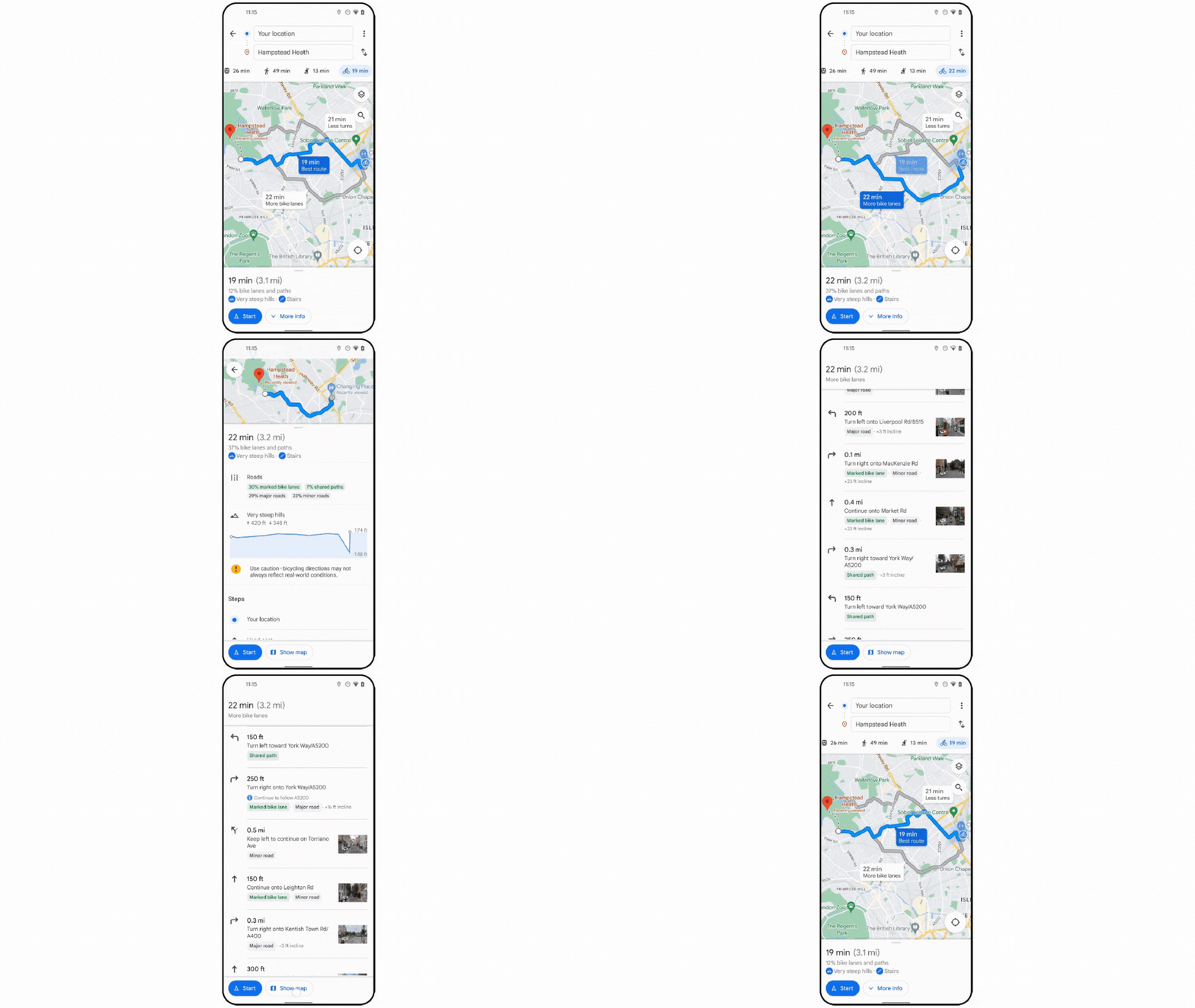
Google Maps is also getting better navigation tools for cyclists. While Maps has offered bike navigation for a long time now, this update aims to make it more like its car navigation, giving cyclists more information about their route.

Specifically, it means that cyclists will be able to see if their route is impacted by car traffic, as well as if the route includes bike lanes, how steep or windy a route is, and what kind of roads they’ll be riding on. Users can use this information to choose alternative paths; in some cases, Google Maps will offer riders multiple possible routes other than the fastest, including a path with more bike lanes, or one that requires fewer turns.

(Image credit: Google)

Location-sharing upgrades

Google is also upgrading location sharing. Now, in addition to sharing your location, you can ping notifications to a friend to let them know you’re leaving one location, and automatically send another when you arrive at your destination. The app will also be better at warning you that you’ve left the feature turned on if you didn’t set a time limit when you started sharing your location.

If you think location sharing and the other updates are neat features, here are a few other hidden Google Maps tools that you might not know about.

https://ift.tt/flk4JDH

Alphabet profit falls once again, despite major revenue growth

Google’s parent company has reported a drop-off in profit for a second consecutive quarter, despite a handsome rise in revenue.

As per the latest earnings report, Alphabet brought in a profit of circa $16 billion in Q2 2022, down from $18.5 billion for the same quarter last year. Meanwhile, total revenue for the quarter rose by 12.6% year-on-year to reach $69.7 billion.

The reason for this disparity appears to be a combination of rising sales and marketing costs and an increase in research and development spend, which cost the company an additional $3 billion last quarter. Google also spent more heavily on M&A activity and took a $2.1 billion hit from deferred income tax payments.

Alphabet results

As ever, the largest portion of Alphabet revenue stemmed from its digital advertising business, with the “Google Search and other” segment alone responsible for $40.7 billion in revenue for Q2.

The total ad revenue figure was supplemented by $7.3 billion generated by YouTube advertising and $8.3 billion from programs like Google Adsense, whereby publishers and website owners host display ads on their own properties.

Although Google’s cloud services business remains highly unprofitable (losing $858 million for the quarter), the division – which houses both Google Cloud products and Workspace productivity software - attracted $6.2 billion in sales, marking an increase of more than a third over 2021.

“In the second quarter our performance was driven by Search and Cloud,” said Sundar Pichai, Alphabet and Google CEO. “The investments we’ve made over the years in AI and computing are helping to make our services particularly valuable for consumers, and highly effective for businesses of all sizes.”

“As we sharpen our focus, we’ll continue to invest responsibly in deep computer science for the long-term.”

However, although total revenue figures were up-and-to-the-right across practically all business segments, Alphabet recorded its slowest sales growth in two years, perhaps signalling trouble ahead for companies in the digital advertising sector as businesses cut back on spending.

https://ift.tt/xocBJhq

Tuesday, 26 July 2022

Avatar is being remastered in high frame rate – but your current 4K TV can’t handle it

James Cameron’s 2009 sci-fi epic Avatar is being remastered in high frame rate (HFR), along with his 1997 film, Titanic. That announcement comes from Pixelworks, the developers of the TrueCut Motion technology being used to transform the director’s signature blockbusters for a return to theaters.

“We’re bringing Avatar and Titanic back to the big screen, looking better in every way,” said James Cameron in a Pixelworks press release. “We will be presenting both films in 4K with high dynamic range visuals and have been working with Pixelworks’ TrueCut Motion platform to remaster the films in high frame rate, while keeping the cinematic look of the original.”

What is HFR?

To explain HFR, we first need to discuss frame rates, and how they differ between film and video formats. Motion pictures shot using both film and digital cinema cameras are captured at a 24 frames per second (fps) rate, while TV shows like news, sports, and sitcoms are shot on video at either 50 or 60 fps depending on the country.

The main benefit to displaying images at a higher refresh rate like 50 or 60 Hz is that programs like sports with plenty of fast action look more clear and detailed. That same action captured and displayed at a 24 fps rate will have much lower motion resolution, with the end result being that images look comparatively blurry, and the action less smooth. 

To address this situation for movies, filmmakers like Peter Jackson in The Hobbit, for example, boosted the camera’s frame rate to 48 fps HFR. And while the HFR version of The Hobbit got a mixed reception at the cinema (including from this writer), the motion resolution improvement it brought to that movie’s many action sequences was undeniable.

Enter TrueCut Motion technology 

TrueCut Motion technology, according to the Pixelworks release “allows filmmakers to dial in the motion, with any source frame rate, shot by shot, in post-production.” The release adds that the platform “ensures that these creative choices are delivered consistently across every screen, whether in the theater or the home.”

I caught a demo of TrueCut Motion technology put on by Pixelworks and TV-maker TCL at the CES tradeshow in early 2022. The demo gave me the chance to once again see HFR footage from The Hobbit, except this time processed using TrueCut Motion. 

The remastered HFR version The Hobbit displayed on the TCL TV looked much better than what I remembered from my theatrical experience: images retained detail in fast-action sequences, but more standard shots didn’t have the same sped-up “soap opera” effect that could look unnatural at best, and sick-making at worst.

To expand a bit on the Pixelworks press release, the tech as explained to me by the company’s reps at CES is a “motion grading” process that allows for image motion to be varied within a 48 Hz high-frame-rate (HFR) container on a scene-by-scene basis. That, in effect, makes it similar to Dolby Vision HDR grading, where the range between the deepest shadows and brightest highlights in images can be adjusted on a similar scene-by-scene basis during post-production.

watch titanic online

(Image credit: Paramount/20th Century Fox)

TrueCut Motion on TVs?

While higher-motion resolution versions of Avatar and Titanic are clearly in the works for theaters courtesy of Pixelworks, that doesn’t necessarily mean we’ll get to see the same at home. 

The reason why is that TrueCut Motion technology is an end-to-end process – all components in the production and presentation chain need to support it. Even the digital cinema cameras used for movie production can be equipped with the variable motion capture tech. 

And that means your TV will also need to support TrueCut Motion. You can think of it as the movie equivalent of Variable Refresh Rate (VRR), an HDMI 2.1 feature included in newer TVs that eliminates screen “tearing” and permits smoother motion during gaming – something it does by syncing the TV’s refresh rate with the variable output of games played on next-gen Xbox and PlayStation consoles.

The set used for the demo I caught at CES 2022 was outfitted with TrueCut Motion, so it’s obviously something that can be easily licensed and incorporated into TVs – which TCL plans to do. At the time, I thought Peter Jackson agreeing to allow The Hobbit footage to be used by Pixelworks was a good sign for the motion grading tech’s future. Now, with James Cameron fully on board, its chances of making it into the best 4K TVs is looking even better.

https://ift.tt/bEVdaX0

Still using a tablet for work? Google Workspace has some good news for you

Google Workspace has unveiled a much-needed upgrade to some of its most popular software tools aimed at making them easier to use and experience on larger-screen mobile devices.

The updates will cover Google Drive, Docs, Sheets, Slides, and Keep on Android, and look to address several key pain points seen by users with larger-screen Android smartphones or business tablets.

With more of us now working flexibly and across multiple devices, Google hopes that the updates will bring improved usability and less frustration for workers everywhere.

Google Workspace on tablets

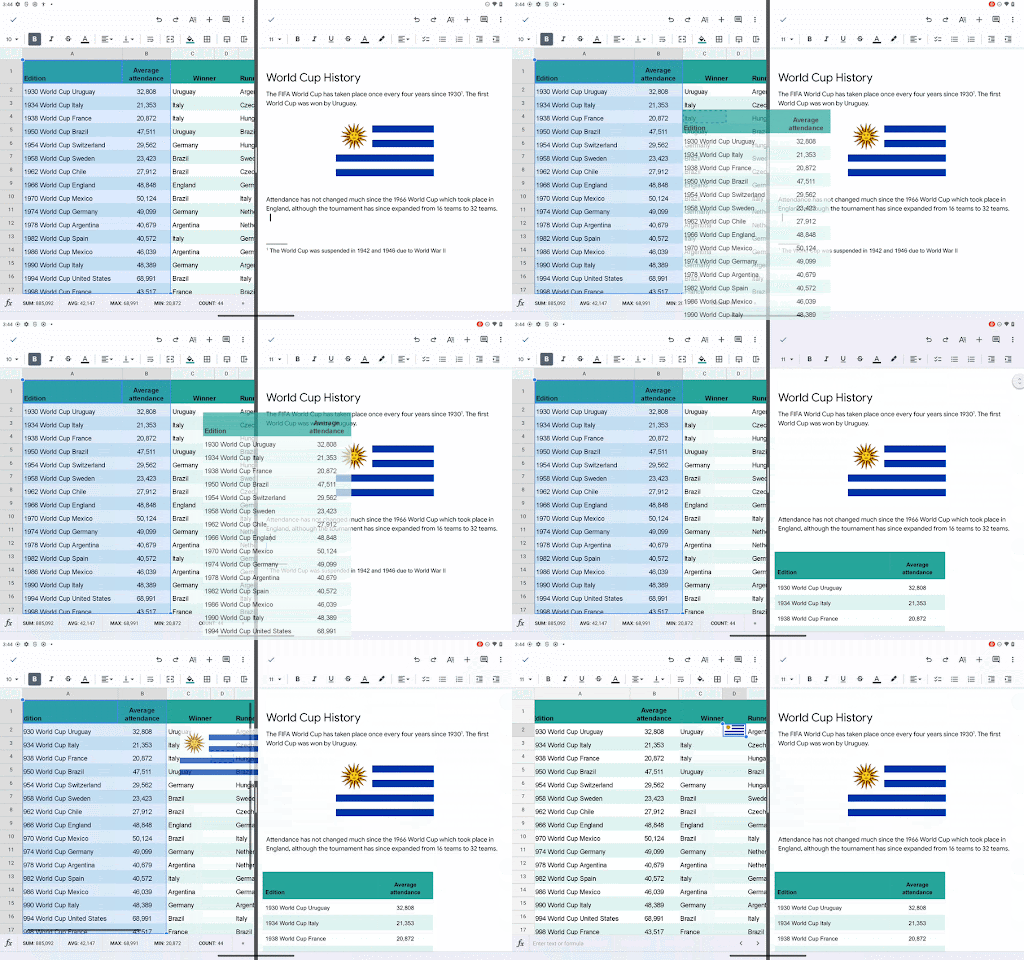
The new features include the ability to drag and drop files from one Google Workspace app to another to improve the links between different services.

For example, users can now drag a table from a Google Sheets form directly into a Google Docs document on the same display, ending fiddly copy-and-paste functions, or drag a Google Drive file into a new Keep note.

Google Workspace drag and drop from Sheets to Docs

(Image credit: Google Workspace)

Mobile and tablet devices will also see much-improved keyboard support for Drive, Docs and Sheets, making it much easier to use your device when on the move. Google says all your favorite shortcuts will be available, making it a lot smoother to use a keyboard when on a train or bus, for example.

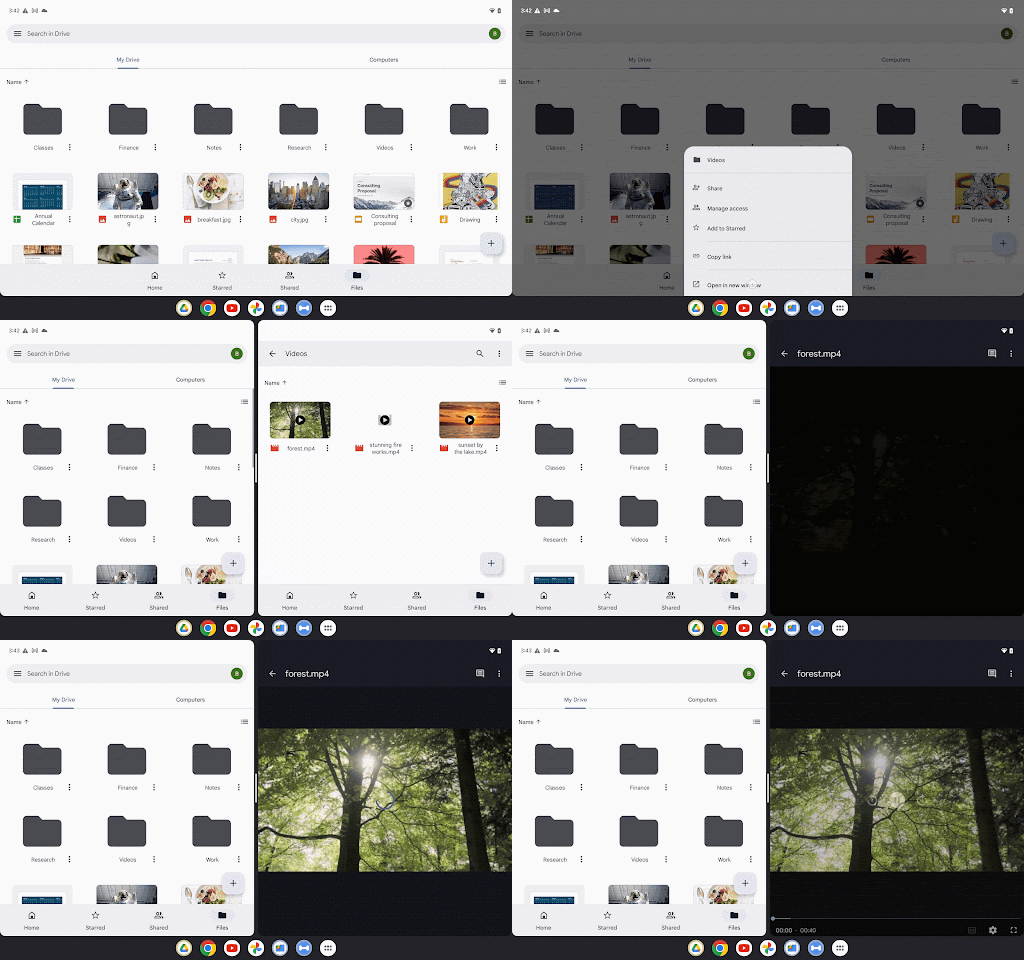
Google Drive multi-instance windows open

(Image credit: Google Workspace)

Finally, Google Drive users can get a clearer view of their files by having two windows open side-by-side at the same time, allowing them the chance to view video or photos without having to juggle multiple overlapping windows.

"As part of our mission to provide a top-class user experience on large screen devices, we’re adding several new features and functionality," the official Google Workspace Updates blog post noted.

"We hope these updates enhance flexibility by giving you more ways to work with, display and organize your content across Google Workspace."

The new features are rolling out now to users across the world, and will be available to all Google Workspace customers, as well as legacy G Suite Basic and Business customers, along with users who have personal Google Accounts.

https://ift.tt/dahoDVE

Netflix's latest hit movie is getting a sequel and spin-off film

The Gray Man is getting a follow-up and a spin-off movie, Netflix has announced.

Revealed in a press release, the streaming giant confirmed that it had greenlit two new projects in The Gray Man's embryonic cinematic universe. The announcement comes hot on the heels of the Netflix movie becoming the streamer's latest hit film, with audiences worldwide lapping up the Ryan Gosling and Chris Evans-fronted action-thriller flick. Gosling will return as Court Gentry, aka Sierra Six, for the sequel.

The Russo brothers, who directed the first entry in the movie series, will also return to helm The Gray Man 2, which currently doesn't have an official title or release date. However, it's likely to follow the plot of the second novel in Mark Greaney's thriller series, which is called On Target. 

Meanwhile, The Gray Man's co-writer Christopher McFeely, who also penned hit Marvel movies including Avengers: Infinity War and Avengers: Endgame – movies he worked on with the Russo brothers – will write the sequel. 

Not content with simply greenlighting a follow-up to The Gray Man, Netflix also announced that a spin-off movie is in development. Paul Wernick and Rhett Reese, whose credits include acclaimed films like Deadpool and Zombieland, have boarded the unnamed project. However, Netflix did tease what fans can expect from the spin-off, stating that it'll "explore a different element of The Gray Man universe".

See more

In a statement, Joe and Anthony Russo expressed their gratitude to Netflix's global fanbase for making The Gray Man such a hit. The pair also revealed their delight at being able to expand The Gray Man's cinematic universe, saying: "The audience reaction to The Gray Man has been nothing short of phenomenal. We are so appreciative of the enthusiasm that fans across the world have had for this film. 

"With so many amazing characters in the movie, we had always intended for the Gray Man to be part of an expanded universe, and we are thrilled that Netflix is announcing a sequel with Ryan, as well as a second script that we’re excited to talk about soon."

Head of Netflix Film Scott Stuber added: "With The Gray Man, the Russos delivered an edge-of-your-seat spectacle that audiences around the world are loving. We're excited to continue to partner with them and the team at AGBO as they build out The Gray Man universe."

The expansion of The Gray Man's cinematic universe should come as no surprise. Currently, the movie holds a 91% certified fresh audience rating on review aggregator website Rotten Tomatoes. Additionally, it debuted at #1 in 92 countries in the first few days post-release, cementing The Gray Man as a dominant force on the streaming landscape this month.

In our review, we called The Gray Man a "suitably entertaining and tension-filled spy movie that feels like a summer blockbuster of yesteryear", despite its plot being "par for the course". Some fans and critics didn't enjoy it as much as we did, though, with one reviewer calling it "a lump of generic subscriber bait". Still, such criticism hasn't put Netflix off from greenlighting more entries in its burgeoning franchise. 

For more content on The Gray Man, check out our exclusive, in-depth chat with the Russos about how James Bond, Marvel, and their love for action movies influenced The Gray Man's development. Alternatively, read up on every other Netflix original movie coming in 2022.

https://ift.tt/6aC2QxX

Slack went down yet again for some users - here's what we know

UPDATE: Slack has confirmed the issue is now resolved.

"Customers should no longer be experiencing issues with sending messages, loading threads and uploading or downloading files. Thank you for your patience while we worked to resolve this!"

Another outage hit Slack today, with users across the world reporting problems with the software.

The online collaboration tool went down for many users, affecting people as they tried to log in for work or try and get tasks done.

The issue began around 6am PT / 9am ET / 2pm BST, mainly affecting users in the UK and Europe, who reported issues as they tried to log in and send messages.

Slack down

Thousands of Slack users initially flocked to outage tracker site DownDetector to report problems, with numbers spiking around 3pm BST.

The company first acknowledged the issue at 2.12pm BST, noting on its Slack Status page, "We are receiving multiple reports of threads not loading and some users are unable to send messages. We’re investigating and will let you know as soon as we have further information to share."

Half an hour later, the company added that although the situation was improving, "Customers may still be experiencing trouble in Slack, specifically with sending messages and loading threads."

This was then followed by what has been the last update at the time of publishing, which read, "Some customers may continue to experience trouble sending messages, loading threads and uploading or downloading files. We'll continue to provide further updates as soon as we know more. We thank you for your patience in the meantime."

https://ift.tt/JvnHQw7