Google Search Live is now available globally in 200 countries and 98 languages
Search Live uses the new Gemini 3.1 Flash Live audio and voice model to enable a “more natural” conversational search
Audio responses have links to the information source
Google has rolled out its AI-powered conversational search tool, Search Live, globally to more than 200 countries and territories, and is available in 98 languages. First launched in the US in September 2025, Search Live lets you point your phone or tablet’s camera at something and ask the AI tool about it out loud, such as what model washing machine you have and how to use it.
The AI then responds with an audio answer that’s also, handily, captioned, and will continue listening for any clarifications and follow-up questions to emulate a natural conversation.
You can access Search Live through the Google app on Android or iOS by tapping the “Live” button under the search bar, placed between the AI Mode and Nano Banana buttons. It can also be accessed through Google Lens and the dedicated Gemini app.
Google has said the expansion has been made possible thanks to the launch of a new audio and voice model called Gemini 3.1 Flash Live, which it says is “inherently multilingual”. The company also claims the model also responds to queries faster, and aims to deliver “more natural and intuitive conversations”.
Analysis: Good but not perfect
Search Live uses query fan-out — an information retrieval technique that broadens the search by looking at related answers beyond a specific question — to provide a more comprehensive response and double down on the conversational aspect.
We tried Search Live in June last year, and noted how the tool continues to work in the background to use query fan-out, and my colleague Eric Hal Schwartz said the answers “didn’t feel boxed into a single form of response, even on relatively straightforward queries”.
I took it for a spin myself, testing it on my bike. While Search Live was good at identifying the specific model, year of release and why it had a specific paint job, it failed to recognize that I had swapped out the stock wheelset for a third-party set and thought that it still had the integrated handlebars that it originally came with. It also failed to correctly identify the accessories on the bike, like my rear light, water bottle and the bottle cages.
(Image credit: Future | Nico Arboleda)
In a similar test, it failed to identify the Nothing Phone 4a Pro that was on my desk, calling it the Nothing Phone 2a instead. I compared the results with the same question on Gemini Live, and I received identical answers.
It’s understandable why some of the results were incorrect as the AI assistant was drawing from existing sources online and new products won’t necessarily have information for the model to learn from but, as it stands, it can handle a fair few general queries.
According to Google, over 1.5 billion people were using Google Lens to identify objects around them as of June 2025 and there are about 750 million Gemini Live users, so it would be interesting to see what the uptake of Search Live will be globally and if this becomes the default way to search for information online.
On Wednesday, a Los Angeles jury found that Meta and Google are liable for designing products that are deliberately addictive and failing to warn users about the nature of their products.
This is huge news, a landmark verdict that will inform hundreds of cases to come. While the plaintiff, a 20-year-old identified only as KGM, has been awarded $6m in damages, it's the verdict itself that's most damaging, as it opens the door to many more lawsuits against tech companies.
According to a report in The Guardian, KGM testified that "she became addicted to YouTube at age six and Instagram at nine, which she said had deleterious effects on her wellbeing". She began self-harming at age 10 and was diagnosed with body dysmorphic disorder and social phobia in her early teens.
KGM's lawyers, in their closing remarks, said: “How do you make a child never put down the phone? That’s called the engineering of addiction. They engineered it, they put these features on the phones. These are Trojan horses: they look wonderful and great … but you invite them in and they take over.”
Outside the courtroom, families who had lost young people to suicide celebrated the verdict as the beginning of justice. Meta and Google both plan to appeal, stating they "respectfully disagree" with the verdict.
Why is it so hard to put down our phones? Is social media and scrolling really as addictive as substances like nicotine and tobacco? Should we be safeguarding our kids from technology, or is it a content issue to be monitored by parents, rather than an app design problem? I'll break down the scientific research behind the verdict below.
Children and social media addiction: the effects
While I think it's pretty obvious to any phone user that social media apps have addictive qualities, there are extra concerns about the effects of heavy digital device use on children's developing brains.
One literature review by Italian pediatrists linked digital addiction in children with depression, diet, and psychological issues, as well as 'sleep, addiction, anxiety, sex related issues, behavioral problems, body image, physical activity, online grooming, sight, headache, and dental care'. KGM was six years old when she first got addicted to social media, according to her testimony.
Researchers in Germany, Sweden, and the Netherlands have also linked 'high social media usage' among adolescents to 'a statistically significant change in the developmental trajectory of cerebellum volumes', a part of the brain associated with emotional control. It could literally influence the brain's physical development.
Another report says: "frequent social media use may be associated with distinct changes in the developing brain in the amygdala (important for emotional learning and behavior) and the prefrontal cortex (important for impulse control, emotional regulation, and moderating social behavior), and could increase sensitivity to social rewards and punishments".
However, it's worth noting that none of these findings are yet conclusive.
How social media apps are designed to foster engagement
Below are three ways Meta and Google could have designed their platforms to encourage addictive behaviors, supported by science and quotes from the trial.
1. The dopamine cycle
(Image credit: Getty Images)
In a report by The Guardian, Meta employees in 2020 are quoted as saying “oh my gosh y'all, IG is a drug” in an email exchange, while a colleague responds, “Lol, I mean, all social media. We’re basically pushers.”
They're not entirely wrong. The basis of addiction is all about hijacking the 'mesolimbic system', the part of the brain responsible for associating certain behaviors with rewards, both natural (food, sex, play) and artificial (drugs such as alcohol and nicotine, and notifications). Once a reward is achieved, dopamine is released.
One study on teen addiction linked activation of the mesolimbic pathway to social media use, stating children are "often victims of an unrelenting 'dopamine cycle' created in a loop of 'desire' induced by endless social media feeds, 'seeking and anticipating rewards' in the way of photo tagging, likes, and comments," the latter being the triggers that continue to reinstate the 'desire' behavior.
"The overactivation of the dopamine system in such individuals can further increase the risk of addictive behaviors or pathological changes that lead to a decline in pleasure from natural rewards." Essentially, all you want to do is keep scrolling, just like an addict looking for an endless fix because natural rewards no longer provide the same pleasure as scrolling.
According to CNN, KGM's lawyer Mark Lanier said in his opening statement: “This case is about two of the richest corporations who have engineered addiction in children’s brains,” Lanier said in his opening statement. “The swipe, for a child, like Kaley, this motion is a handle of a slot machine. But every time she swipes, it’s not for money, but for mental stimulation.”
2. The infinite scroll
(Image credit: Getty Images)
Now that a swipe is a pleasure creation tool, the next crucial tool in social media's arsenal of addiction creation is the infinite scroll: the ability to swipe forever, to continue to activate and hijack the mesolimbic pathway for as long as the user desires. Likewise, video autoplay on platforms such as YouTube and Netflix helps remove barriers and pauses, encouraging viewers to continue watching.
KGM's lawyers mention the infinitely scrollable feeds and video autoplay as features designed to keep people on the apps, maintain attention, and encourage addictive behaviors. But it's ok, because the inventor of the scrollable feed, Aza Raskin, apologized when he unleashed this horror upon the world.
3. Algorithmically encouraged negative content
(Image credit: Shutterstock)
Ever heard of 'happy scrolling'? Of course not. 'Doomscrolling,' on the other hand, is named so for a reason. Negativity is more addictive than positive content: one 2024 report by Cambridge University said that "it’s long been recognized that news-related social media posts that use negative language are re-posted more, so that in turn rewards users who create negative content through greater exposure".
Combine this with the infinitely scrollable feed and addictive, casino-esque nature of social media platforms, and you get doomscrolling, a constant stream of bad news, enraging user-created content, and messaging that you're never going to be enough unless you do this, or buy that, or look like this.
KGM used Instagram filters on 'almost all' her pictures and 'had not experienced the negative feelings associated with her body dysmorphia diagnosis before she began using social media and filters,' according to court reporting by Al Jazeera.
The same scientific report quoted above on brain development also said that "in early adolescence, when identities and sense of self-worth are forming, brain development is especially susceptible to social pressures, peer opinions, and peer comparison".
The bottom line? Children are easily impressionable, and if online negativity is more rewarding than positivity, unfettered access to an endless stream of content designed to make users feel worse to increase engagement is going to warp their worldview. According to the jury, in this case, the buck stops at the algorithm's designers.
A new NYT Strands puzzle appears at midnight each day for your time zone – which means that some people are always playing 'today's game' while others are playing 'yesterday's'. If you're looking for Thursday's puzzle instead then click here: NYT Strands hints and answers for Thursday, March 26 (game #753).
Strands is the NYT's latest word game after the likes of Wordle, Spelling Bee and Connections – and it's great fun. It can be difficult, though, so read on for my Strands hints.
Want more word-based fun? Then check out my NYT Connections today and Quordle today pages for hints and answers for those games, and Marc's Wordle today page for the original viral word game.
SPOILER WARNING: Information about NYT Strands today is below, so don't read on if you don't want to know the answers.
NYT Strands today (game #754) - hint #1 - today's theme
What is the theme of today's NYT Strands?
• Today's NYT Strands theme is… Just right
NYT Strands today (game #754) - hint #2 - clue words
Play any of these words to unlock the in-game hints system.
MEAT
SLIME
BLADE
GATE
BAIT
MELT
NYT Strands today (game #754) - hint #3 - spangram letters
How many letters are in today's spangram?
• Spangram has 10 letters
NYT Strands today (game #754) - hint #4 - spangram position
What are two sides of the board that today's spangram touches?
First side: top, 3rd column
Last side: bottom, 3rd column
Right, the answers are below, so DO NOT SCROLL ANY FURTHER IF YOU DON'T WANT TO SEE THEM.
NYT Strands today (game #754) - the answers
(Image credit: New York Times)
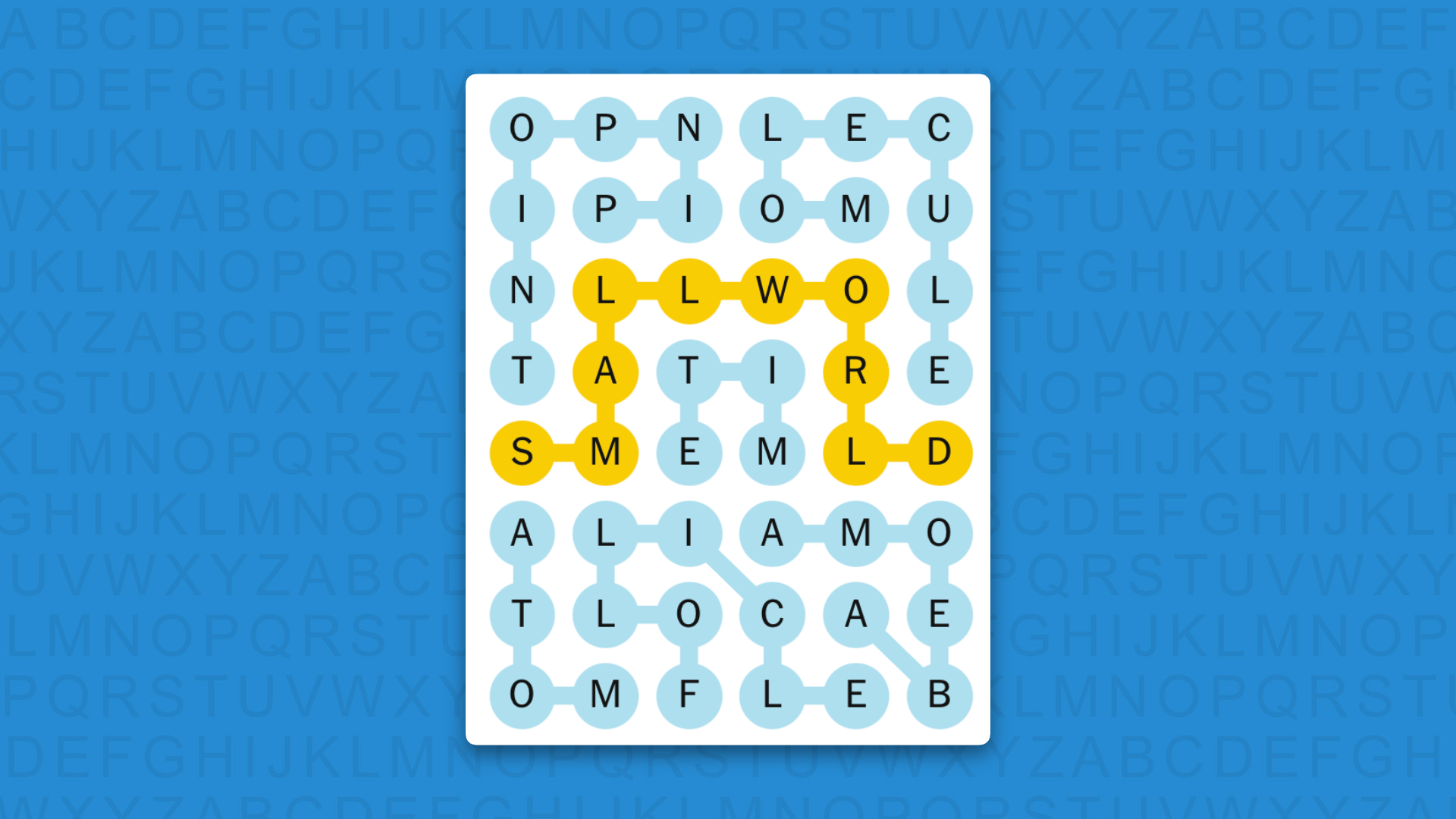
The answers to today's Strands, game #754, are…
PERFECT
EXACT
FITTING
IDEAL
SEEMLY
SUITABLE
SPANGRAM: TAILORMADE
My rating: Easy
My score: Perfect
A neat game, although when I was connecting PERFECT I was sure it would actually become “perfection”. Oh well, you can’t have everything!
Next I zeroed in on the rare letter X for EXACT and noticed that FITTING smartly contoured around it.
Low on surprises then, but an oddly satisfying search.
Yesterday's NYT Strands answers (Thursday, March 26, game #753)
FLUTE
HARMONICA
RECORDER
CLARINET
OBOE
SPANGRAM: WINDINSTRUMENT
What is NYT Strands?
Strands is the NYT's not-so-new-any-more word game, following Wordle and Connections. It's now a fully fledged member of the NYT's games stable that has been running for a year and which can be played on the NYT Games site on desktop or mobile.
I've got a full guide to how to play NYT Strands, complete with tips for solving it, so check that out if you're struggling to beat it each day.
A new Quordle puzzle appears at midnight each day for your time zone – which means that some people are always playing 'today's game' while others are playing 'yesterday's'. If you're looking for Thursday's puzzle instead then click here: Quordle hints and answers for Thursday, March 26 (game #1522).
Quordle was one of the original Wordle alternatives and is still going strong now more than 1,400 games later. It offers a genuine challenge, though, so read on if you need some Quordle hints today – or scroll down further for the answers.
Enjoy playing word games? You can also check out my NYT Connections today and NYT Strands today pages for hints and answers for those puzzles, while Marc's Wordle today column covers the original viral word game.
SPOILER WARNING: Information about Quordle today is below, so don't read on if you don't want to know the answers.
Quordle today (game #1523) - hint #1 - Vowels
How many different vowels are in Quordle today?
• The number of different vowels in Quordle today is 4*.
* Note that by vowel we mean the five standard vowels (A, E, I, O, U), not Y (which is sometimes counted as a vowel too).
Quordle today (game #1523) - hint #2 - repeated letters
Do any of today's Quordle answers contain repeated letters?
• The number of Quordle answers containing a repeated letter today is 2.
Quordle today (game #1523) - hint #3 - uncommon letters
Do the letters Q, Z, X or J appear in Quordle today?
• No. None of Q, Z, X or J appear among today's Quordle answers.
iOS and iPadOS users in the UK now have to verify their age
Otherwise certain features may be disabled for under-18s
Meta and Google have been fined over their child safety policies
It seems we're hitting a point of reckoning when it comes to phone usage for under-18s: Apple is rolling out mandatory age verification for iPhone and iPad users in the UK, just a day after Meta and Google were hit by a massive fine in a landmark social media trial.
Starting with the Apple verification rollout, this is part of the new iOS 26.4 and iPadOS 26.4 update for users in the United Kingdom. If you're a UK user, you'll be asked to register a credit card or scan an ID in order to prove you're aged 18 or over — unless Apple has previously confirmed your age.
Apple has full details here, and says the verification process is "required by law in some countries and regions" in regards to "downloading apps, changing certain settings, or taking other actions with your Apple Account". If you need to verify your account, you'll see a message appear on the Settings menu.
While this specific step of age verification at a device level isn't required by UK law as it currently stands, recent legislation does mean it is required for adult websites (including pornography sites). The onus has been on the sites themselves to do the verifying, but there have been calls for checks to be made at the device level too.
With the UK government trialling a curb on social media for under-16s, a law similar to the one implemented in Australia now looks likely. Apple's intentions may be to get ahead of any such decision, and according to the BBC it has been working closely with regulator Ofcom on the new feature.
It's not clear exactly what will happen if you're under 18 and are unable to confirm an adult identity. As per Apple's support document, you may see certain features restricted or be asked to join a Family Sharing group operated by a parent, but the wording suggests it will vary on a case-by-case basis.
Social media addiction
Mark Zuckerberg's Meta is under fire for its child safety policies(Image credit: Getty Images)
Another reason Apple might have taken this move is the landmark social media lawsuit that just reached a conclusion in Los Angeles: Meta and Google have been ordered to pay out $6m (about £4.5m / AU$8.65m) to a young woman who claimed that Facebook, WhatsApp, and YouTube severely impacted her mental health.
The woman's lawyers had described the apps developed by Meta and Google as "addiction machines", arguing that the tech companies hadn't done enough to stop younger children accessing these platforms, or to protect them from the harms associated with too much screen time.
In a separate trial in New Mexico that reached a verdict earlier this week, Meta was separately told to pay a $375m (about £281m / AU$541m) fine for misleading users over child safety protections in its apps. Meta had been aware of child predators on its platforms, and hadn't done enough to block them, the jury decided.
Meta and Google both intend to appeal: "Teen mental health is profoundly complex and cannot be linked to a single app," a Meta spokesperson said. "We will continue to defend ourselves vigorously as every case is different, and we remain confident in our record of protecting teens online."
And while Apple's age restrictions have been welcomed by Ofcom and child protection groups, not everyone is happy about it: some see it as another step towards "mass surveillance" and even more user data tracking and logging, while others argue protection responsibilities should lie with parents rather than device makers.
The momentum definitely seems to be in one direction right now, however — and with AI bots another problem that the internet is grappling with, it's likely that more verification checks are going to start appearing in the future.
A new Quordle puzzle appears at midnight each day for your time zone – which means that some people are always playing 'today's game' while others are playing 'yesterday's'. If you're looking for Wednesday's puzzle instead then click here: Quordle hints and answers for Wednesday, March 25 (game #1521).
Quordle was one of the original Wordle alternatives and is still going strong now more than 1,400 games later. It offers a genuine challenge, though, so read on if you need some Quordle hints today – or scroll down further for the answers.
Enjoy playing word games? You can also check out my NYT Connections today and NYT Strands today pages for hints and answers for those puzzles, while Marc's Wordle today column covers the original viral word game.
SPOILER WARNING: Information about Quordle today is below, so don't read on if you don't want to know the answers.
Quordle today (game #1522) - hint #1 - Vowels
How many different vowels are in Quordle today?
• The number of different vowels in Quordle today is 3*.
* Note that by vowel we mean the five standard vowels (A, E, I, O, U), not Y (which is sometimes counted as a vowel too).
Quordle today (game #1522) - hint #2 - repeated letters
Do any of today's Quordle answers contain repeated letters?
• The number of Quordle answers containing a repeated letter today is 2.
Quordle today (game #1522) - hint #3 - uncommon letters
Do the letters Q, Z, X or J appear in Quordle today?
• No. None of Q, Z, X or J appear among today's Quordle answers.
What letters do today's Quordle answers start with?
• H
• C
• M
• L
Right, the answers are below, so DO NOT SCROLL ANY FURTHER IF YOU DON'T WANT TO SEE THEM.
Quordle today (game #1522) - the answers
(Image credit: Merriam-Webster)
The answers to today's Quordle, game #1522, are…
HOBBY
COULD
MORPH
LEDGE
This was an excellent game for me and one that very gently tested my brain.
With P as a penultimate letter and E and T unavailable I knew that I had a word ending PH and MORPH fitted. But my biggest pleasure of this game was tactical — delaying choosing between “hedge” and LEDGE to see if other columns gave me some clues.
Daily Sequence today (game #1522) - the answers
(Image credit: Merriam-Webster)
The answers to today's Quordle Daily Sequence, game #1522, are…
A new NYT Strands puzzle appears at midnight each day for your time zone – which means that some people are always playing 'today's game' while others are playing 'yesterday's'. If you're looking for Wednesday's puzzle instead then click here: NYT Strands hints and answers for Wednesday, March 25 (game #752).
Strands is the NYT's latest word game after the likes of Wordle, Spelling Bee and Connections – and it's great fun. It can be difficult, though, so read on for my Strands hints.
Want more word-based fun? Then check out my NYT Connections today and Quordle today pages for hints and answers for those games, and Marc's Wordle today page for the original viral word game.
SPOILER WARNING: Information about NYT Strands today is below, so don't read on if you don't want to know the answers.
NYT Strands today (game #753) - hint #1 - today's theme
What is the theme of today's NYT Strands?
• Today's NYT Strands theme is… I blew it!
NYT Strands today (game #753) - hint #2 - clue words
Play any of these words to unlock the in-game hints system.
CRAM
CRUEL
STRUM
RIND
CLAN
DOME
NYT Strands today (game #753) - hint #3 - spangram letters
How many letters are in today's spangram?
• Spangram has 14 letters
NYT Strands today (game #753) - hint #4 - spangram position
What are two sides of the board that today's spangram touches?
First side: left, 8th row
Last side: right, 4th row
Right, the answers are below, so DO NOT SCROLL ANY FURTHER IF YOU DON'T WANT TO SEE THEM.
NYT Strands today (game #753) - the answers
(Image credit: New York Times)
The answers to today's Strands, game #753, are…
FLUTE
HARMONICA
RECORDER
CLARINET
OBOE
SPANGRAM: WINDINSTRUMENT
My rating: Easy
My score: Perfect
This was a long and short day, with the 14-letter spangram, WINDINSTRUMENT, being as long as words get and and four-letter game word OBOE being the shortest.
Although I began by thinking the search could involve failure, FLUTE was an easy spot in the top-left-hand corner and set me off on a search for similar instruments.
I did not learn the RECORDER at school but enjoy its unique ability, much like the bagpipes, to sound simultaneously in and out of tune.
Yesterday's NYT Strands answers (Wednesday, March 25, game #752)
BEER
FRIES
SODA
WATER
POPCORN
PRETZEL
CANDY
SPANGRAM: CONCESSIONS
What is NYT Strands?
Strands is the NYT's not-so-new-any-more word game, following Wordle and Connections. It's now a fully fledged member of the NYT's games stable that has been running for a year and which can be played on the NYT Games site on desktop or mobile.
I've got a full guide to how to play NYT Strands, complete with tips for solving it, so check that out if you're struggling to beat it each day.