Microsoft continues to maintain a stranglehold over the office software market, despite the best efforts of Google and the effects of the pandemic, new data shows.
The poll also highlighted the extent of headwinds faced by smaller players, with alternatives like Zoho Workplace, Polaris Office and LibreOffice all used by fewer than 3% of respondents.
Microsoft 365 vs. Google Workspace
It is perhaps news to no one that Microsoft leads the way in the office software market with its famous Microsoft 365 suite, but the extent of that lead may come as some surprise, given the reputation of apps like Google Docs, Google Sheets, Google Slides and more.
One of the defining features of Microsoft’s offering is tight integration between apps and services, extending all the way out to the Windows operating system on which most business computers run.
However, Google stole a march on Microsoft when it came to the real-time collaboration model, whereby software is served up via the cloud, which has proved all-important since the transition to remote and hybrid working.
In 2020, Google also rebranded G Suite to Workspace, signalling an increase in investment in the software suite. As part of this process, the company announced it would make a concerted effort to create a more “deeply integrated user experience”, closing the gap on its rival.
Since then, Google has rolled out hundreds of upgrades in an attempt to deliver on this objective and further fine-tune its services for the post-pandemic working environment.
However, the new data provided to TechRadar Pro suggests these efforts have ultimately translated into limited user growth.
Although the survey is far from comprehensive and doesn’t provide a global picture, the results are backed up by the financials. In Q1 2022, Google’s cloud services (which includes Workspace) accounted for $5 billion in revenue, whereas Microsoft’s productivity segment took in $15 billion.
In other words, Google has a long way to go before it can genuinely challenge for the market lead.
Star Wars fans are eating well today (Friday, May 27). Not only is there a brand-new TV show set in that galaxy far, far away available to stream, but there were plenty of exciting announcements made on day 1 of Star Wars Celebration, which took place in California on Thursday, May 26.
And there's a lot to get up to speed with. Below, we'll run you through every announcement, trailer, and other interesting pieces of news that were revealed during day 1 of Star Wars Celebration. That includes updates on The Mandalorian season 3, Andor, and other upcoming Star Wars projects that are at various stages of development.
So, what are you waiting for? Strap into your Millennium Falcon (we know you have one), engage your hyperdrive, and let's travel at light speed towards everything that was announced.
The Mandalorian season 3 gets a release date and first footage reveal
The Mandalorian season 3 returns early in 2023.(Image credit: Lucasfilm/Walt Disney Studios)
Let's kick things off with Star Wars' most popular series of recent times. Yes, The Mandalorian season 3's release is drawing ever closer – and we finally know when it'll be with us.
Star Wars Celebration attendees weren't just treated to that announcement, though. Audiences were also given their first look at The Mandalorian's next instalment, with a sizzle reel giving us a tease of what's to come.
According to those in attendance, there were plenty of stunning shots and visuals to take in, but it's the hints at where season 3's plot will go that was most intriguing.
The footage showed Mando meeting with The Armorer again, who told him that "redemption is no longer possible" after the latter found out that the former had removed his helmet (on multiple occasions) in previous seasons. Meanwhile, Mando tells Grogu that the duo are bound for Mandalore – the home world of all Mandalorians – so he can be forgiven for his transgressions.
Other blink and you'll miss it scenes involved Mando and Grogu reuniting with Greef Karga, who seems to have settled into a new (and well-paying, based on his attire) profession, and a tense, verbal showdown with Bo-Katan, another Mandalorian warrior who fans will remember from the show's second season and animated series The Clone Wars. There were also plenty of action-packed moments to take in, before Bo-Katan ominously tells Grogu "Did you think your dad was the only Mandalorian?". Color us excited.
Andor season 1 gets a teaser trailer and release date reveal
Andor, the Star Wars prequel series starring Diego Luna's rebellion hero from Rogue One, will officially launch on Disney Plus on August 31.
The series, which will receive a two-episode premiere on that date, is set five years before Luna teams up with Felicity Jones' Jyn Erso to steal the Death Star plans in order to aid the rebellion's fight against the Galactic Empire. Expect it to be a gritty, street-level affair in much the same away as Rogue One was.
And that seems to be the case, judging by the show's first teaser, which accompanied its release date announcement. You can watch the first footage from the upcoming series above, which is also the first Star Wars TV series that doesn't utilize Industrial Light and Magic's StageCraft (aka The Volume) technology. Instead, the show was set in real locations to retain that hardy, criminal underworld style that Rogue One is known for.
Andor season 1 will consist of 12 episodes, though it's unclear if the series will receive dual-episodic releases over the course of six weeks or get weekly releases after its premiere date. Oh, and why do we say that this is the show's first season? Because a second instalment – also comprising 12 episodes – is already in development and will begin shooting in November, according to Variety.
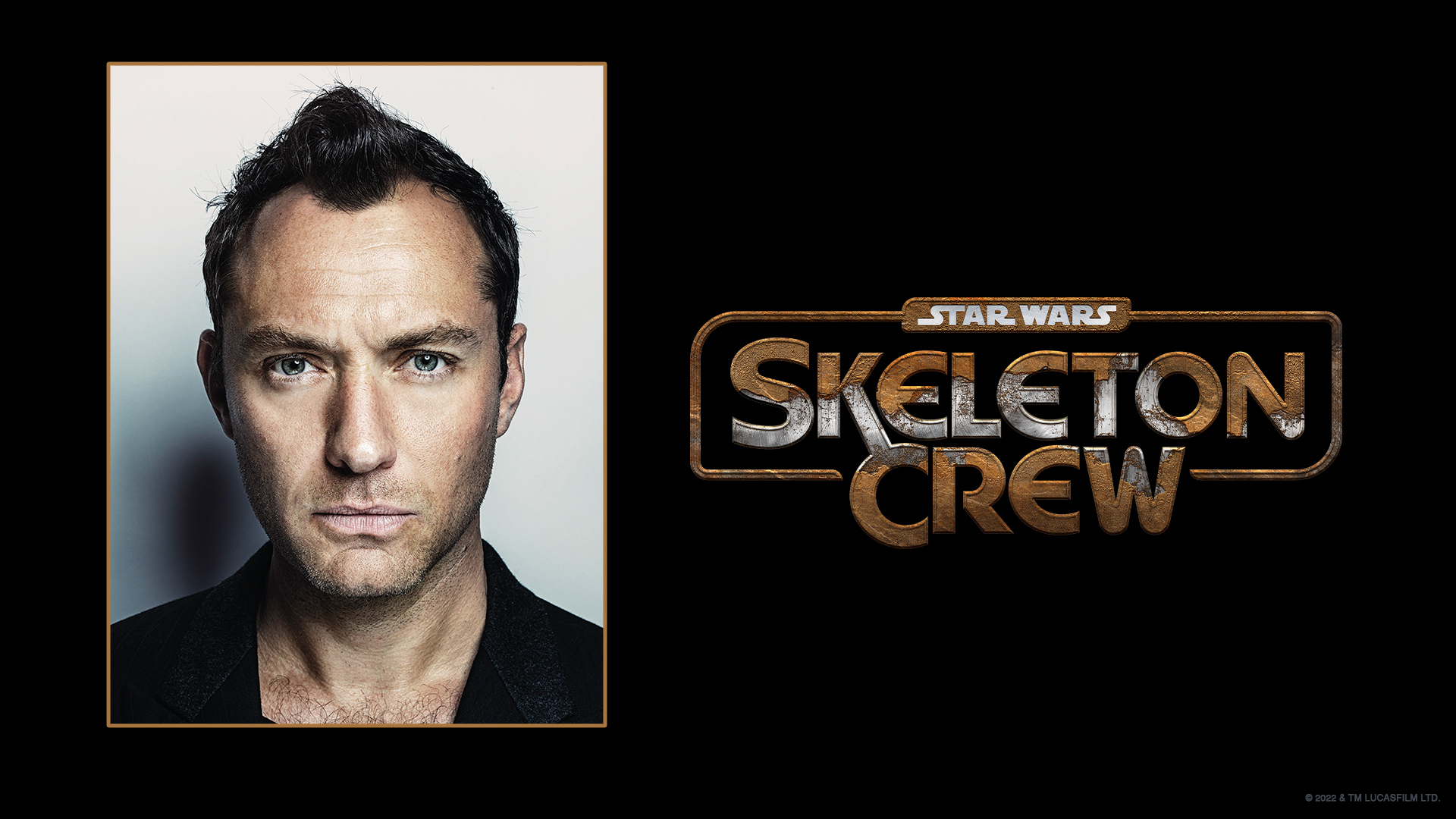
Skeleton Crew, a Star Wars series starring Jude Law, announced
Skeleton Crew will be helmed by Spider-Man director Jon Watts.(Image credit: Lucasfilm)
Now this was a pleasant surprise. Skeleton Crew, a new Star Wars TV series, is coming to Disney Plus sometime in 2023 – and it'll star none other than Marvel movie and Fantastic Beasts actor Jude Law. Talk about nailing down a role in three of the biggest franchises of all-time.
Little is known about Skeleton Crew, but we do have some information on its, well, backstage crew and what the show will entail.
Skeleton Crew is the official name of the series developed by Jon Watts (Spider-Man's MCU trilogy), and Christopher Ford (Chaos Walking) which previously had the working title Grammar Rodeo (a fun nod to one of The Simpsons' many, many episodes). Jon Favreau and Dave Filoni are also on board as executive producers alongside Watts, which isn't surprising, given how that duo have single-handedly (or should that be dual-handedly?) developed Star Wars' burgeoning output of TV-specific content.
According to Filoni, Skeleton Crew is an "upcoming live-action series stars kids but is as much for kids as The Clone Wars". Expect it to contain some mature concepts and themes that may not be suitable for kids of a certain age, then.
Per IGN, Skeleton Crew's story will follow "a group of 10-year-old kids from a small planet who get lost in that galaxy far, far away and must try to find their way home". The series is also set after Return of the Jedi, aka Star Wars Episode VI, so it'll be placed on the main Star Wars timeline alongside The Mandalorian and Ahsoka Tano's forthcoming live-action show. The Hollywood Reporter also claims that filming will begin this summer and that Skeleton Crew will have the feel of a 1980s Amblin Entertainment production, such as The Goonies or E.T.
Indiana Jones 5 first image revealed
In 2023, Harrison Ford returns as the legendary #IndianaJones. Check out this first look of the new James Mangold-directed film. pic.twitter.com/ALs82tsmXwMay 26, 2022
See more
Okay, these next two announcements are not Star Wars-centric. But, considering that Lucasfilm was the company that originally brought them to the big screen, it makes sense that they'd be covered in some capacity during Star Wars Celebration.
The first of that duo is Indiana Jones 5. We already knew that the next instalment in the iconic Harrison Ford-starring action-adventure film series was coming in June 2023. However, this is the first teaser we've received about the James Mangold-directed flick – even if it is just an image.
The still, which you can see in the tweet above, shows Ford's Jones crossing a rickety old bridge – presumably in a cave looking for treasure – as the warm, yellow glow of sunlight appears through a crack in the cave's roof. Sure, it doesn't give anything away, but it's a fan-pleasing image that'll whet your appetite ahead of the movie's release.
Fleabag's Phoebe Waller-Bridge, Fantastic Beasts' Mads Mikkelsen, Logan's Boyd Holbrook, and Uncharted's Antonio Banderas among the supporting cast. Mangold also serves as co-writer alongside Jez Butterworth and John-Henry Butterworth (Flag Day, Edge of Tomorrow), with Indiana Jones' legendary director Steven Spielberg and Lucasfilm president Kathleen Kennedy among the film's executive producers.
First trailer for Willow TV sequel unveiled
Arriving nearly 35 years after the cult favorite 1988 dark fantasy film, a Willow TV series will be released on Disney Plus on November 30.
The show, which is set 20 years after the events of the original movie, will see Warwick Davis (Rogue One, Harry Potter) reprise his role as the Nelwyn dwarven wizard known as Willow Ufgood, who joins Ruby Cruz's Princess Kit (and a band of other warriors) on a journey to rescue Kit's twin brother from an as-yet-revealed villain.
As the teaser trailer (which you can watch above) shows, the TV series looks to have retained the whimsical, dramatic, and ominous tones and style from the Willow flick. Fans of that late 80s movie, then, are sure to be counting down the days until the live-action show makes its grand debut on Disney's streaming service.
Ron Howard, who directed the original film, is on board as an executive producer alongside Kathleen Kennedy, Jonathan Kasdan, and Bryan Glazer among others. The eight-episode series has been developed by Kasdan (Dawson's Creek, Solo: A Star Wars story) and Wendy Mericle (Arrow).
Google is rolling out a new update for cloud storage service Drive that could save users plenty of time and hassle.
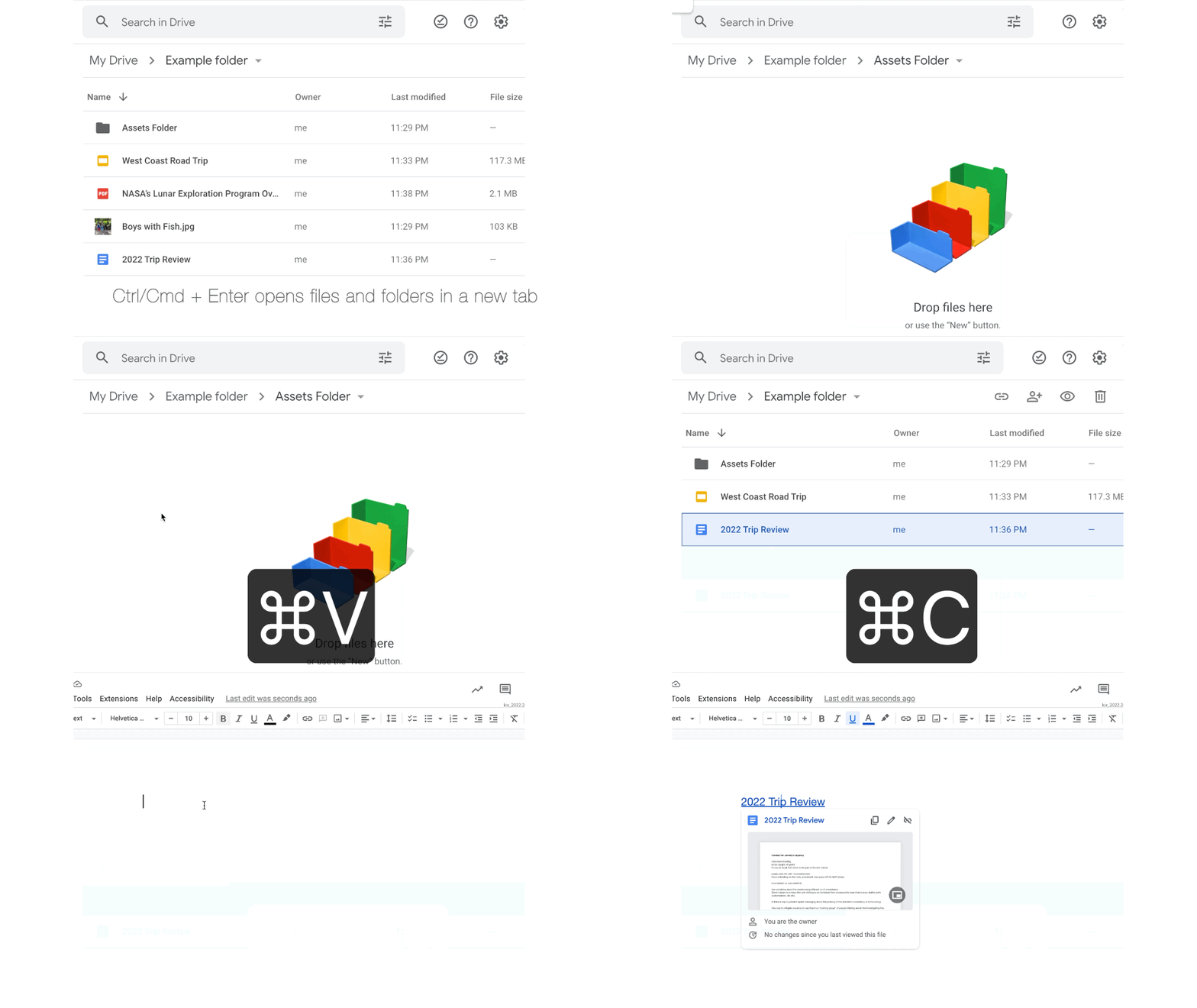
The update introduces the ability to use copy, cut and paste shortcuts - Ctrl + C, Ctrl + X and Ctrl + V (and macOS equivalents) - to transfer files between Google Drive folders with greater ease.
“This saves you time by allowing you to copy one or more files and move them to new locations in Drive, and across multiple tabs, with fewer clicks,” explained Google in a blog post announcing the changes.
Google Drive copy-and-paste
As a side-effect of the transition to remote and hybrid working, many knowledge workers now depend on a larger volume of documents and spreadsheets to collaborate effectively, which makes managing cloud storage something of a difficulty.
This was especially the case under the previous Google Drive system, whereby users would have to lean on the clunky “Move to” feature or drag-and-drop mechanics to shift multiple files between locations.
However, with the introduction of copy-and-paste keyboard shortcuts, restoring order to a mess of files and folders should become a little easier.
As explained in the blog post, copying a file in Google Drive will also capture a link, which can be pasted into a document or email as a simple way to share content with co-workers or external partners.
Another feature bundled with the update is the ability to use the Ctrl + Enter shortcut to open files or folders in a new browser tab, providing an easy way to launch into multiple files at once or shift files between two folders.
The Google Drive update is already rolling out to workers whose companies have opted into receiving features in early-access. The rest of us should see the update take effect in the first week of June.
Building your dream website could soon be easier than ever thanks to a new update from WordPress.
The website builder has launched a stripped-back platform that costs just $5 per month, offering WordPress managed hosting and unlimited site traffic for what it calls "a revolutionary price".
WordPress Starter looks to offer a middle-tier option for users, sitting between the company's current Pro premium offering and its free basic option.
WordPress Starter
"From building your audience with a blog, to sharing your business, design, expertise, or experiences with the world. If you’re looking to make your work visible, and make it visual, the Starter plan has you covered," WordPress wrote in its announcement.
Subscribers to the new platform will get access to a wide selection of tools helping them to set up and personalize a website, starting from custom .com domains instead of the company's basic wordpress.com offering.
When building their site, users will benefit from 6GB of storage for their assorted photos and images, and will get access to Google Analytics as a default alongside WordPress' own tools. The company says this partnership will allow website owners much greater visibility into who is visiting their site, what content they are engaging with, and much more.
For those looking to dip their toes into the world of ecommerce, WordPress Starter will give access to a number of useful tools and payment platforms, including a Payment Button block that provides a fast way to take payments and set up subscriptions with Stripe. They'll also get access to the Donations Form block as a way to accept tips and donations, and the Premium Content block for the option to sell one-off, monthly, or yearly premium content.
WordPress says it will also soon be be introducing a range of add-ons that will pair with Starter to give users "an extra boost".
Back in April 2022, the company introduced major price changes without warning, replacing all of its paid plans with a single Pro plan costing $180 a year with no option to spread costs out monthly, a facility previously available with the old plans.
WordPress had also reduced the storage on its free plan significantly, from 3GB to just 500MB, so the new Starter plan may prove popular with those seeking a little more space.
Students the world over rely on Google Docs for quick and easy text editing that is constantly saved to the cloud.
But the comapny isn't standing still, and has announced a new Google Docs update that gives users the ability to select multiple pieces of text from different places at once.
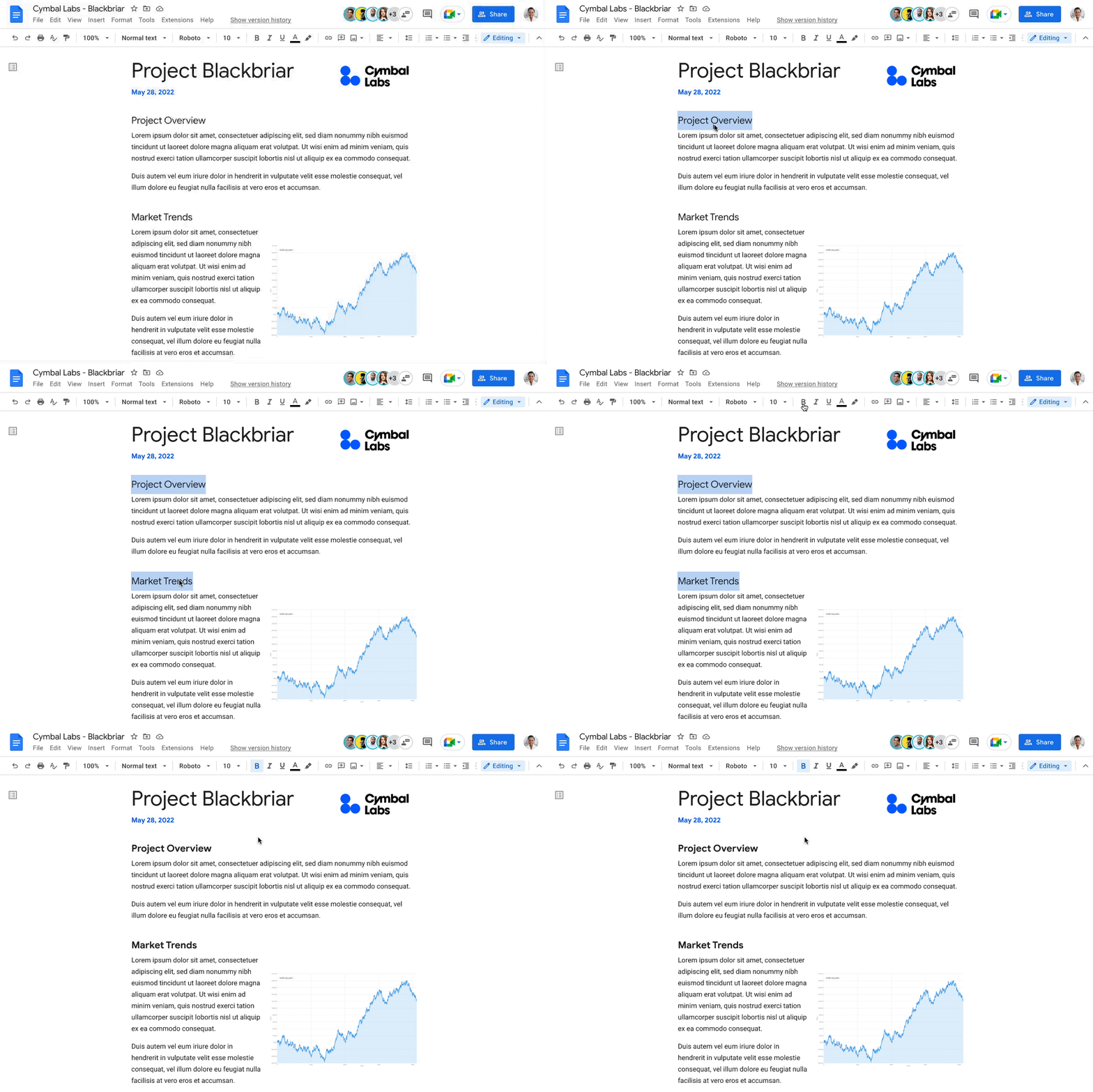
"In Google Docs, you can now make multiple text selections at once, and apply actions such as delete, copy, paste, or format to all selections," the company says. "This will make formatting and editing documents faster by eliminating the need to make repetitive changes, increasing your overall productivity."
(Image credit: Google)
Moving quickly through a document and bolding things, as the above example shows, without having to laboriously select each line of text is a game changer.
Microsoft Word already has a similar feature – when you hold down CMD or CTRL and select the text – but it's good to see Google now bring something similar to Docs with minimal fuss.
A battle for the workplace
Google Docs forms part of the best productivity tools with aplomb, especially given that, unlike Microsoft 365, personal use of Google's services is available for free.
As hybrid working has become increasingly popular worldwide, Microsoft and Google have been battling it out for the glory of having the most businesses use their tools.
While Microsoft has the deep relationships with companies, Google has been updating its Google Workspace suite regularly with important updates.
In some ways, Workspace is the best positioned going into the future as Google's services are free, which means that a whole generation of students have used them religiously for years.
Sadly, it isn't often employees that get to pick their own tools – and it's not like Word and company are niche – but it's something for Google to take comfort in.
After three years spent grounded in the Paramount studios hanger, Top Gun: Maverick finally flies into theaters this week – but the blockbuster sequel wasn’t the inevitability many may have thought it to be.
In an exclusive interview with TechRadar to promote the upcoming movie, Top Gun: Maverick producer Jerry Bruckheimer revealed just how close the movie came – or rather didn’t come – to being made in the last 20 years, and shared an unsurprising story about how leading man Tom Cruise finally secured lift-off for the long-awaited project.
“It was never close,” Bruckheimer told us at a press event in London. “And it was never about the technology. Making a sequel came down to taking the right approach. Of course, technology had something to do with making the movie better – because we could get those cameras in the plane – but it was always about the story, the character journey and the emotion.”
Cruise himself famously turned down several sequel proposals following Top Gun’s stratospheric success 1986 – the actor recently told the BBC he spent years rejecting “terrible ideas that didn’t work in any way, shape or form” – but it was Oblivion director Joseph Kosinski who would finally convince him to reconsider his reluctance.
“So Joe had this idea for the story,” Bruckheimer said, “and we flew to Paris where Tom was shooting Mission: Impossible Fallout. We sat with him between setups – he had about half an hour to sit with us – and Joe came there with a lookbook, a poster and the fact that he wanted to shoot everything real. He told Tom the story, and Tom pulled out his cell phone, called the head of Paramount and said, ‘I want to make another Top Gun.’ And that's what got the movie propelled. That's what made it happen.”
So there you have it. In a single phone call, Tom Cruise took Top Gun: Maverick from unlikely concept project to in-development sequel. And it was only once he, Bruckheimer and Kosinski had ironed out the movie’s story that the trio turned to the magic of modern technology to bring it to life.
“The cameras were obviously the main difference [between this and the original Top Gun] – they were a big part of the fact that we could shoot digital,” Bruckheimer explained.
“Although it looks like traditional film – and we made sure it looked that way, that was a prerequisite from Tom and Joe – we used a process to make sure everything had the same grain feeling that the original movie had. So that was a big advantage, and the lighting, too.
“Everything has gotten smaller and better in the last 35 years. Even the editing process – the machines we edited the movie with were completely, completely different to those we used on the original Top Gun.”
As for whether Bruckheimer believes the theatrical experience can maintain its importance in the era of streaming services, his stance betrays that of a legendary producer whose career – and almighty fortune – has been built on audiences’ willingness to embrace the big screen.
“It’s always, always about the story,” he told us. “If you're lucky enough to get a Tom Cruise [to attract audiences into theaters], that's great. But it's about the story and the emotion of a movie – but of course it’s nice to have a recognisable actor that you know is brilliant, that draws you out of your house.”
For what it’s worth, we think Top Gun: Maverick has all three in abundance: a great story, plenty of emotion and an actor who, despite pushing 60, remains at the absolute peak of his powers. See it on the biggest screen possible.
Top Gun: Maverick releases exclusively in theaters worldwide on May 27.
Samsung Display has been working on a new way of producing OLED pixels for its QD-OLED TV panels, according to a presentation by a South Korean professor, reported by The Elec. Specifically. Samsung has been working on a better kind of blue OLED pixel, and this could be just the boost the technology to needs to be able to start dropping its prices and competing directly with the regular (and cheaper) OLED panels used in the best OLED TVs currently.
Here's the background: red and green OLED pixels are made of phosphorescent materials that provide 100% efficiency for brightness internally. But blue OLED pixels are made from florescent materials that provide only 25% efficiency.
Unlike regular OLED screens, which use red, green and blue pixels together to make colors, QD-OLED screens only used blue and green pixels (with the layer of quantum dots converting the light to other colors). The Elec notes that currently, QD-OLED screens use three layers of blue pixels (because their efficiency is so limited), and one layer of green pixels.
Samsung Display's research was apparently to create a phosphorescent blue pixel, hopefully bringing the blue efficiency up to match the other colors – the company has already published a paper based on its work. But according to Professor Kwon Jang-hyuk of Kyung Hee University, Samsung is "prioritizing applying phosphorescent blue OLED material on its advanced TV panel," says The Elec.
Professor Kwon said that "Samsung Display likely had made a process on developing phosphorescent blue OLED material" in practice, not just in theory, and he said that Samsung intends to show off something using the new tech "within the year".
The advantage here is that Samsung wouldn't need to use four layers of pixels anymore – it could reduce it down to just two: one layer of blue, one layer of green. This would reduce both the materials needed and the complexity of production of its OLED panels – it would make them more efficient to produce, as well as more efficient at putting out light.
More efficient production means cheaper production, and with QD-OLED TVs currently ranking right at the very top of 4K TV prices, a price drop is exactly what they need to take them mainstream.
TechRadar has contacted Samsung Display for comment.
Analysis: A realistic claim, and might be necessary
As also noted by The Elec, Samsung Display isn't the only company zeroing in on creating viable phosphorescent blue OLED pixels. UDC, which is based in the US, has said that it plans to bring the technology to market in 2024, so assuming that's true, it certainly doesn't seem unlikely that Samsung Display would be able to achieve it at around the same time, or even slightly earlier.
The first QD-OLED TVs – the Sony A95K and Samsung S95B – are extremely high end. With some regular OLED TVs now often available for around $1,000 / £1,000 or even less, QD-OLED looks to be a long way off from being able to match that. But as the cost of living crisis goes on, the market for premium TVs might get pinched, with people choosing to save money and get a TV that's 95% as good for half the price.
The sooner Samsung Display can reduce the price of creating QD-OLED panels the better, because it's an incredibly exciting technology, and we'd hate to see it get left behind. Between Samsung Display generally being able to improve production yields (reducing costs) and the promise of this new technology, it looks like the company's got a bright future. (Sorry.)