Monday, 31 May 2021

Bollywood actress files plea against 5G implementation in India - Here's why

One of the most popular movies of yesteryear Bollywood top star Juhi Chawla is Darr, which in English means fear. And these days she seems revisited by darr, but apparently of the real kind. The actress has filed a suit against the implementation of 5G in India alleging harmful effects of radio frequency radiation.

In a plea filed with the Delhi High Court, she claimed that 5G will lead to RF exposure to all the living beings on earth which will be 100 times more than the current level and lead to serious, irreversible effects on humans.

She said 5G should not be rolled out in India till it is certified safe after a thorough research finding on the subject.

In a sense, it is surprising to see Juhi Chawla take up such an issue. Like many film personalities, she has also been an environmental 'activist' of sorts. But practically none expected her to make such a move. 

An actress filing a court case in a hot-button technology issue was the kind of news to send the television networks into a tizzy. And it sure did in India today.

Juhi's contention

Juhi Chawla's plea in the court cited clinical and experimental evidence of damage to DNA, cells and organ systems in plants and animals, and human diseases like cancer, and diabetes being caused by electromagnetic pollution which is generated by wireless mobile phone technology.

Stating that the case was filed to get the government to certify to the public that 5G technology is safe to humankind, man, woman, adult, child, infant, animals and every type of organisms, to flora, to fauna, Juhi also wanted the government to conduct an efficient research --- without participation of private interest --- and furnish the report and declare whether or not the implementation of 5G in India would be safe.

She said: “We are not against the implementation of technological advancements. On the contrary, we enjoy using the latest products that the world of technology has to offer, including in the field of wireless communications. However, whilst using the latter kind of devices, we are in a constant dilemma, because after doing our own research and studies regarding the RF radiation from wirefree gadgets and network cell towers, we have sufficient reason to believe that the radiation is extremely harmful and injurious to the health and safety of the people.”

The case has been posted for hearing on June 2.

Jury is still out on 5G's impact on health

On the ground in India, the Department of Telecom (DoT) has earlier this month approved applications of telecom companies Reliance Jio, Bharti Airtel, Vodafone Idea and MTNL to conduct 5G trials. 

Bharti Airtel, Reliance Jio and Vodafone Idea have been given trial spectrum for six month to test 5G technology in the country. State-owned telecom firm MTNL will also join the trial soon.

The trials will be conducted at various locations including Delhi, Mumbai, Kolkata, Bengaluru, Gujarat and Hyderabad.

The application of 5G in Indian settings will get tested, and these ironically will include tele-medicine and tele-education and drone-based agriculture monitoring. 

In general, 5G technology is expected to deliver 10 times better download speed than 4G and up to three times greater spectrum efficiency. 

But on the health front, the jury is still out on the issue. There are many scholarly articles available on the internet debunking the health fears on 5G as being unfounded. As it happens, there are equally many medical research papers that claim that there is no reason to believe that 5G is safe.

In the event, there has been plenty of noise from both the campers, confusing the common public.

  • Get up close with consumer tech news that you can use, latest reviews and buying guides. Follow TechRadar India on TwitterFacebook and Instagram!
https://ift.tt/3i0l6Ou

This cool Microsoft Teams update will make sure nothing gets lost in translation

Microsoft is in the process of migrating a useful Teams feature to mobile clients, in a bid to support multilingual workers and help make international collaboration easier.

As revealed in two new product roadmap entries, Teams for iOS and Android will soon receive inline message translation, which is currently only available with the desktop version.

“Inline message translation in channels lets users translate channel posts and replies into their preferred language. To translate a message, press-and-hold the channel post or reply and then select ‘Translate’,” said Microsoft.

According to the roadmap, messages will be translated into whichever language the user has marked as default, but translation settings can also be changed via Settings > General Translation.

The translation feature is still undergoing testing, but is expected to roll out to smartphone users in July.

Microsoft Teams update

With the rise of remote working, companies have found themselves able to take full advantage of an international pool of talent. However, an increasingly multilingual workplace also comes with a few inherent challenges, communication chief among them.

By bringing the inline translation feature to mobile platforms, Microsoft will hope to plug a potential avenue for miscommunication, helping those that use a second language at work to double-check they have fully understood messages received over Teams.

With people from external organizations now able to join Microsoft Teams group chats, the translation feature could also help users communicate more effectively with international partners and clients.

The move to bring inline translation to Android and iOS is also part of a wider accessibility push. Since March 2020, Microsoft has rolled out a range of Teams features designed to ensure everyone is able to make full use of the platform, such as live captions, transcription and new meeting views.

Most recently, the company announced a variable playback speed feature for meeting recordings, which will be helpful to all users, but especially anyone that suffers from hearing loss or conditions such as dyspraxia.

https://ift.tt/3paicIn

FireOS: does Amazon's software compete with Android?

Ever since Google’s Android operating system debuted back in 2010, it’s allowed other vendors to create their own take on it, from smartphones to tablets.

Amazon has done precisely that with FireOS, curating a look that makes it known that you’re in Amazon’s world.

It even appeared in the much-maligned Amazon Fire Phone back in 2014, which only lasted for a year before it was cancelled.

However, the similarities between FireOS and Android are too many to count, but there are some use cases that could make you wonder if a Fire device could work in your household.

Differences with Android

FireOS first appeared in 2012 with the Kindle Fire tablet, as a means to rival Apple’s iPad mini. Since then it split into different versions, appearing on devices such as the Fire TV, the Echo Show and Fire tablets. However, Amazon has made sure to keep the user interface and the color scheme to match its branding, with orange abound when you access the settings app, or browse the apps installed on your Fire tablet.

Instead of Google’s Play Store, you access the Amazon App Store instead. This features a wide variety of apps, but it's also accessible from Amazon’s own website. This way, if you see an app you like there, you only have to purchase it and it will download directly to your Amazon Fire device. It’s a much easier way for Amazon to manage what apps are available for the Fire line.

But the more you delve deeper into FireOS, the more you may find familiarity, especially if you have an Android phone. You can avoid Amazon’s gatekeeping and use alternative third-party apps instead, enabling features such as mouse support and even the ability to run games and movies that aren’t present on Amazon’s store.

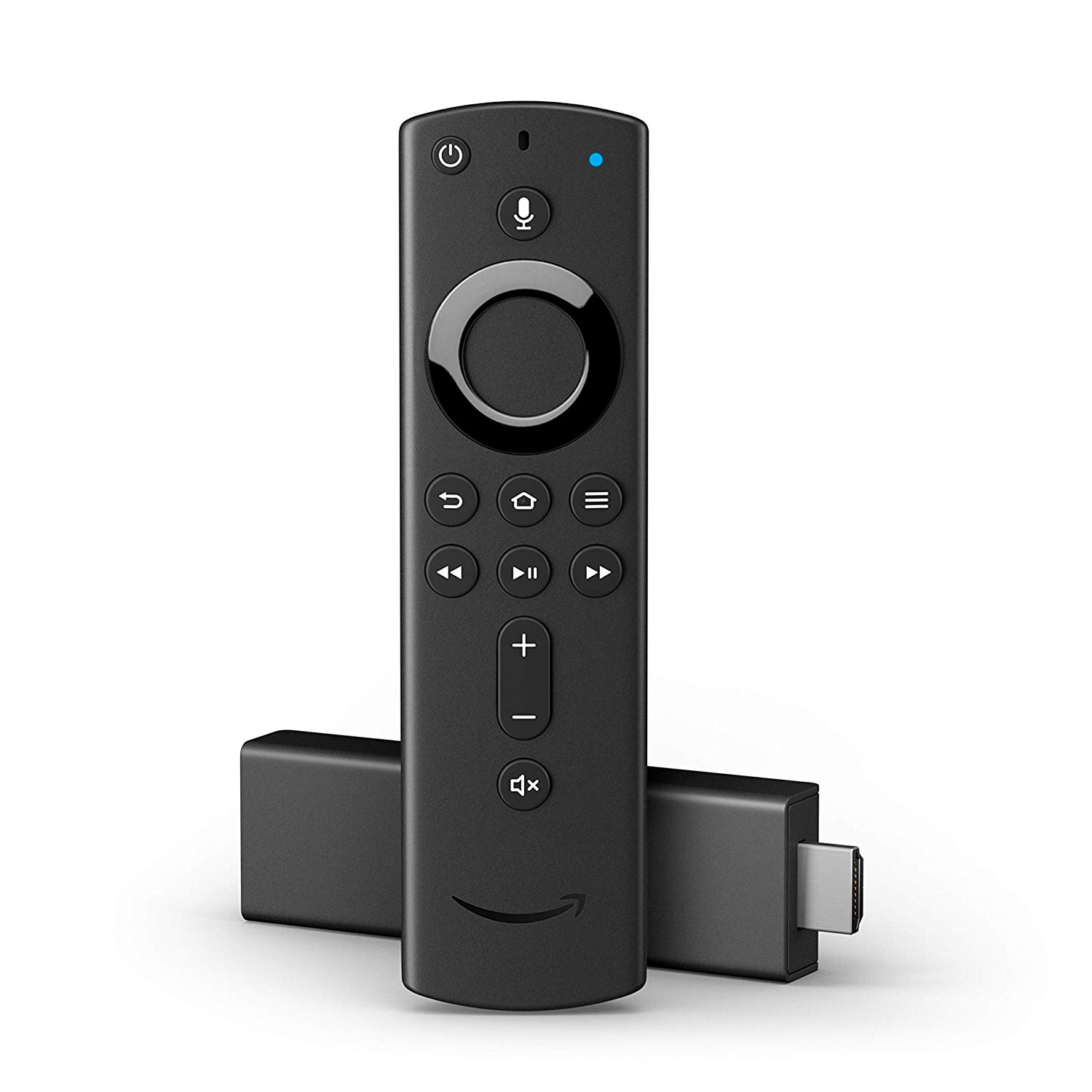
Amazon Fire TV

(Image credit: Amazon)

Analysis: Here comes a new Challenger

As FireOS runs on a version of Android, it also means that it’s open to a wide variety of games. For example, the Xbox GamePass app can be used on a Fire tablet, and with some rejigging, a Fire TV stick. Essentially you will be able to play Halo 2 on your TV, with a controller of your choice paired to the device. It’s an incredibly appealing aspect, especially for those who don’t have an Xbox. You can just launch the app and carry on with your game of choice.

However, with Amazon’s own gaming streaming service, called Luna, in testing, it could help transform FireOS into a much more appealing gaming device to enable even more access to games that only require a controller and an internet connection.

Prime Day Incoming

As Amazon Prime Day is rumored to be landing around the end of June, it also means that it’s a great opportunity to look into a new Amazon device, especially if you want something to just play games on.

With restrictions slowly lifting and more opportunities available to meet with people, travelling will come back into force again. This only means that having a Fire HD tablet just for watching your favorite James Bond films could be the perfect use for one.

https://ift.tt/3yQ6BTu

Windows 10 update is messing with the taskbar – but there’s an easy fix

Windows 10 recently received a new preview update, and it’s reportedly causing trouble with the taskbar for some users.

Patch KB5003214 is a preview of June’s cumulative update, but as well as the known issues listed by Microsoft, there’s a problem with icons on the taskbar going awry, as flagged up by Windows Latest.

This patch is for May 2021 Update, October 2020 Update and May 2020 Update versions of Windows 10 (which are all essentially the same version, just with minor changes in the newer ones). KB5003214 began rolling out earlier this week with some bug fixes, and the update also made the ‘News and interests’ feature on the taskbar available to everybody.

And it’s the latter where the taskbar problem reportedly lies. Some users are complaining that the system tray area of the taskbar (in other words, the icons on the far-right) are getting messed up by this patch, with this apparently being related to having ‘News and interests’ enabled.

Some folks got in touch with Windows Latest to describe the problem, with one reader of the site saying that their system tray icons are overlapping or disappearing, and generally suffering from corruption of one type or another, “especially” with the News feature turned on. Others have observed problems with Action Center notifications, or the network icon no longer working properly, or the taskbar search box disappearing, and icons vanishing or randomly shifting around in the system tray.

One user who installed the patch reported on Microsoft’s feedback hub: “After installing quality cumulative preview update KB5003214, I’ve got some issues with the taskbar, mainly right side icons will move randomly, disappear (hide) or will be scrambled. Tested on a Surface Book 3 business edition and Alienware M17 R5.”

The user observed that uninstalling the update made the issue go away.

Another report on the feedback hub complained: “After installing KB5003214, my taskbar (in the bottom right with clock, notification centre, network icon etc) all broke. The icons appeared over the clock for a bit then disappeared.”

A denizen of Reddit also reported ‘graphical issues’ with the taskbar’s system tray being messed up, or even vanishing entirely.

There are also some users experiencing display scaling issues which could be related to KB5003214, and again there’s a thread on Reddit where folks are complaining about the icon for the new feature looking fuzzy or out of focus.

Quick fixing

Of course, preview updates are still in testing, so it’s not surprising that there might be problems – though these sound like some particularly frustrating niggles to still be left in at this point.

Several potential easy fixes for the issue have been pointed out though, and one we’ve already mentioned: simply uninstall KB5003214. However, there are also reports claiming that just turning off the News widget on the taskbar will cure the icon corruption issues, a much simpler fix.

A possible workaround is described by ‘old_old_geek’ on Reddit: “After booting has finished, right click on the taskbar and select Taskbar settings. Toggle the setting for ‘Use small taskbar buttons’. After the taskbar is redrawn, toggle the setting again. This works for me. I’m assuming it’s because it forces the taskbar to be redrawn.”

Worryingly, another Reddit user suggests that: “News and interests causes this when its disabled. It’s like they purposely broke the taskbar so you would enable the feature.” Although that runs against the grain of what everyone else is reporting, namely that the gremlins manifest if the feature is enabled – not disabled.

Clearly enough, there’s an issue of some kind here, and hopefully it’s one Microsoft can fix before this preview update is rolled out as the June cumulative update.

  • Don’t forget that Amazon’s Prime Day 2021 sale is on the horizon
https://ift.tt/3yPCAD0

Twitter is working on tweet reactions so it can be more like Facebook

How would you feel about being able to cheer or laugh at a tweet as well as like it? Hidden features not yet visible to users suggest that Twitter could be launching Facebook-style emoji reactions to tweets in the very near future.

Well-known tipster Jane Manchun Wong has a picture of how the upcoming feature is supposedly going to look, although not all of the reactions have the correct corresponding emoji at the moment – this still appears to be a 'work in progress' for now.

The reactions shown are Like, Cheer, Hmm, Sad and Haha, giving you a much wider range of responses to the tweets coming through on your timeline. At the moment, all you can do is 'like' a tweet, which used to be called 'favoriting' a tweet.

This isn't completely out of the blue: for quite some time now we've been hearing rumors that Twitter is working on this feature. It makes sense to give users a broader range of reactions they can use, matching the diverse types of content that get posted.

See more

From this leak at least we don't get any indication of when tweet reactions might appear. That some of the code is already deployed suggests that a launch isn't too far away, though it doesn't look as though the feature is near to being finished at the moment.

It's been a busy time for Twitter leaks and rumors lately, with the social network about to unveil a Twitter Blue subscription service that will give paying customers some extra features – features said to include the ability to recall sent tweets and up to six different color schemes to play around with.

The rumors suggest that the powerful Twitter client TweetDeck could soon become a paid-for extra too. TweetDeck on the web offers real-time timeline updates, advanced search functionality and plenty more, and has long appealed to power users.

When Twitter does have something official to say about all of this, expect a barrage of announcements to arrive, covering new features and the subscription plan (tipped to cost $2.99 a month). We will of course keep you updated as all of this news breaks.

https://ift.tt/3yNKDjL

Confusion in Indian OTT platform space: Two self-regulatory bodies on the anvil

It is the best of times. It is the worst of times. For the Indian OTT platforms, that is.

Thanks to the pandemic and the subsequent shut down of cinema halls, the streaming platforms have seen enormous spike in the number of followers.

Meanwhile, the OTT platforms as an industry have been mandated to form a self-regulatory body under the Information Technology (Intermediary Guidelines and Digital Media Ethics Code) Rules, 2021. 

And this is where a major schism has developed in the industry, with it split as broadcaster-owned OTT platforms owing allegiance to the Indian Broadcasting and Digital Foundation (IBDF) on one side, and the standalone OTT platforms, under the aegis of the Internet and Mobile Association of India (IAMAI) on the other.

The story so far, and the IBDF is born

All along, almost all the OTT players were aligned with the IAMAI, which was kind of the apex body to represent the OTT industry. But just as the deadline for new statutory self-regulatory body (which will deal with the complaints about content on platforms) was kicking in, the Indian Broadcasting Foundation (IBF), the apex body of (television) broadcasters, renamed itself to Indian Broadcasting and Digital Foundation (IBDF), and expanded its purview to digital streaming firms, too.

And this is where the penny dropped. The industry was quickly riven into two groups. One that are owned by broadcasters, and other that are standalone streaming platforms.

In the event, the industry will now have two apex bodies, and two self-regulatory bodies.  

For the record, ten OTT players namely Netflix, Amazon Prime Video, ALTBalaji, Hungama Play, MX Player, ShemarooMe, Aha, Lionsgate, Firework TV, and hoichoi have decided to stay in the IAMAI camp.

Platforms like Disney+ Hotstar, Zee5, SonyLIV, Voot, Sun NXT, Discovery+, Jio TV, and Jio Cinema will be part of the IBDF stable.

IBDF names panelists for its self-regulatory body 

IBDF is making all the early moves. It has said the OTT platforms will be a part of a separate subsidiary within the rechristened IBDF, and dealt with separately.

And it is also reaching out to the other side. The IBDF is sending out letters of invitation to Netflix, Amazon Prime Video, MX Player, Eros Now, and ALTBalaji, among others, to join its fold. The membership of IBDF's self-regulatory body is on an invitation basis. So not all may be lost, and the industry still can join forces together. 

Meanwhile, without wasting much time, the IBDF has appointed Justice (Retd.) Vikramjit Sen as the Chairman, along with six other eminent industry members for the newly formed Digital Media Content Regulatory Council (DMCRC), its self regulatory body - the Level II structure as mandated by the IT Rules 2021

The body constitutes prominent personalities from the media & entertainment industry and online content providers.

The other members include filmmaker Nikkhil Advani, artist, filmmaker and writer Ashwiny Iyer Tiwari, writer and director Tigmanshu Dhulia and CEO Banijay Group Deepak Dhar, General Counsel, Sony Pictures Ashok Nambisan, and Chief Regional Counsel, Star and Disney India Mihir Rale.

IAMAI is also at it

In the event of any complaint against any content on any of the platforms that is not resolved by the platform concerned, this body will review the same. And if this body is also unable to solve the issue, a government-controlled committee will come into picture.

Meanwhile, it is learnt that the IAMAI is also working towards setting up and operationalising its self-regulatory body.

Two different organisations, and two different self-regulatory bodies do not bode well. It will only add to the confusion. The government will have to use its clout to restore some order in the situation.

https://ift.tt/3p5CKBL

Confusion in Indian OTT platform space: Two self-regulatory bodies on the anvil

It is the best of times. It is the worst of times. For the Indian OTT platforms, that is.

Thanks to the pandemic and the subsequent shut down of cinema halls, the streaming platforms have seen enormous spike in the number of followers.

Meanwhile, the OTT platforms as an industry have been mandated to form a self-regulatory body under the Information Technology (Intermediary Guidelines and Digital Media Ethics Code) Rules, 2021. 

And this is where a major schism has developed in the industry, with it split as broadcaster-owned OTT platforms owing allegiance to the Indian Broadcasting and Digital Foundation (IBDF) on one side, and the standalone OTT platforms, under the aegis of the Internet and Mobile Association of India (IAMAI) on the other.

The story so far, and the IBDF is born

All along, almost all the OTT players were aligned with the IAMAI, which was kind of the apex body to represent the OTT industry. But just as the deadline for new statutory self-regulatory body (which will deal with the complaints about content on platforms) was kicking in, the Indian Broadcasting Foundation (IBF), the apex body of (television) broadcasters, renamed itself to Indian Broadcasting and Digital Foundation (IBDF), and expanded its purview to digital streaming firms, too.

And this is where the penny dropped. The industry was quickly riven into two groups. One that are owned by broadcasters, and other that are standalone streaming platforms.

In the event, the industry will now have two apex bodies, and two self-regulatory bodies.  

For the record, ten OTT players namely Netflix, Amazon Prime Video, ALTBalaji, Hungama Play, MX Player, ShemarooMe, Aha, Lionsgate, Firework TV, and hoichoi have decided to stay in the IAMAI camp.

Platforms like Disney+ Hotstar, Zee5, SonyLIV, Voot, Sun NXT, Discovery+, Jio TV, and Jio Cinema will be part of the IBDF stable.

IBDF names panelists for its self-regulatory body 

IBDF is making all the early moves. It has said the OTT platforms will be a part of a separate subsidiary within the rechristened IBDF, and dealt with separately.

And it is also reaching out to the other side. The IBDF is sending out letters of invitation to Netflix, Amazon Prime Video, MX Player, Eros Now, and ALTBalaji, among others, to join its fold. The membership of IBDF's self-regulatory body is on an invitation basis. So not all may be lost, and the industry still can join forces together. 

Meanwhile, without wasting much time, the IBDF has appointed Justice (Retd.) Vikramjit Sen as the Chairman, along with six other eminent industry members for the newly formed Digital Media Content Regulatory Council (DMCRC), its self regulatory body - the Level II structure as mandated by the IT Rules 2021

The body constitutes prominent personalities from the media & entertainment industry and online content providers.

The other members include filmmaker Nikkhil Advani, artist, filmmaker and writer Ashwiny Iyer Tiwari, writer and director Tigmanshu Dhulia and CEO Banijay Group Deepak Dhar, General Counsel, Sony Pictures Ashok Nambisan, and Chief Regional Counsel, Star and Disney India Mihir Rale.

IAMAI is also at it

In the event of any complaint against any content on any of the platforms that is not resolved by the platform concerned, this body will review the same. And if this body is also unable to solve the issue, a government-controlled committee will come into picture.

Meanwhile, it is learnt that the IAMAI is also working towards setting up and operationalising its self-regulatory body.

Two different organisations, and two different self-regulatory bodies do not bode well. It will only add to the confusion. The government will have to use its clout to restore some order in the situation.

https://ift.tt/3p5CKBL