Showing posts with label Portable Devices. Show all posts

Friday, 10 July 2020

JBL One Series 104-BT and 104 BTW Bluetooth speakers now available in India

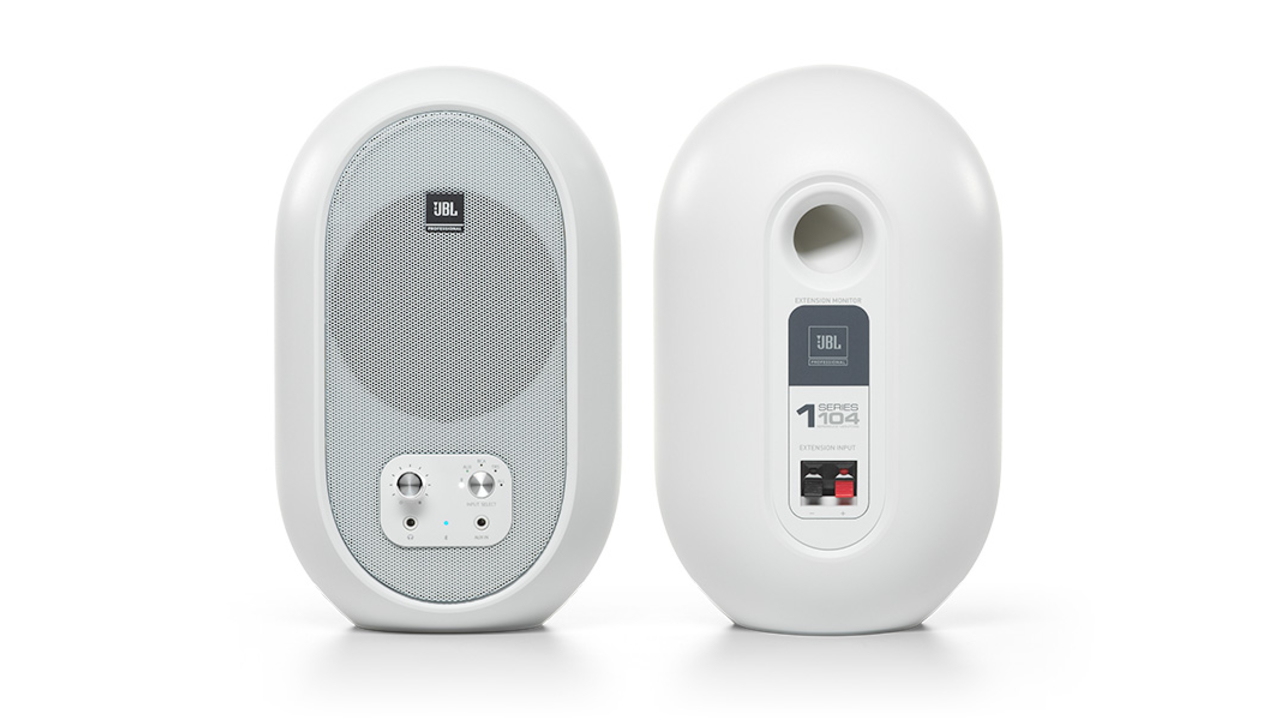
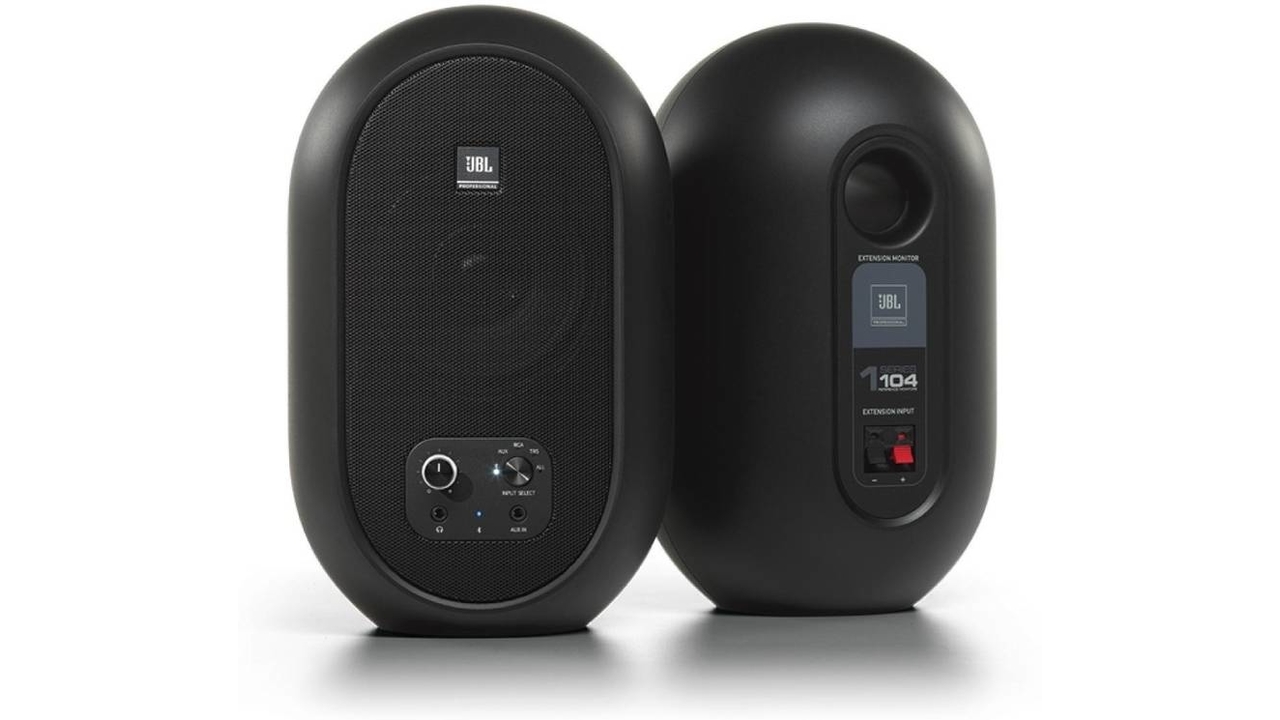
Samsung backed JBL has announced the launch of Bluetooth enabled JBL Professional One Series 104-BT and 104-BTW desktop reference monitors in India. These speakers are aimed at content creators and audio professionals enabling them to stream high-quality audio content both wirelessly and with standard wired connectivity.

Image 1 of 2

(Image credit: JBL)
Image 2 of 2

(Image credit: JBL)

JBL One Series 104-BT speakers price and features

These professional-grade JBL Professional One Series 104-BT and 104-BTW can be paired with both desktops as well as laptops. Available in two different colour options – Black and White, these speakers are priced at Rs. 11, 4999 and can be bought from Flipkart.

Touted to deliver “detailed sound while mixing and editing”, the JBL One Series 104-BT speakers sport high-bandwidth Bluetooth 5.0 to stream audio to stream content from your preferred devices.

Since these speakers are designed to sit on the desktop, the input array is located on the front panel of the speakers for easy access. Apart from the wireless capabilities, the One Series 104 BT Speaker’s offers Aux, RCA and TRS connectivity options. 

As per the company, the speakers can offer low-frequency performance at 60Hz and a 60-watt Class D power amplifier distributes 30 watts per speaker offering “clear, undistorted, loudest-in-class output.”

https://ift.tt/3feHlfq

Monday, 22 June 2020

You can sign up for the iOS 14, iPadOS 14 and macOS 11 beta now – well, sort of

Apple has unveiled iOS 14, iPadOS 14 and macOS 11, showing off the various features that'll come to iPhones, iPads, and Macs in the near future, but right now, we don't know exactly when we'll be able to download them – even the beta versions are only slated for a vague 'July' release date.

While you can't get iOS 14, iPadOS 14 or macOS 11 on your device right now, you can actually sign up for the beta versions already. This means that, when the betas are released by Apple you'll already be most of the way through the process of getting them, and you'll get notified by Apple too.

This means it'll be way quicker for you to get iOS 14, so you can test out all the new features like home screen widgets or tweaks to Messages before everyone else. This also works for iPadOS14, as well as the new macOS 11 Big Sur, tvOS 14, and possibly also watchOS 7 – though Apple doesn't list the latter on its website right now.

So without wasting any more time, we'll take you through the steps of signing up to the iOS 14, iPadOS 14, macOS 11 and tvOS 14 betas, so you can be the first in line to download the new operating systems.

How to sign up to the iOS 14 beta

The various Apple betas are available to people who join the Apple Beta Software Program(ABSP), and the key thing to know is that you can join it now, cutting out most of the work you'd otherwise need to do when the various Apple OS public betas launch in July.

To join, simply head to the Apple Beta Software Program website, and click Sign Up to go through the stages of becoming a member of the program. If you've already been part of an Apple beta, simply click Sign In.

Now your Apple ID account will be linked to your ABSP account. Next, click Enroll your Device, select whichever operating system you want to join the beta program for, and go through the stages to make sure your device is signed up and ready for the iOS 14, iPadOS 14, macOS 11 or tvOS 14 beta.

This will involve downloading a special profile onto your device. Make sure it's charged up, and you've backed up your data just in case.

For now, this is all you can do. However, by going through this process now, you've ensured you won't have to do it again when the iOS 14 beta lands, and on top of that you'll get a notification on your device when it's available, so you don't have to keep checking back at TechRadar to see if it's opened up (although you can certainly do that anyway).

So while you won't gain anything extra by doing this now, you'll save time later, and beat your friends to the punch. 

https://ift.tt/2Z11cry

Billions of online tracking records leaked online

A security researcher has discovered an unsecured database which contains billions of tracking records about users' activity online.

What makes this discovery particularly interesting is the fact that the database belongs to BlueKai which Oracle purchased for around $400m back in 2014. 

BlueKai is a startup that uses website cookies and other tracking technology to follow users around the web. Just based on which websites users visit and which emails they open, the company and others like it can infer a great deal of information about them and marketers use this data to deliver targeted ads that are more likely to be clicked on.

Security researcher Anurag Sen discovered the unsecured database and reported his findings to Oracle with the help of Hudson Rock's CEO and former TechCrunch reporter Roi Carthy, who served as an intermediary.

Tracking records

After reviewing the data shared by Sen, TechCrunch found names, home addresses, email addresses and other identifiable data in the database. The data even revealed users' sensitive web browsing activity from purchases they had made to newsletters they unsubscribed from.

To deliver more precise ads, BlueKai uses a never-ending supply of data from a variety of sources. The company even uses covert tactics such as allowing websites to embed invisible pixel-sized images or tracking pixels to collect information about a user's system including the hardware, operating system, browser and type of connection they have when they open a webpage. This data can be used to create a unique fingerprint of a person's device which follows them across the internet regardless of which device they're using.

According to an estimate from the site Whotracks.me, BlueKai tracks just over one percent of all web traffic online. The company tracks web traffic on a number of the most popular sites online including Amazon, ESPN, Forbes, Glassdoor, Rotten Tomatoes and others. The marketing firms that pay for access to BlueKai's data though, never see names, addresses or any other personal data which is why the discovery of its exposed database is so revealing.

In a statement to TechCrunch, Oracle spokesperson Deborah Hellinger explained that two companies had failed to properly configure their services and this led to the database being exposed online, saying:

“Oracle is aware of the report made by Roi Carthy of Hudson Rock related to certain BlueKai records potentially exposed on the Internet. While the initial information provided by the researcher did not contain enough information to identify an affected system, Oracle’s investigation has subsequently determined that two companies did not properly configure their services. Oracle has taken additional measures to avoid a reoccurrence of this issue.”

  • We've also highlighted the best VPN services

Via TechCrunch

https://ift.tt/37TEnKv

Here’s a technology that could make laptops and smartphones last longer

When you think about the parts of our electronic devices that consume the most power, the screen and processor usually spring to mind. However, data transfer - either within the device or over the waves (i.e. to cloud storage providers) - is consuming more and more power.

Scientists at the National University of Singapore (NUS) have come up with an innovative technique that promises to reduce the amount of energy consumed during memory-intensive processes by up to 80%. In other words, a fivefold improvement in efficiency over current solutions when bits travel on silicon.

They came up with a new type of network-on-chip that decreases quality a little bit, but also reduces power consumption significantly. This is achieved by adjusting the amplitude of the transmitted signal dynamically; using conventional values for mission-critical tasks to ensure maximum accuracy and lower values for greater power reductions.

Check out TechRadar Pro's remote working survey

$27,000 worth of prizes up for grabs, which one lucky winner will take home. Help us find out how the pandemic has affected our readers and their working lives by filling out the survey below. T&Cs apply, prize details can be found here.

Smarter than usual

The example provided by the team was that of imperceptible video quality degradation when full quality is unnecessary, for example when the user looks away from the screen, when ambient light is low or when battery life is short.

Similar scenarios are also applicable to more powerful (and power hungry) platforms such as desktop PCs, NAS boxes, laptops or even servers, but the key opportunity is to enable a full computer vision system - one that can replicate the human vision system while being viable from a power perspective.

The stated goal of the research is to build “a new breed of low-power smart cameras that could operate almost perpetually under the tight power budget extracted from the environment such as via a centimeter-sized solar cell”.

It's unclear when the technology will be rolled out for more practical use cases, but given TSMC - which manufactures chips for AMD, Nvidia and Qualcomm - supports the project for chip fabrication, we wouldn’t be surprised if it was sooner rather than later.

https://ift.tt/3ep5grW

Current-gen Marvel’s Avengers players will get free next-gen upgrade

With so many great games still to come for current-generation consoles during the second half of 2020, there exists an awkward limbo where gamers must decide whether to play immediately or hold out for next-gen versions at the end of the year.

Thankfully, publishers and console-makers are trying to make the transition between console generations as smooth as possible.

Microsoft is at the forefront with its Xbox Smart Delivery program, which gives players next-gen versions of selected Xbox One games for free, and now Square Enix has announced that Marvel's Avengers will be available at launch for both PlayStation 5 and Xbox Series X as a free upgrade for owners of the current gen version – either digitally or on disc.

"Featuring extremely fast load times, boosted resolution and fidelity, improved texturing and armor destruction, ray tracing, and more – Marvel’s Avengers will look and play great on next-gen systems," reads Square Enix's press release.

What you can expect on PS5

Though the free upgrade has been announced for both upcoming consoles, the press release only describes what players can expect for the PS5 version.

"The PlayStation 5 experience will be seamless and dynamic, fully utilizing the ultra-high speed SSD, the PS5 DualSense advanced haptics, and immersive spatial audio. To fully customize their visual experience, PS5 will also provide players with their choice of Enhanced Graphics Mode or High Framerate mode."

More information about the PS5 version of Marvel's Avengers was revealed on the official PlayStation blog, with developer Crystal Dynamics' chief technology officer Gary Snethen offering the inside scoop.

"PS5 greatly lifts the performance and graphics bar for consoles. The new GPU allows us to increase our texture resolution, push a higher level of detail farther from the player, enhance our ambient occlusion, improve our anisotropic filtering and add a variety of new graphics features such as stochastic screen-space reflections with contact-aware sharpening," said Snethen.

Long story short, this is great news for those who want to get a jump on Marvel's Avengers before the new consoles arrive late 2020. For more information on the game itself, Square Enix will be holding a Marvel’s Avengers War Table digital stream on June 24 at 10:00am PDT.

https://ift.tt/2V94qIk

This top security software is crashing Windows 10 version 2004

Following the release of Windows 10 2004, users have reported experiencing performance issues and even crashes when Malwarebytes 4.1 is installed on their systems.

The official Malwarebytes support forum has seen numerous users reporting problems with MBAM 4.1 after Microsoft released its latest Windows update back in May.

The issues caused by having the security company's software installed include random freezes, general slowness, video stuttering, blue screen of death (BSOD) crashes and Windows 10 becoming unresponsive.

However, not all users running Windows 10 2004 and Malwarebytes' software seem to be affected but there are enough requests for help on the company's forums to indicate that there is a problem.

Potential fixes

In a post on Malwarebytes forum, one user explained that they were experiencing issues after installing Windows 10 2004. However, they were able to mitigate these issues by disabling the software's ransomware protection feature.

To resolve the issues users are having, Malwarebytes also released a new beta version (4.1.1.71) of its security software at the beginning of June.

If you're a Malwarebytes user that is having similar issues, you can install the new beta version by going into the software's settings and enabling the “beta updates” setting under the General tab. After enabling this setting, you will need to check for new updates to install the beta version and its components package.

However, if you're still experiencing issues after installing the beta, then you should probably head over to the Malwarebytes forum for additional help.

Via BleepingComputer

https://ift.tt/2YpmMXJ

Sunday, 21 June 2020

Xiaomi pauses MIUI 12 beta development; Here’s why

MIUI is probably one of the most used custom Android skins thanks to not only the sheer number of devices Xiaomi sells but also because of the interesting features it comes with. Its latest version MIUI 12 has been in development for some time and has just started making its way to the flagship Xiaomi smartphones, however, the company has temporarily paused the development of this latest firmware.

As per this post on the company's official community forum, the beta development of the firmware has been halted from 26-06-2020 to 02-07-2020 due to the local Chinese Dragon Boat Festival.

The development team is supposed to resume working after over a week’s off from July 3 to ensure the previously announced timelines of MIUI 12 rollout can be met.

 To recall, the Android 10 based MIUI 12 was unveiled in April and comes with interesting features like a revamped dark mode, new 3D live wallpapers, updated settings menu with a graphical layout and improved gesture control apart from a whole lot of tweaks.

In the first phase the shiny new ROM is supposed to come to devices like the Mi 10 Pro, Mi 10, Mi 10 Youth Edition, Mi 9 Pro 5G, Mi 9 Transparent Edition, Mi 9, Redmi K30 Pro Zoom Edition, Redmi K30 Pro, Redmi K30 5G, Redmi K30, Redmi K20 Pro Premium Edition, Redmi K20 Pro, and Redmi K20. 

Recently the company announced the beta testing for the Redmi K20 series devices and a few budget Redmi smartphones with Redmi Note 9 series apart from Poco F1 and Poco X2 to follow suit. Since there is no official information if the holidays will derail MIUI12 rollout in India, we can assume that the Indian devices may continue to get the latest firmware as per the plan, so stay tuned.

https://ift.tt/3fLSkg9

The cheapest usable Android tablet right now comes with half terabyte storage

Gearbest usually offers up some excellent deals, but this one, well, we’re not sure about. It might be a genuine clearance sale or perhaps it's a typo, but we’ll leave our audience to decide for themselves. In the meantime, we’ve reached out to Gearbest for additional details.

Priced at $76.99 (£64.04/AU$121.11) with free shipping worldwide, this unnamed tablet is about the size of Huawei’s MediaPad T5. It has a 10.1-inch display (likely an IPS model), with a rarely-encountered resolution: 1960 x 1080 px.

The rest of the specification is as equally strange as the price point. The tablet is powered by a four-core CPU (the Mediatek MT6582) that was launched nearly eight years ago and comes with a Mali-400MP2 GPU.

Yet, it runs Android 9.0 with 8GB of RAM and 512GB of storage capacity, and wireless connectivity is provided by Bluetooth 4.1 and 802.11n (no AC at this price). It also features two camera sensors, 8-megapixel and 13-megapixel models (likely to be interpolated), with a flash.

Available in pink, black, gold or silver, the tablet has narrow bezels on the sides with thicker ones on the top and bottom.

Other than a 8800mAh battery, a pair of tiny speakers, a microUSB slot, a microSD card slot and a headphone jack, there’s precious little else to report on. Overall, this is a tablet that will be useful for a wide range of scenarios, whether you want to use it as a POS tablet or to entertain your children.

Bear in mind

  • If this product comes from mainland China, it will take at least a month to reach either the US or UK (and potentially more). You may also be levied a tax either directly or through the courier.
  • If you've managed to get hold of a cheaper product with equivalent specifications, in stock and brand new, let us know and we'll tip our hat to you.
https://ift.tt/3hQHwiI

EOFY 2020: the best tech deals from Australia's end-of-financial year sales

The end-of-financial-year sale is one of the biggest shopping events in Australia, with a wide range of products steeply discounted, including cars, household appliances and, of course consumer electronics.

While lockdown restrictions are slowly being lifted, it’s still a good idea to shop online. After all, you’ll be able to shop from the comfort of your own home, and have more time to trawl through various online storefronts for the best offers. Or, you could let us do the hard work.

TechRadar’s Australian team is on hand to find the best bargains on electronics over the entire month of June, and we’ll list them all right here. There’s a strong possibility that a lot of the EOFY sales will end before June 30, so you’ll need to be quick to snag a great deal.

Retailers offering EOFY deals

EOFY 2020 deals

EOFY 2020 sale: what and when is it?

Unlike the calendar year, Australia’s end of financial year is June 30. That means, from July 1 to the end of October, individuals and businesses will need to file their tax forms with the Australian Taxation Office (ATO). Prior to that retailers will be racing to shift old stock to make way for fresh ones, and they’ll be slashing prices on plenty of items, many of which will be tax deductible.

Australia’s EOFY sales traditionally begin June 1 and end on June 30, although many retailers tend to jump the gun, offering a few tempting morsels to lure shoppers in. However, the best EOFY offers are during the month of June, although not all retailers have month-long sales. Moreover, the offers also change through the month, so you will need to keep checking back to see if whatever you need is being discounted or not.

Australia's EOFY 2020 sale: what to expect

If you’re looking to save some money on electronics during Australia’s annual EOFY sale, you’ve come to the right place. We’ve had our finger on the pulse of tax-time deals for a few years now and can safely predict what you can get for a cheaper price.

So, what kind of tech can you find during EOFY sales Down Under? Plenty. From computers to gaming gear, the best flagship smartphones to personal audio. To get an idea of what to expect in 2020, let's take a look at what was on offer last year.

Laptops and PCs: Computing gear has always been some of the most popular items to purchase during EOFY. Manufacturers like Microsoft, Lenovo, Dell and HP will host their own sales on their sites, but you’ll also be able to grab laptops and desktop PCs from major retailers as well, with average discounts of about 15% to 20%. You’ll even be able to snag bargains on accessories as well, with printers, keyboards, SSDs and external hard drives all going on sale during this time.

Gaming
From Nintendo to Sony and Microsoft – there were plenty of deep discounts on gaming gear last year and we’re expecting to see more of the same again in 2020. The best price we saw on the Switch during EOFY 2019 was AU$379, which isn’t quite as low as it’s gone during other big sales like Black Friday, but it’s still a darn good price. There’ll also be some blockbuster gaming titles available for cheap, if you’d like to expand your gaming library, but keep an eye out for console bundles.

Smartphones and tablets
While there’s usually not a lot of variety when it comes to smartphone discounts, there are always some very intriguing offers to consider during EOFY if you’re looking to upgrade your handset. Last year saw some great discounts on Samsung’s flagships, as well as the Google Pixel 3, so if you’re an Android user, you may be able to score a new phone without having to pay full retail price. 

It’s also a great time to see if you need a tablet as well, as more often than not they too are tax deductible if you use them for work.

Home entertainment and personal audio
There were plenty of TVs, sound bars and speakers on sale during the last couple of EOFY sales, and we don't expect that trend to change any time soon. And with some excellent 4K UHD smart TVs already seeing price drops outside of big sales, we're looking forward to seeing how much more affordable they'll be during the 2020 tax-time sale.

It's not just home entertainment setups that you'll be able to save on but portable Bluetooth speakers and the best wireless headphones as well. The premium audio products retail for about AU$500 a pop, but there's a good chance you'll see them drop well below the AU$400 mark. While discounted prices may not match Black Friday offers, tax-time deals still see a decent chunk of change saved on premium products.

Cameras
The EOFY sales are also a great time for photographers – beginners, pros or hobbyists – to grab the latest gear. Last year saw plenty of cameras go on sale, particularly from Fujifilm and Nikon. In 2018, we saw action cameras also drop in price, so keep your eyes peeled for some excellent bargains on DSLRs, compacts and more. If you’re happy with the camera body you already own but need some accessories, we’re also expecting lenses, tripods, filters, bags and SD cards to see some decent price drops as well.

Smart home devices
These nifty voice-activated products have been flooding the market – from internet-connected lights to smart security systems, and the speakers and displays to control them all. Amazon discounted its Echo range of smart speakers last year and we're quite sure that will happen again, along with the other smart devices the e-commerce giant stocks, such as Philips Hue smart lights. You'll also find plenty of retailers offering discounts on Google's range of smart speakers as well.

Home appliances
If you’re looking to renovate your home, the EOFY sales will help you save plenty on the new appliances you’ll need. You can expect to see bargains on not just Dyson vacuum cleaners, but also fridges, dishwashers, washing machines and plenty more.

https://ift.tt/2qJBgRr

WFH? Use these pro-gamer tips to optimise your setup and perfect your mindset

While it will come as no surprise to learn that gamers are one of the few demographics that have actually been enjoying lockdown, what may be more surprising is that professional gamers – those that compete in esports tournaments for big prizes across Australia and around the globe – have developed a work ethic and model that can teach all of us a thing or two about working from home.

Professional gamers need to balance their many hours of intense focus in front of a computer screen with healthy schedules that keep them capable of maintaining optimal performance, both physically and mentally, at all times. So, which techniques do they use, and which technology do they recommend?

To find out, we reached out to Legacy Esports – one of the most successful esports organisations in the burgeoning Oceanic Region with teams and streamers currently competing in games including Fortnite, Hearthstone, Starcraft 2 and the hugely popular League of Legends. Its techniques have been proven in the field too: in April, its League of Legends team was crowned Oceanic Pro League (OPL) Champions.

We asked Tim Wendel, Head of Esports for Legacy Esports, what we could learn from their success. After all, as he puts it, “Working from home under quarantine hasn’t really changed much for what we do… we’re very used to operating in this space.”

Communication is key

For Tim Wendell, Head of Esports at Legacy Esports, remotely communicating and coordinating with team members has always been the norm.

Many office workers will have been getting to grips with Zoom for meetings and communication, but pro-gamers are already well versed at coordinating with their co-workers remotely. Winning means sharing information quickly – calling out enemy positions with military-grade efficiency, for example – and operating as though your teammates (who could be many kilometres away) are sitting right next to them.

Legacy Esports uses the gamer-oriented multi-channelled Discord app for voice and text communications, but Tim’s experience with it translates to all web conference-related communication software. His first point is to ensure that everyone has very good microphones for clarity – it’s neither professional nor helpful to others to sound like you’re talking from the bottom of a well. He adds, “For people now working from home, the key is to become familiar with the software that your team or company uses. It’s going to save you a lot of time being able to fix your own problems as opposed to going to IT every time something goes wrong. It could be that your microphone was on local mute as opposed to muted in the software – any number of issues.”

Microphone and speaker problems are certainly regular bugbears for the new world of conference calls: being able to diagnose whether an issue stems from computer settings, headset buttons/dials, another attendee, the local network or third-party cloud service, is important. Meetings can quickly become derailed by key participants not having functional audio or video, and providing remote tech support can be difficult, especially when it comes to explaining how to navigate hidden settings in apps (and operating systems) to those who are not tech-savvy.

The key lesson here is to plan ahead and test your setup prior to any important events. This will give you enough advance time to Google a specific problem, or ask a colleague for help.

Healthy body, healthy mindset

Samsung's curved gaming monitors are kind on the eyes and can easily do double-duty as your primary work display.

“Esports professionals put in some of the longest hours, of any profession, into their craft. Consequently, taking regular breaks is important and so is posture and stretching,” says Tim. Indeed, when training primarily involves sitting in front of a screen, clutching a mouse and keyboard, for many hours, every day, it becomes particularly important to understand and compensate for the negative effect that this has on one’s body. Tim says that getting up at least once an hour and stretching – even if it’s only for five minutes – is very important.

He continues, “There is a gamer stretch routine which focuses on warming-up. It involves pulling your fingers back one way and then back the other way. It’s really about loosening up any tension: your forearms can become very tense when holding a mouse and using a keyboard for prolonged periods.” This will help stave off the primary affliction that blights the world of Esports: RSI.

Beyond that, following a rigid schedule was essential. While training alongside teammates kept pro gamers from missing most sessions, there was still a great deal of solo work required. Having them stick to tight schedules for practice, rest, exercise and performance reviews helps the team and each individual member to structure their days.

He also adds the following advice, “When your routine changes, try to build a schedule that includes alarms or reminders for checking your messages. If you are used to only checking your emails in one big block each day, it might make sense to be a bit more dynamic during this time.” He concludes, “Also, there shouldn’t be any excuse not to stick to a healthy diet. Even maintaining exercise isn’t difficult, as online classes and live sessions with personal trainers are widely available.”

Get the right gear for the job

Samsung's T7 SSDs are an easy way to add robust, super-fast external storage to any PC or Mac.

Every job is simpler when you have the right tools to do it and, just as a blunt knife acts as a frustrating barrier to a chef, having a slow computer or poor-quality peripherals can act as a major barrier to office productivity. To that end, Samsung provides Legacy Esports with a variety of high-quality equipment to help them perform their best, including fast computer memory, SSDs and curved gaming monitors. Tim says, “All players who have received them have enjoyed the benefits. Not having to wait long for your computer to boot, being able to load games quickly and having plenty of room to store games [has proved particularly popular].”

He also stresses the importance of having an ergonomic chair. “Gaming chairs are hot items in esports, right now, with multiple manufacturers including elements like adjustable armrests and lumbar support. But, as long as you have a good chair that supports good posture; that’s the most important thing.” He adds that while it’s important to ensure that forearms are level with the table, there is no special gaming posture, or way to hold a mouse, that will stop you from getting tired.

Nonetheless, Tim still recommends using a curved monitor (or two) for work purposes: “Having a curved screen means I move my eyes less to reach corner to corner whereas, with a flat monitor the space feels wider. It feels like I’m using my eyes less to see the whole screen. Also, using two monitors makes it easy to multitask by providing multiple sources of information. Working on one monitor, while source information or messages appear on the other, makes things much easier.” He adds that, connecting to ultra widescreen monitors can particularly boost productivity versus being hunched over a laptop screen – and will help encourage better posture, too.

Top tech for WFH

The 970 EVO Plus range of SSDs offer terrific performance and can help reduce both boot up and load times, as well as making your PC more responsive for both work and games. 

Samsung CT55 1000R curved monitor: Whether at home or in the office, curved monitors make it easier to tackle demanding tasks, offering a more natural and comfortable viewing experience. The Samsung CT55 features a 1000R curvature that matches the human field of view allowing you to see the whole screen in just one glance, which can help to limit visual fatigue, especially during sustained use scenarios. Another benefit of using a curved monitor is the ability to use it as a second monitor, making it easier to multi-task.

Samsung EVO Plus NVMe SSDs: These solid-state drives are fast and yet small enough to power both laptops and desktops alike. Boot times will plummet, as will the loading times of applications. Despite the diminutive dimensions they still pack in up-to 2TB of storage, so you won’t be running out of space any time soon.

Samsung Portable SSD T7: With increasing file sizes (especially when it comes to multimedia), running out of storage space on your laptop or desktop is a fairly common problem. Samsung’s portable SSDs, such as the T7, offer an easy way to add super-fast external storage, allow you to both save and work from large files on a separate drive – even demanding jobs like video editing can be done directly from a Samsung Portable SSD, so there’s no need to transfer files between the external SSD and your computer’s internal storage.

Samsung 27-inch CRG5 curved monitor: The CRG5 combines a lightning-fast refresh rate through 240Hz RapidCurve™ technology and 1500R curvature, minimising lag time while displaying ultra-smooth scenes for a truly immersive experience. The 240Hz refresh rate allows a swift, effortless response to screen transitions and quickly changing situations, while the 1500R curved screen offers a wide view with just one glance. To eliminate tears, stuttering and any delay in the action, G-sync compatibility from NVIDIA synchronises the graphics processing unit (GPU) and panel, offering players exceptionally dynamic and seamless gameplay during any scene in full HD resolution.

https://ift.tt/3hYTN4K

The Apple Watch 5 is just AU$399 in this epic eBay deal

eBay's Plus Month has just over a week to go before it ends, but there's still a bunch of ace daily deals to come before next Tuesday. Today's offering in particular is a ripper, with the online marketplace offering up the Apple Watch 5 for a tiny AU$399, discounting the popular smartwatch by AU$250, or an incredible 38% off! 

There's a total of 500 units up for grabs in the Plus-exclusive deal, which unlock in batches of 100 at 10am, 12pm, 2pm, 4pm and 6pm.

Whilst Apple’s latest smartwatch isn’t all that different from the previous model in terms of design, its main change is that it comes with an always-on display for the first time. This means you don’t have to stimulate the watch to show your stats as they’re always displayed on a dimly lit screen.

Along with the usual fitness features you would expect from an Apple Watch, the new model boasts some additional top-of-the-range tracking modes, including an ECG monitor, GPS tracking, impressive heart rate monitoring and more. If you're looking for the very best Apple Watch, this is it!

As we mentioned earlier, this bargain price is only available for 500 units in total, which unlock throughout the day, and you need to be an eBay Plus subscriber to access the discount – if you’re not already a member, signing up is easy and includes a 30-day free trial, so can even just use the latter to score this fantastic smartwatch.

If the Watch is sold-out when you visit the store don't fret, as new units will be dropped at 12pm, 2pm, 4pm and 6pm – make sure to use the code PJT91 at checkout to receive your full discount.

https://ift.tt/313fVoh

Apex Legends Mobile: what we want to see

Apex Legends was one of the hottest games of 2019, and it continues to prove successful over a year after its launch. We'd say a mobile port seems likely, but for the fact publisher EA has directly confirmed Apex Legends will come to mobile at some time in the future.

In late 2019, EA confirmed that Apex Legends Mobile could be released around the end of 2020. Although we've heard nothing about it since then, and we don't know much in the way of how it'll play.

Now the game is confirmed to be launching on Nintendo Switch later this year, we thought this would be a great time to talk about the potential mobile release.

Most popular multiplayer games have seen big changes when they've been ported over to mobile. PUBG Mobile has a tweaked map and added AI players compared to the main game, and Call of Duty: Mobile is its own separate entity based on maps, weapons and guns from the popular series. 

It's not clear, then, if Apex Legends Mobile will be a faithful port of the online battle royale game or if it'll be different in some ways. We don't know what it'll be called either, though 'Apex Legends Mobile' seems the most obvious choice. 

In addition we don't know whether the developers will opt to use the 'standard' controls shooting games use on mobile phones, or possibly try out some new features like Call of Duty: Mobile did with its automatic aim-down-sights.

To help you understand what Apex Legends Mobile is shaping up to be before its release, we've compiled everything you need to know as well as a wish-list of what we'd like to see in Apex Legends mobile.

Cut to the chase

  • What is it? A mobile port of the popular battle royale game
  • When is it out? Maybe towards the end of 2020
  • How much will it cost? Likely - and hopefully - nothing

Apex Legends Mobile release date and price

Let's start with the price: we'd very much expect Apex Legends Mobile to be free.

Apex Legends was a free download on PC, PS4 and Xbox One, with the option to buy cosmetics on the side, so it'd be curious for that to be different for a mobile port. In addition most similar mobile ports like Fortnite, PUBG Mobile and Call of Duty: Mobile are free, with micro-transactions instead of an up-front payment, so to stay competitive Apex Legends Mobile would probably want to do the same.

As for a release date, that's the real question mark over Apex Legends Mobile, but we're expecting it to be after October 1. That's because EA's chief executive has previously said it'd be coming in the 2021 fiscal year, which starts in October.

So an Apex Legends Mobile release date might be a way off, and although we could be surprised with an earlier release, it's probably best not to get our hopes up.

Apex Legends Mobile: what we want to see

Here are some of the features of Apex Legends Mobile we'd like to see, including changes (or lack thereof) from the base game, and ways it'd work on a mobile phone.

1. Cross-play for mobile devices

This is an easy one, and something we expect you'll be able to do when it launches. We'd love for cross-play to be supported by Apex Legends Mobile, but just across mobile devices.

It wouldn't be fair to be competing against those on console or PC, but it'd be great if Android players could be mixed in the same matches as those on iOS. That's especially the case as the people you want to meet up with and play online may have differing devices.

2. 120Hz support across all devices

Fortnite Mobile

Fortnite Mobile is capable of running at 120Hz on the iPad Pro, but that's all for now and we'd like to see Apex go above and beyond that for its mobile iteration.

With a lot of top-end mobile devices now sporting 120Hz frame rate displays, we'd hope this would soon become the norm in games like Apex Legends, at least for phones that can support it. 

This is unlikely to happen at launch, but it'd be a big benefit and make the gameplay even smoother than other mobile titles.

3. A reworked map

We don't want to say goodbye to Kings Canyon, but that may be a necessity for a mobile version of Apex. Traversing that map may be difficult in a short mobile game, so maybe Respawn could work on a smaller map for this edition?

It could still be a mobile version of Kings Canyon, but considering how long it takes to travel from one side of the map to the other this may be a difficult thing to do in the Kings Canyon or World's Edge we know and love.

4. Easy to download 

This is another simple one; we'd like Apex Legends Mobile to be easy to download and install to your phone.

Epic Games decided not to host its version of Fortnite Mobile in the Google Play Store at launch, so you had to download it in a roundabout way with an APK and that was a bit of a pain.

We'd like to see EA make a big song and dance about its Apex Legends mobile release, and launching that on the App Store and Google's alternative would be a good way to do that.

5. A solo mode

Mobile connectivity can be unreliable at the best of times, so perhaps it's time to have a single player mode of Apex Legends in the mobile title so you don't have to rely on the connection of those around you.

By this we mean, we'd like to see you play as a team of one, so your game plans won't be scuppered if another player disconnects (in fact, that might be advantageous for you).

This won't be anywhere near as fun as working as a team, but it may be a good addition for those with poorer connectivity or those who want to avoid working with others.

6. Support for plug-and-play controllers

Plug-and-play controllers are great ways to play mobile games, as they imitate the console controller experience and stop you becoming reliant on the often-fiddly on-screen controls.

However, some games like Fortnite, PUBG Mobile and Call of Duty: Mobile don't work on all - we tested the Razer Kishi recently and these games weren't supported, so we couldn't use it on them. 

We'd like to see Apex Legends Mobile launch with a bespoke control scheme for mobile game pads, so we have the option of using the controllers if we so wish.

7. An offline mode

Sometimes you just can't get online to play games, and we'd like Apex Legends to have an offline mode so we can still enjoy the experience without needing to be connected to the internet.

One option for this is to bring over the Story Mode from the main version which lets you play linear levels with select equipment and enemies based on areas from the map. These are short, but are a fun alternative to the online battle royale.

Another option is to offer a version of the battle royale game where you only play against AI opponents. Of course the AI would need to be pretty good, so you don't feel like you're fighting lifeless robots (as that would be no fun) but it could be a good training mode for the actual game.

8. Variable frame-rate and other battery features

Mobile gaming can be a huge battery drain, but some titles have ways to mitigate this issue to an extent, and we'd like Apex Legends to bring some into play.

For example, Old School RuneScape lets you set a frame-rate cap if you like, which reduces battery drain (and makes the game easier to play on older phones), and that'd work well here for people who don't have 120Hz phones as mentioned above.

Good optimization in the game would also stop it draining power as much, and possibly shorter match lengths as well so each individual one doesn't take as much off your phone's battery life.

https://ift.tt/2NjjhLP
Spotify could be working to add music videos to its app

While Spotify has dabbled with video before, it's hardly an integral part of the music streaming app at the moment. That might be about to change, based on code hidden inside the current version of the mobile app.

As revealed by serial hidden-feature-revealer Jane Wong on Twitter, Spotify engineers are experimenting with a new Video tab on the now playing screen, to go alongside Album Art and Canvas tabs.

There's nothing there yet though – only a message that reads: "Thanks for your interest in video. We're still exploring what could happen here." Music videos would seem to be the obvious choice.

  • Spotify recently had a redesign
  • Google is planning an AirDrop rival
  • No more freebies on Disney Plus

If you're unfamiliar with Canvas by the way, it shows short, looping animations provided by the artist for selected songs. It's more visual art than an actual music video, and in the current apps you get to (if it doesn't start playing automatically) it by tapping on the album art.

The easy comparison to make here is with Google's up-and-coming YouTube Music, which has music videos front and center – you can switch between video and audio for tracks that have videos with a single tap, for example.

YouTube has been a fantastic music resource for years, way before YouTube Music launched. Besides having just about every music video of recent years, Google's video sharing platform also has a ton of rare audio, live recordings, and music uploaded by fans.

Now it seems that Spotify is keen to get in on the music video action. It would most likely have to tap up YouTube for access to the videos, which might pose a problem – though YouTube is usually okay with its content getting embedded, as long as it means more views for the clips.

As yet Spotify hasn't said anything official about the feature being tested, which comes with the usual caveat: it might end up getting abandoned even before it reaches users. Even if Spotify is only playing around with the idea of music video, it shows how it's thinking about ways to keep users in its apps.

Via 9to5Google

https://ift.tt/2Ne5o1F

The fitness tracker of tomorrow

What will the fitness tracker of the future look like, and what new features will it offer when strapped around your wrist?

We've already seen some exciting new activity bands this year that hint at things to come. We've had the heavy-duty Polar Grit X and accessible Fitbit Charge 4, plus several new entries in the luxe Garmin MARQ range (including a watch with maps for 4,000 golf courses).

There are many more on the horizon too, including the Amaxfit X, with its strangely curved screen, and (hopefully) the Garmin Fenix 7. We wouldn't be at all surprised to see some new entries from the likes of Suunto as well.

But what about further in the future? Here are the features we'd most like to see hitting the mainstream over the next couple of years – and why we don't think they're a pipe dream.

5G

5G has the potential to revolutionize smartwatches and fitness trackers alike, taking the weight of computing off the device itself and shifting it to the cloud.

For example, it could make a dramatic improvement to voice controls. Previously, when we’ve used an Alexa-enabled smartwatch (like the Fitbit Versa 2) we’ve been disappointed by how long it takes to respond to queries as our questions are sent to our phone, then to Amazon’s servers, and all the way back again. It’s the last thing you want when you’re on the move. With 5G, responses would be almost instant, making voice controls far more practical and useful.

It would also make music streaming a breeze – no need to rely on your fitness tracker’s on-board storage, or simply use it as a remote to control the music app on your phone.

In fact, 5G connectivity could almost eliminate the need to download and install apps using your phone.

Garmin Quatix 6X Solar

The Garmin Quatix 6X Solar can last almost a month between charges, but at an eye-watering price

Month-long battery life – or more

The newly launched Garmin Quatix 6X Solar is specially designed for life at sea, without ready access to an electrical outlet, and boasts remarkable battery life of up to 24 days. That’s achieved thanks to the watch’s photovoltaic face, which keeps it topped up when you’re off messing about in boats.

There’s only one drawback: the Quatic 6X solar costs $1,149.99 / £999.99 / AU$1,799. That’s not entirely due to the solar charging – this is a fitness tracker that can also control a yacht – but we’d love to see that kind of battery life in fitness trackers that don’t cost hundreds of dollars, letting us go weeks without a charge (which would be wireless, naturally).

A flexible display

We’ve seen foldable phones and rollable TVs, so a fitness tracker with a bendable display seems like a natural next step. The forthcoming Amazfit X will have a curved display to give you more space for notifications, but a truly flexible display would give you more still.

A wrap-around watch wouldn’t have to take the same snapping force of a snap-shut smartphone, which would hopefully make it more robust than devices like the Samsung Galaxy Fold, whose launch was marred by reports of broken screens. Such a smartwatch wouldn’t come cheap (the Galaxy Fold’s launch price was twice that of a typical flagship smartphone), but hopefully the price will drop as the technology matures.

Amazfit X

The Amazfit X has a long, curved screen to display more data, but what if it was flexible too?

Improved incident detection

Fall detection is already making its way into higher-end fitness trackers, but we want to see it become mainstream. Not only that, we’d like to be able to trigger it manually by holding a single button. Episodes like a hypoglycemic attack or epileptic seizure are often preceded by a specific feeling, but if you’re confused and dizzy, you might not have the ability or presence of mind to remember a complicated series of taps and swipes.

Virtual group workouts

Through its running and cycling apps, Zwift lets you join a virtual run or ride on a treadmill or exercise bike – but what if you could do the same thing outdoors?

There’d be no need for a separate cadence sensor thanks to your watch’s GPS, which would help you keep pace with the pack remotely. With Bluetooth headphones connected to your tracker (forget the phone), you could chat with your friends in real time during a long run, or take part in a HIIT together with audio alerts. You could even get Peloton-style real-time coaching from a professional instructor anywhere in the world.

Woman with fitness tracker

Tomorrow's fitness tracker could provide full, interactive support for a much wider variety of workouts

More activities

Most fitness trackers are mainly designed with cardio in mind – swimming, running, cycling and walking being the order of the day – why stop there?

If your new tracker came with a set of sensors similar to those used by Yoganotch, it could provide interactive classes for not just yoga, but activities like dance and pilates through your headphones, giving you instructions and correcting you if your posture is less than perfect. And what about getting live guidance when using your connected smart dumbbells?

An HD camera

The camera apps on smartwatches like the Apple Watch function as remote controls for your phone, and although some smartwatches with their own built-in cameras do exist, we've yet to see an activity band with a built-in snapper. It looks like that will soon change though, and Fitbit even seems to be preparing a kid's fitness tracker capable of making video calls, but why should they get all the fun?

A fitness tracker with a built-in HD camera (or even 4K if you want to dream big) would not only let you join Zoom chats from your wrist, it would also help show off your most picturesque runs and rides on Strava. Just hold up your hand and capture the scene in its fully glory, or stream live video to your platform of choice. That wrap-around screen mentioned earlier could double as a handy viewfinder so you aren’t shooting blind.

There would be no need to store the resulting snaps or footage locally – the data could be sent off to a cloud server instantly (or just cached temporarily if you’re out of 5G range) then deleted to conserve internal storage.

https://ift.tt/2NgeB9x

What is blue light? Glasses, filters, night shift, and dark mode explained

What is blue light? Those two simple words may well be causing you grief, in a screen-heavy society intent on getting you to work at a laptop, take breaks by scrolling through social media on your phone, and rest at the end of the day by… turning on the television.

In its simplest form, blue light is simply part of the light spectrum from infrared to UV (ultraviolet light). The reason you’re hearing so much about it these days, though, is that LCD screens emit a substantial amount – and our proximity to so many of them, for both our work and leisure, means we’re getting an awful lot of it.

Blue light has become something of a bugbear these days, with many claims around the impact of blue light on the quality of our sleep or even our eye health.

Studies certainly suggest that blue light can suppress the release of melatonin at night, making it harder to get to sleep or reach deep sleep states needed to fully rest. But when we end the day with the television or head to our smartphones to final-check our messages or set our morning alarms, it can be hard to break the routines keeping us in constant thrall to blue light.

That’s led to the creation of a host of blue light filter technologies, which aim to stop blue light reaching your eyes (through specialized spectacles) or possibly even leaving the screen at all (through protective screen filters).

This guide will run you through the science around blue light, why some concerns are more valid than others, and the aids currently available to help you out.

Blue light FAQ

  • What is blue light? Blue light is visible light at a wavelength of 400−525 nm
  • Where does blue light come from? LED screens such as those found on smartphones, TVs, and computers, as well as certain lamps and light bulbs
  • Does blue light affect sleep? Blue light has been shown to suppress the release of the sleep hormone melatonin, disrupting your circadian rhythm and making it harder to sleep well
  • Will blue light hurt my eyes? There’s no conclusive evidence for this, and the real culprit may be simply the amount of screen time in your day

OLED smartphones emit a lot less blue light than LED displays

Blue light: the science

We wouldn’t be doing our job if we didn’t come armed with some good, hard facts.

The important thing to remember is that blue light is a natural part of sunlight, and helps to keep us alert. The issue is when that blue light comes at times – say, late in the day – that mess with your circadian rhythm, telling your brain that it isn’t yet time to shut down for bed.

This is great for keeping you active in the late hours for a big project deadline, or if you’re trying to stay awake, but it’s not as great when you’re trying to sleep. Harvard Health cites numerous medical studies making a strong case for melatonin suppression by blue light – and specifically recommends people “avoid looking at bright screens beginning two to three hours before bed.”

The issue is fuzzier around eye health, though (more on this further down). Lots of uninterrupted screen time can absolutely irritate your eyes, though the issue may simply be because you’re focusing your attention at a fixed distance for hours on end, and therefore straining your vision. As ever, it’s good advice to take regular breaks from your screen, look out the window (if you have one), and walk about when you can to vary the distance your eyes are focusing on.

It's worth noting that OLED screens – like those used in the iPhone 11 Pro, or OLED TVs like the LG CX – emit far less blue light than traditional LED lighting technologies too (via FlatPanelsHD).

Other studies have suggested positive benefits to limiting blue light exposure or using filters, like this one (via GoodHousekeeping).

Screen recorders

The proximity of LED screens to our eyes means we're getting a lot of blue light

Blue light: night shift, dark mode, and f.lux

You may already be aware of software fixes for blue light, such as Apple’s Night Shift setting, which reduces levels of blue light, according to the time in your region, to reduce the intensity of the display: “Night Shift automatically adjusts the colours of your display to the warmer end of the spectrum – making the display easier on your eyes.”

f.lux is a similar program available for Mac, PC, iOS and Android. The issue with both Night Shift and f.lux is that they give screens a reddish or orange tint towards the end of the day – which isn’t ideal for watching Netflix shows or enjoying pretty much anything in its original colors.

The much-discussed dark mode, too, is something available on a host of different devices and apps. Dark mode generally turns automatically white backgrounds to black (or a dark color) to reduce the amount of light being emitted, hopefully reducing eye strain.

Get some amber light before you go to sleep

Blue light filters

There’s now a burgeoning market in blue light filters: effectively screen protectors that help to block out blue light on your most commonly-used devices.

Ocushield is one company making blue light filters for computer screens or smartphones. The options are a bit limited to certain models and sizes – you’ll have better luck getting the right fit with an iPhone or Macbook – but we got to test out a few ourselves, and were impressed. The filters clearly block out blue wavelengths without overtly affecting the color palette on your screen, meaning you’re not left with off-tone images. 

We’re told by Ocushield founder Dhruvin Patel that users of the filter are “limiting blue light while maintaining a crystal clear picture,” while also noting that software such as f.lux – designed largely for evening use – doesn’t address exposure to blue light throughout the rest of the day. “Cumulative exposure to blue light during the day also causes visual stress in the form of eye strain and headaches which a lot of people are unaware of.”

“Ocushield has been specially developed to reduce the spikes in blue light while maintaining a clear image,” said Patel. “Through research studies done on blue light, simply reducing blue light by 19% has been shown to have positive impacts on users. Ocushield filters limit blue light exposure by up to 40%, double the researched amount. Ocushield screen protectors are registered to the Medicines and Healthcare Regulatory Agency (MHRA) in the UK.”

Patel advises us to turn down the brightness on our devices, too: “The brightness on digital device screens also correlates to the intensity of blue light being emitted, if you decrease the brightness of your screen you will again reduce the impact at hand.”

Ray-Ban now stocks blue light protection lenses

Blue light glasses: should you buy them?

A new twist on UV-protective glasses in the past few years has been prescription glasses with a blue light filter overlaid on the lenses, which help to block out blue light instead of ultraviolet light. Even Ray-Ban includes a Blue Light Filter option for its prescription glasses, claiming “17% protection” for blue light wavelengths. In recent news, a Manchester-based eyewear company Arlo Wolf is giving out free blue-light lenses to NHS staff too.

A study by the US National Institutes of Health writes that "More than one-third of wearers found that a clear lens with a blue-filtering coating (BT lens, which all limit blue light up to 20%) provided better anti-glare performance and improved their vision for computer and mobile digital screens."

However, the UK's College of Optometrists states that "There is no strong evidence that blue-blocking spectacle lenses will improve visual performance, alleviate symptoms of eye strain or improve sleep quality. It is also unclear whether blue-light filtering lenses preserve macular health or alter the risks associated with the development or progression of AMD [age-related macular degeneration]."

The FDA doesn’t view blue light glasses as medical devices, either, and it may be too early to claim certain benefits or harm prevention conclusively.

https://ift.tt/2BnDzkS

Saturday, 20 June 2020

Here’s the cheapest way to store a huge 1000TB of data online

Remember when tape was en vogue, back in the days before it was displaced by compact discs and then vanished from the consumer market? Well, turns out it's still very much in fashion in the corporate world, where demand for data storage is fast outstripping supply.

Fujifilm has announced it will offer its tape-based Object Archive solution as a service (you could call it TaaS) for a transparent, one-off fee. You can store up to one Petabyte (that’s one million GB) in a datacenter for up to five years for a mere $46,100.

That’s $0.77 cents per TB per month, without the additional egress costs, and there’s even an S3 API for Amazon’s popular cloud storage service.

Compared to Backblaze, one of the cheapest online cloud backup services around, Fujifilm’s offering is about 85% cheaper over five years.

Data is stored in the newly developed OTF (Open Tape Format) on two copies, in a way that mimics RAID-0; 180 LTO-8 and 350 LTO-7 tapes are provided. For added security, the archived data is also air-gapped. 

“The customer can request the latest LTO generation (ie. LTO-9) upon renewal of their subscription. The customer is required to upgrade to the latest tape drive technology (LTO-9 drives if the customer is requesting LTO-9 media) prior to the shipment of media,” Fujifilm told TechRadar Pro.

A shorter 3-year subscription is also available for $35,940, which is slightly more expensive in the long run at $1 per TB per month.

Just bear in mind, this is a cold storage solution, similar to Amazon’s Glacier, and as such is unlikely to suit scenarios where data needs to be moved to and from the storage tier on a regular basis.

https://ift.tt/2Z0ukPM

iPhone SE 2020 in India could get 15% cheaper: here is why

The iPhone SE 2020 is currently Apple’s most affordable phone. However, it still costs much more in India compared to the US. However, that's about to change with the  iPhone SE 2020 as the company plans to assemble them in the country.

Partnering with Wistron, a Taiwanese manufacturer, Apple already assembles its older versions of iPhones like the iPhone 7, and the older iPhone SE. A report from The Information has pointed that Apple has asked one of the component suppliers in China to start shipping the components for iPhone SE 2020 to India.

What this means is that the company has already worked out plans with Wistron to start assembling the device in the country, and that could begin as early as July 2020, a person familiar with the matter, says.

With this move, Apple could avoid an import duty of at least 20% which has already made the company to sell iPhone SE 2020 at a price of Rs.42,500(~$560) when compared to the $399 in the US.

Being one of the biggest markets, the majority of India’s buyers lie in the mid-range segment. However, with the recent 6 percent increase in GST rates, companies have been forced to hike prices of their handsets. Add to that, an import duty of 20 percent on imported phones, and we have an iPhone SE 2020 priced significantly higher than the US.   

Apple has had a record of sharing only a small portion of the market despite having the image of a premium brand. But after beginning to assemble its older flagships like the iPhone XR by partnering with Foxconn, the company has seen good upside to gain the top spot in the premium segment.

The iPhone SE, which launched in April, is the company’s cheapest iPhone yet. However, it is selling at a whopping $150 more than the US pricing in India. That being said, let's hope the company makes use of this contract and garner benefits out of the Government’s new PLI scheme and price the device lower in the future.

https://ift.tt/310WdK8

Friday, 19 June 2020

Opinion: Apple’s got all the pieces to integrate Covid-tracking into its health app

 As WWDC 2020 keynote nears, we expect Apple to reveal plenty of new software features coming to its devices, especially new ways to track health through iPhones and Apple Watches. But we’re also hoping the tech giant chooses to move beyond simply providing the tech to track Covid-19 and promotes its own tracker that works within its health suite.

To be fair, Apple has plenty of reasons not to release its own solution. Most notably: it’s letting other countries make their own decisions according to their own health and privacy protocols.

In early April, Apple announced it was partnering with Google to enable Covid tracking within its phones. Folks assumed this meant the companies were releasing their own apps, but the tech giants deliberately noted they were simply enabling governments or health services to create their own iOS and Android apps based on Apple and Google’s software API model.

That model, the companies explained, provided ways to anonymize data (via randomly generated keys and Bluetooth encryption) to keep it from being used to identify individuals. An app built on this model would alert users that they’d been in proximity with a Covid-infected person, but not in a way that would indicate who they were. The data would be decentralized, to keep identities from being exposed or data exploited.

While there are certainly concerns over this model, it’s been vindicated in its own way: the UK NHS initially rejected it in favor of contracting domestic companies to build their own app, but two months later, the failed effort has led the NHS to embrace Apple and Google’s model. 

Part of the problem was technical. Since NHS-contracted developers weren’t using the tech giants’ specific model, which allows constant Bluetooth scanning in the background, they needed to find less efficient workarounds for restrictions in Android and iOS, which the NHSX conceded wasn’t possible, Wired UK explained. Further, battery loss and bugginess hindered use of the app. 

Similarly, Australia’s home-built CovidSafe app has struggled to work around operating system restrictions, to the point where researchers found that simply locking an iPhone would prevent it from exchanging contact info, per ZDNet.

In short: avoiding the Apple and Google model/API and its access has led to what seem like intractable roadblocks for basic background use, let alone the litany of little issues that annoy users into ditching their country’s apps. 

Enter WWDC 2020, and the benefits of integrating Covid-tracking with the Health app.

Health app advantages

Apple isn’t the kind of company to decide for users what data is tracked – after all, the Apple/Google tracking API is opt-in by default – but there’s plenty of resources that the Health app, and Apple’s range of devices, could assist with. 

Currently, Apple is pretty hands-off with Covid examinations, providing only an online screening tool that requires folks to self-report on symptoms and pre-existing conditions. While the latter are outside the scope of Apple’s device lineup to detect, there are some biological factors that could be. 

Take, for instance, the recently-released study by West Virginia University and startup Oura Health that, in its first phase, predicted Covid-19 related symptoms like fevers, coughing, and breathing difficulties three days in advance with over 90% accuracy – so long as they were wearing an Oura Ring, a device that measures body temperature, heart rate, sleep patterns, and respiratory rate. The study also tracked psychological, cognitive, and behavioral biometrics to contextualize results, but the results are promising.

Apple’s devices can track some, but not all, of the factors allegedly monitored by the Oura Ring. While the latest Apple Watch 5 can’t measure temperature, it can track heart rate,and  its successor, the Apple Watch 6, is rumored to be getting sleep tracking along with the capability to measure the oxygen levels in your blood via a pulse oximeter – which can be used to find respiratory rate.

Combine that tracking with the conditions a user has already disclosed within their Health app, including Covid-relevant factors, and their Apple Watch + iPhone setup could detect that they’re potentially Covid-positive before they do. Which, of course, could prompt users to get tested, thus accelerating positive identification. 

We could see Apple simply announce that kind of robust tracking at WWDC 2020 and leave further action (like contact tracing) up to governments and health services. But a holistic Apple-run approach could streamline detection. Think: after encountering a Covid-positive person or even being in a location that’s been visited by some, the Health app could prompt a user to be aware of particular symptoms given their medical history. Even those potential infection vectors could be fed to at-risk users to avoid certain Covid-risky areas, for instance. 

There’s a lot of reasons governments would want a personal handle on running contact-tracing, but Apple at least has the tools to see it done well.

https://ift.tt/2Yffl5g

This new Amazon Web Services computer is near indestructible and almost as light as a laptop

Amazon Web Services has launched yet another product that it hopes will help customers add even more data to its cloud storage ecosystem.

The new Snowcone device allows users to process data on-premise ahead of being transferred to Amazon’s data centers and servers either physically (it comes with an e-ink label) or via the internet.

The machine is box-like in shape (23 cm x 15 cm x 8 cm) and weighs 2.1 kg, which is barely more than a 15-inch laptop. It's also ruggedized, meeting stringent ruggedization standards (ISTA-3A, ASTM D4169, and MIL-STD-810G) for free-fall shock and operational vibration.

Snowcone is also dust-tight and water resistant (meeting the IP65 International Protection Marking IEC standard) thanks to a combination of smart design, thick bumpers and plenty of shock absorbing material.

Inside there are two processors (Graviton2 perhaps), 4GB of RAM, 8TB storage, a pair of USB Type-C connectors and two Ethernet ports.

The service is currently available only in North America and caters to a niche audience looking for what Amazon describes as “an IoT hub, data aggregation point, application monitor, or lightweight analytics engine.”

The first five days of on-premise usage are included in the service fee of $60. Any additional usage incurs an extra $5 per day, with a lost device fee of $2,000. In addition, while any data transferred into Amazon S3 is free, transferring it out will cost $30 per TB, which is rather expensive for cloud backup.

https://ift.tt/2NeM2t6