Zoom has become the latest company to announce collaborative efforts with OpenAI to embed artificial intelligence into its platform and hopefully help save workers hours of lost time.
The video conferencing company described generative AI, like ChatGPT, as a “driving force” in making workers more productive, and as such has added OpenAI’s generative tool to its Zoom IQ offering.
Zoom IQ is best thought of as a digital personal assistant, which up until now, has been able to compartmentalize and summarize meeting recordings, but it’s about to get a whole lot smarter.
Zoom IQ
OpenAI’s large language model (LLM) used to train the hugely popular ChatGPT is behind the latest addition to Zoom IQ, which has gained a tonne of other assistant-like features.
As well as summarizing chats and other messages, it can help create new content for messaging applications, organize ideas, and create agendas.
Having created an agenda, Zoom IQ can go on to summarize the meeting and share notes with attendees, including action points assigned to individual workers.
Similarly, and much like Microsoft Dynamics 365 Copilot which also borrows OpenAI technology, Zoom IQ can handle emails with customers too, suggesting what to write or turning a poorly-written brief into a more eloquent reply.
Rollout is expected to begin in April, however Zoom customers will be able to access the new Zoom IQ features by invitation only, and some features (like the email composing tool) will be available to Zoom IQ for Sales only, leaving many businesses having to wait even longer until they get access.
“Zoom has long built AI solutions into our products to empower customers to be more productive,” said Smita Hashim, chief product officer at Zoom. “We are excited to bring many more capabilities with new large language models. Our unique approach to AI will give customers the flexibility they want and help significantly improve collaboration and customer relations.”
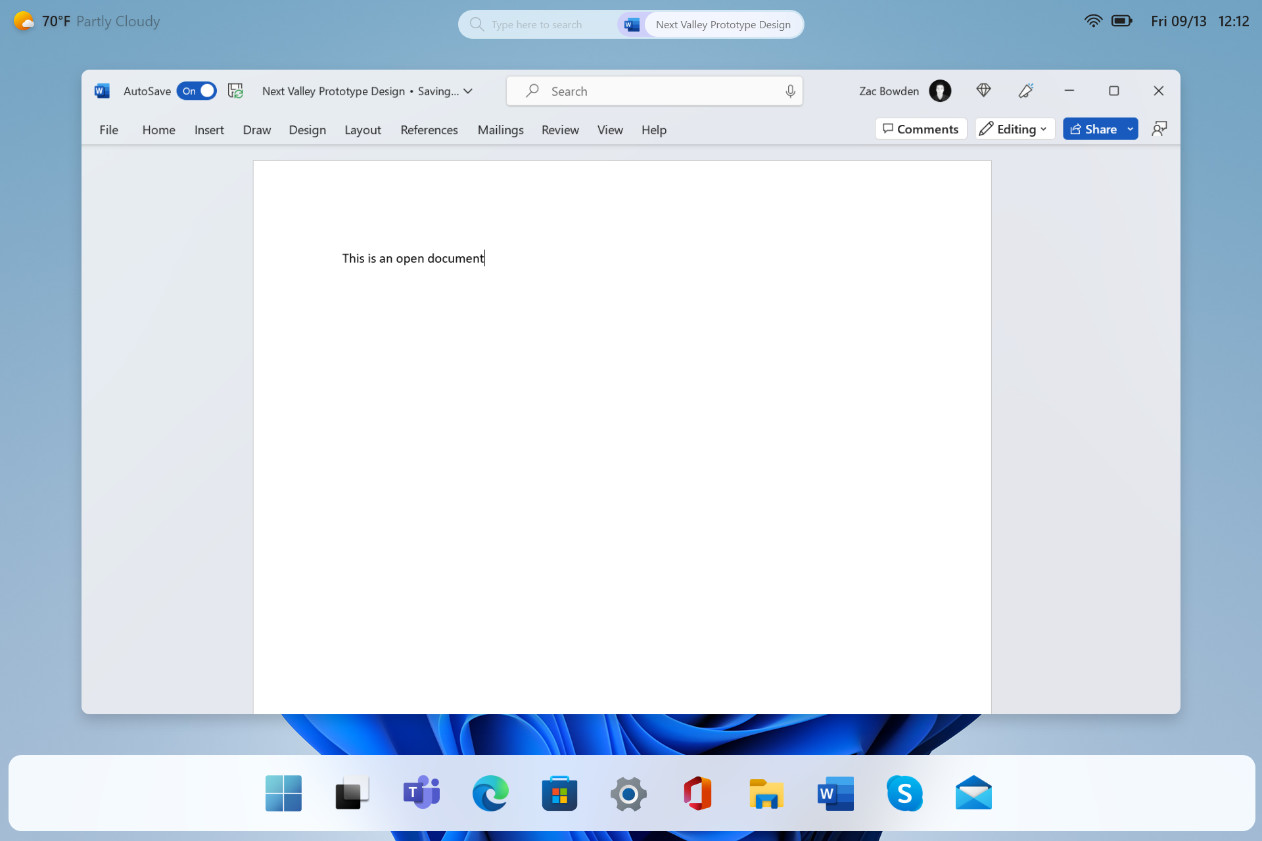
We may have caught a glimpse of what the Windows 12 desktop could look like, or at least been given a rough idea of how it might eventually turn out.
Neowin spotted that an image shown at Ignite 2022, which as we reported at the time was thought to represent the successor to Windows 11 – generally assumed to be Windows 12 (but we certainly don’t know that for sure) – has just turned up again.
(Image credit: Microsoft)
This is an enhanced version of the original leaked image, and now you can clearly see that it says ‘Next Valley Prototype Design’ at the top, which refers to next-gen Windows. And as you may recall, it shows a very different-looking desktop with a floating taskbar (MacOS Dock-style) that has no system tray.
As Brad Sams (VP and General Manager at Stardock Software) further points out on YouTube, this seems to indicate that the leaked pic from Ignite is not just some sort of vague concept Microsoft is toying with, but potentially more of a firm design that shows where Windows is actually headed down the line.
There is some evidence to back up this assertion as Sams observes, pointing to the recent tweaks in preview versions of Windows 11 where Microsoft is in the process of adding the ability to turn off the system tray clock and date (albeit this is still hidden in test builds and not yet realized).
Analysis: Windows 12 – being tested in plain sight?
In short, that piece of groundwork could be viewed as the first step towards the eventual jettisoning of the system tray from the taskbar, paving the way towards that floating taskbar as seen in the leaked Ignite image (which we now know pertains to the design of next-gen Windows thanks to the detective work in terms of enhancing that pic).
With these changes coming to Canary – the earliest testing channel recently ushered in by Microsoft, rumored to be the basis for Windows 12 – this begs the question whether Microsoft will openly carry out next-gen Windows development in the Canary channel.
That could well be possible, and Microsoft may do so without actually telling us that explicitly, at least not until a good way down the road. If the rumor mill is right, that road could be a pretty short one, too, as the theory is that Windows 12 – or whatever it ends up being called – is going to arrive in 2024.
Other major interface changes recently spotted for Windows 11, which could equally end up in the next incarnation of the desktop OS, include further work on the rumored photo gallery for File Explorer, and more flexibility with widgets which may get the ability to be plonked on the desktop.
Oh, Elon. When will you learn? Never, if this latest development is anything to go by: according to a memo reported on by the Wall Street Journal, an internal valuation has just placed Twitter’s total value at around 20 billion dollars. Hilariously, that’s less than half of the $44 billion Musk originally paid for the social media site back in October 2022.
But it seems Elon isn’t content with just sitting in the hole he’s fallen into; some unpaid intern has handed him a shovel, and he’s gonna keep on digging down until everyone on Twitter is paying for Twitter Blue - or the site collapses entirely.
Musk’s latest move to drag more people kicking and screaming into $8-subscription land is to reveal more limitations on free accounts; unless you cough up for a Blue membership, your tweets won’t be recommended to other users in the ‘For You’ tab, and non-verified users won’t be allowed to vote in polls either.
Now, any Twitter user with two brain cells to rub together (so, at least half of them) can probably already tell you that the ‘For You’ page is garbage, and it’s really worth sticking to the ‘Following’ tab if you want something approaching the original Twitter experience. But shutting non-paying users out of polls entirely is, well, a dick move from Musk - perhaps he’s scared there might be a repeat of the embarrassing poll where he was told by the site’s user base to step down as CEO.
Opinion: Cheer up - it might never happen
It’s worth bearing in mind that these latest death throes from the apparently-cursed social media platform come directly from the horse’s mouth - that is to say, Elon’s own Twitter account. That means we should take them with a sprinkling of sodium, since Musk has tweeted out ‘upcoming features’ in the past that have never actually materialized.
Musk claims that the changes are ‘the only realistic way to address advanced AI bot swarms taking over’ even though, you know, everything he’s done so far has yet to make any sort of tangible impact on Twitter’s bot account problems. Bots comprise roughly 5% of the platform’s 330 million users, but account for more than 20% of actual tweets in the US. Oh, and he’s getting rid of 2-factor authentication for non-paying users too, which is going to further worsen the site’s security issues.
Starting April 15th, only verified accounts will be eligible to be in For You recommendations.The is the only realistic way to address advanced AI bot swarms taking over. It is otherwise a hopeless losing battle.Voting in polls will require verification for same reason.March 27, 2023
See more
Another part of the problem is that despite constantly worsening the free user experience, Twitter Blue is estimated to have made the company just $11 million from mobile users since its soft relaunch after Elon took the reins. That sounds like a lot, but it’s a comically small drop in the bucket for a social media giant like Twitter. Nonetheless, Elon claimed in the aforementioned valuation memo that he believes the company will be profitable as early as next quarter.
I’m putting on my best impression of Chris Hemsworth in Thor: Ragnarok to say “will it, though?” - Twitter is still burning money despite slashing staff counts (which leads to trouble like this) and is embroiled in a laundry list of legal disputes which are no doubt costing it a ton of cash. To compound the issues further, many of those cases are specifically Twitter being sued over nonpayment of everything from contracted wages to rent owed to, uh, the British royal family. Yup, you read that right.
Now, as a fun (read: horrifyingly dystopian) little thought exercise, let’s contextualize Elon’s massive losses by taking a little look at some of the things he could’ve spent that wasted $24 billion on instead:
120,000 copies of the original 1999 shiny Charizard Pokemon card
48 working replicas of Jeff Bezos’ 417-foot superyacht
14 NASA space shuttles
At least 2 more Tesla gigafactories
Housing every homeless person in the USA for three full years
And finally, the entire nation of Montenegro - and with cash to spare, since the tiny European country is estimated to be worth just over $17 billion as of 2023. Perhaps Elon could've bought Barbados too.
Marvel has seemingly leaked the release date for Secret Invasion on Disney Plus.
The studio, which has suffered from its fair share of bad press in recent days, appears to have accidentally confirmed Secret Invasion's launch date. As revealed on Reddit – and later confirmed by many news outlets – the Marvel TV series is apparently due to arrive on June 21, 2023.
Initially, Secret Invasion was expected to be released on Disney Plus in Q1 2023. However, in light of some release schedule tweaking on Marvel's part, the spy thriller show's launch was given a more generic 'coming soon' placeholder on the official Disney Plus Originals website. That was the case until yesterday (March 27), anyway. Overnight, the series' Disney Plus landing page was updated with its new release date.
Secret Invasion is seemingly set to arrive in June(Image credit: Disney Plus)
Realizing their error, Marvel and Disney have now removed the launch date and any mention of Secret Invasion from DisneyPlus.com and its corresponding app. Now, searching for the Marvel Phase 5 show on Disney Plus delivers an error code 41 message, which reads: "The requested media is not available. Please try again. If you continue to have problems, please contact Disney+ Subscription Support."
Unfortunately for the two studios, multiple users managed to grab a screenshot of the updated landing page before posting it online as proof (see the image above). Marvel Cinematic Universe (MCU) fans are now expecting an official announcement about Secret Invasion shortly, potentially alongside a new trailer.
We've reached out to Disney and Marvel for an official comment on the series' apparent launch date. We'll update this article if we hear back.
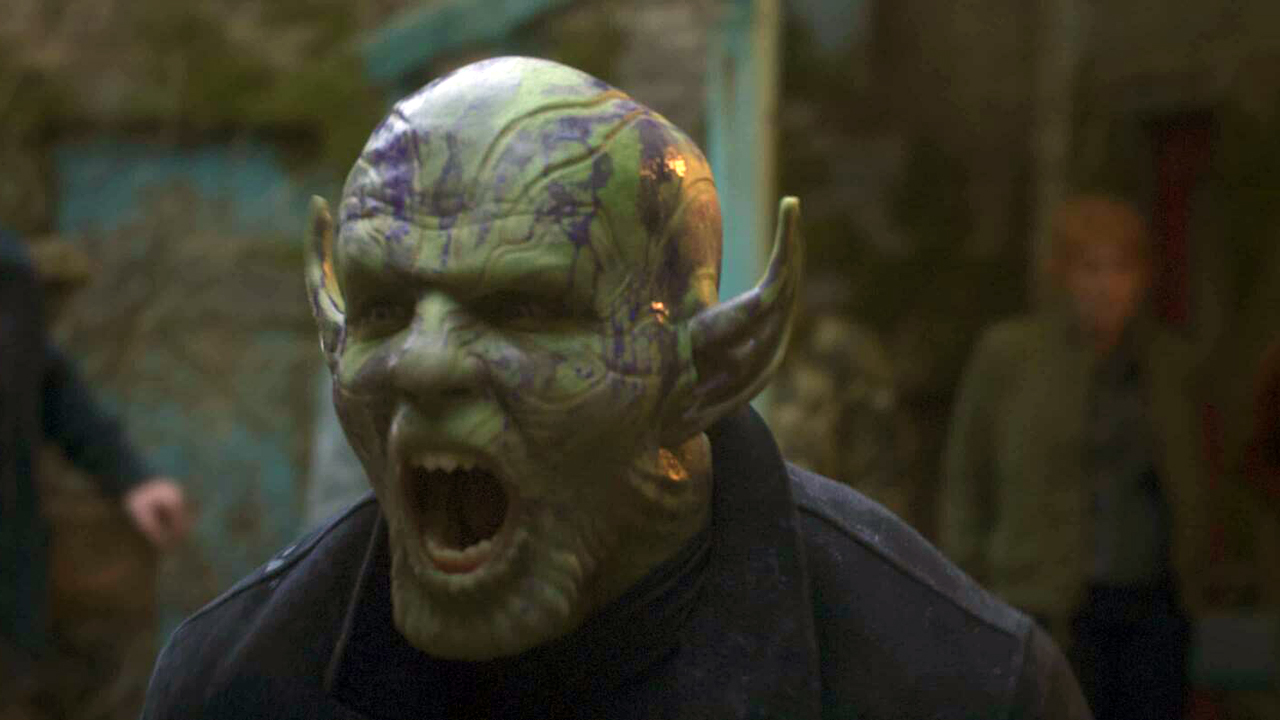
Secret Invasion stars Samuel L Jackson as Nick Fury and Ben Mendolsohn as Talos. The series, which will make Disney Plus history by becoming the first crossover event in the MCU, will follow the pair as they try to uncover a mass conspiracy that's seen many of Talos' fellow shapeshifting skrulls infiltrate Earth and live among humanity for decades. Olivia Colman, Kingsley Ben-Adir, Emilia Clarke, Martin Freeman, and Don Cheadle will all play supporting roles.
Analysis: The secret is out – or is it?
Yeah, this is how we reacted to the news, too(Image credit: Marvel Studios)
After months of silence, it seems that Secret Invasion's release date isn't so secret after all. Or maybe it is...
On the surface, it appears that the show will land on Disney Plus in June. After all, it would be a huge faux pas on Marvel and Disney's part if Secret Invasion's June 21 launch date was nothing more than a placeholder. In our view, the MCU's fanbase would not be best pleased, especially as we've had to wait a long time for Secret Invasion to arrive.
There's reason to believe that a June 2023 launch could be in the offing, too. Marvel might have *ahem* secretly altered its 2023 release schedule plans in recent weeks, with numerous reports suggesting we'll only receive three movies, plus two or three Disney Plus shows, this year as the studio looks to space out its stacked lineup of Phase 5 projects.
However, Marvel's 2023 lineup of TV shows, including Secret Invasion and Loki season 2, still don't have official release dates. With a six-month gap needing to be filled in Marvel's and Disney Plus' calendars, it would make sense for Marvel and Disney to release one or both of the aforementioned series to keep MCU fans entertained between Guardians 3 and The Marvels. If they choose not to, it could be a very long and barren summer (or winter, for those of you in the southern hemisphere) for Marvel's worldwide fanbase.
Daredevil: Born Again star Vincent D'Onofrio has seemingly revealed that a second season of the Marvel TV show is already in development.
Speaking to Newsweek, D'Onofrio – who will make his second Marvel Cinematic Universe (MCU) appearance in Daredevil: Born Again – suggested that the superhero series had been greenlit for another outing. D'Onofrio's claim comes two weeks after the show's first season began filming.
Answering a question about how Born Again differs from Daredevil's previous live-action series, which ran on Netflix between 2015 and 2018, D'Onofrio revealed that Born Again season 2 is on the way. Or, at the very least, that the storylines set up in the Disney Plus show's first entry will pay off in a sequel season.
"By the second season, there are gigantic, gigantic payoffs," the Marvel actor said. "[That happens] in the first season, too, but I can't say much about that. But the fans are gonna really get what they want. It's really quite cool to be doing it."
Daredevil: Born Again is currently being filmed.(Image credit: Marvel Studios/Disney Plus)
Daredevil: Born Again is one of many in-development TV shows that'll be part of Marvel Phase 5. The second part of Marvel's Multiverse Saga began in February with Ant-Man and the Wasp: Quantumania but, like many other fans and critics, we weren't totally enamored with the film. You can read more about why in our Ant-Man and the Wasp: Quantumania review.
Since Ant-Man 3 was released in theaters, Marvel has been hit by a number of big issues. Victoria Alonso, one of Marvel Studios' notable figureheads, was fired for allegedly breaching contract. Meanwhile, reports over the weekend revealed Jonathan Majors, who is set to play Kang the Conqueror (and his many multiversal variants) across the Multiverse Saga, was arrested over domestic violence accusations. At the time of writing, it's unclear whether Majors' arrest will affect his MCU future.
Add those major headaches to other problems that have plagued Marvel (The Marvels' release being pushed to November; other Phase 5 movie and TV show delays; wider matters concerning the third-party VFX studios it works with) and the studio needs a big win.
Luckily for Marvel, two of its most popular franchises have new instalments coming out soon, which might atone for some of the bad press. Guardians of the Galaxy 3, the final movie from acclaimed director James Gunn, arrives in theaters on May 5. Meanwhile, Loki season 2 is set to debut on Disney Plus later this year.
Analysis: nobody silences the Kingpin
D'Onofrio's Wilson Fisk/Kingpin was last seen in Hawkeye on Disney Plus.(Image credit: Marvel Studios/Disney Plus)
With the above problems to contend with, Marvel could do without one of its stars leaking out information about one of its most eagerly anticipated TV shows.
D'Onofrio, though, doesn't play by the rules. The actor, who played Wilson Fisk/Kingpin in Netflix's Daredevil series before reprising his role as the same character in Hawkeye's TV series in November 2021, has always spoken openly about his time playing the iconic supervillain. His love for portraying Fisk shines through whenever he's asked about the role. Non-disclosure agreements won't stop him from chatting about the role, regardless of the wrath he might incur from Marvel's lawyers for seemingly leaking information about Born Again's potential second season.
One saving grace for D'Onofrio is that he's not the first individual or industry insider to reveal official news and/or secrets about Daredevil: Born Again.
Even with things leaking out, given the reverence that Netflix's Daredevil TV show is held in, we'd be surprised if Daredevil: Born Again doesn't prove to be similar popular when it eventually arrives. Currently, the series is due to arrive on Disney Plus in the second half of 2024. But, with Marvel tweaking its release schedule plenty of times in the past year, Born Again might not launch until 2025. Still, we're confident it'll be one of the best Disney Plus shows around when it is release.
Wix has expanded integrations with WhatsApp, Instagram and Messenger, meaning its users can now connect their business accounts directly into a single location.
With the expanded social integrations, Wix Inbox users will now receive streamlined communication to one inbox and can reply to all customer messages straight from the Wix dashboard.
Available now, Wix Inbox is a CRM messaging tool that allows users to view and respond to messages from many different channels including Wix Chat on the Wix website, email, SMS and now, WhatsApp, Instagram and Messenger business pages.
(Image credit: Wix)
Centralized communication
The website builder company offers a built-in messaging experience that allows business owners to utilize their existing assets to not only reply, but also extend their business communication on these channels to include product suggestions, offer coupons, and create auto replies.
“We’re always seeking new ways to provide business owners with every tool they need to be successful in their ventures,” said Ronny Elkayam, SVP, Mobile, App Market & Strategic Products at Wix.
“Integrating these top messaging platforms to the Wix Inbox will streamline communication and help business owners be more efficient. This direct and quick communication builds trust and will ultimately grow customer loyalty and retention. We look forward to continuing to grow multi-channel communication to support businesses as they grow and serve more customers.”
The tool also allows for chat invitations, live site visitors and reaching out to individuals on a contact list. Users can also send visitors attachments, coupons, payment requests and links to their products and services.
Wix Inbox empowers businesses built on Wix with a seamlessly integrated and fully extendible CRM platform to serve their growing needs.
“Today more than one billion users are connecting with a business account each week across WhatsApp, Messenger and Instagram,” said Kyle Jenke, Business Messaging Director of Partnerships at Meta.
“Businesses need an easy and streamlined way of managing these interactions across the entire customer journey – from marketing, sales and support outcomes – and we’re excited to work with Wix on their new Inbox solution that will now integrate with all of Meta’s top messaging platforms.”
The Wix CRM team is currently working on adding more channels and integrations to the Wix Inbox capabilities, to allow third parties to add more channels to the communication integrations.
When Microsoft incorporated ChatGPT’s chatbot into Bing, it managed to achieve something the company had been trying to do for years: it got people excited about its unloved search engine. However, if it’s not careful, its eagerness to capitalize on this rare Bing win could end up doing more harm than good.
As Bloomberg reports, Microsoft has threatened search engines that use Bing indexing that it will revoke licences if they use Bing data in their own AI chatbots.
Indexing the entire internet so that it can be searched is a very expensive endeavour, which is why smaller search engines such as DuckDuckGo pay the companies behind bigger search engines, such as Bing and Google, to use their indexing for their own products.
It seems while Microsoft is perfectly happy to make money from licencing Bing’s indexing for search engines, it doesn’t want it being used in any rival chatbots. According to Bloomberg, Microsoft has warned at least two of its customers that using Bing’s index for their own AI chat tools violates the terms of their contract, which could result in them losing access to the index altogether.
(Image credit: gguy / Shutterstock)
Stifling competition
While Microsoft absolutely has the right to dictate how the services and features it provides to customers are used, it could also be seen as a way of stifling competition to make sure Bing isn’t challenged when it comes to AI.
After Microsoft added AI to Bing, a spate of search engines announced similar tools. DuckDuckGo announced DuckAssist, while You.com and Neeva, two relatively new search engines that rely on Bing indexing, also announced AI-powered tools.
By stating that these AI tools cannot use Bing indexing, Microsoft may have effectively killed them. The threat of removing their access to its indexing is a big problem, as these search engines rely on them to return results. If they get cut off, their entire product could effectively be rendered useless.
There’s an unfortunate whiff of a bigger company bullying smaller ones to make sure they can’t compete, and it’s a shame to see that happening so soon in the chat AI space. Emerging technologies like AI chatbots thrive when there’s a huge amount of competition, as businesses innovate to help stand out from the crowd. OpenAI, the company being the GPT large language model that Bing’s chatbot is based on, understands this, as it has made its platform open for developers to incorporate into their own products.
It's a shame, then, that Microsoft doesn’t seem to be taking the same approach (ironically, Microsoft has a close partnership with OpenAI), and by forbidding the use of Bing’s indexing, it could seriously hamper the growth of alternative AI-assisted search tools. That might be good for Microsoft and its desire for Bing to grow in popularity, but it’s bad news for the rest of us.
Of course, those small search engines could switch to another indexing source. The only problem is that there’s just one other company that indexes the entire internet to licence out: Google. With that search giant working on its own AI-powered search tool, Bard, it’s also unlikely to want to share access to its own indexing. I just hope the greed of Microsoft and other internet gatekeepers doesn’t end up killing off the potential of AI chatbots before they’ve even properly begun.