Thursday, 29 November 2018

Dell reveals it was targeted by cyberattack

PC hardware manufacturer Dell has announced that its online store suffered a security breach earlier this month on 9 November.

The company revealed that it detected an unauthorised intruder trying to extract customer information such as names, email addresses and hashed passwords from Dell.com. 

Dell reassured its customers that their data was safe in a press release announcing the breach, saying:

“Though it is possible some of this information was removed from Dell’s network, our investigations found no conclusive evidence that any was extracted. Additionally, Dell cybersecurity measures are in place to limit the impact of any potential exposure.”

According to a statement the company sent to ZDNet, Dell is still investigating the incident though the breach was likely not extensive as its engineers were able to detect it on the same day it occurred.

Password reset

Luckily for Dell, the hackers that targeted its site did not obtain any card details or other sensitive information about its customers. In fact the incident did not even disrupt the company's website which operated normally during as well as after the intrusion.

In order to protect its customers from any unforeseen consequences, the company initiated a password reset for all Dell.com accounts after it detected the security breach. Dell seems to have clearly had the situation in hand as it also notified law enforcement and hired a digital forensics firm to perform its own independent investigation.

Now that the company has released more information on the security breach, it seems that only a small amount of information from its website was obtained by the hackers responsible.

However, this could change and Dell customers should take the time to review the information they've shared with the company.

Via ZDNet

  • We've also highlighted the best antivirus to help keep your data safe from hackers
https://ift.tt/2RoMdCv

Koo! is a social network for short-form podcasts

Alexandre Meregan says that music, and audio in general, has always been core to his life. But one day on his five-minute commute to work, trying to listen to a podcast for the first time, he realized that by the time he arrived at work he had only heard an introduction and a commercial jingle.

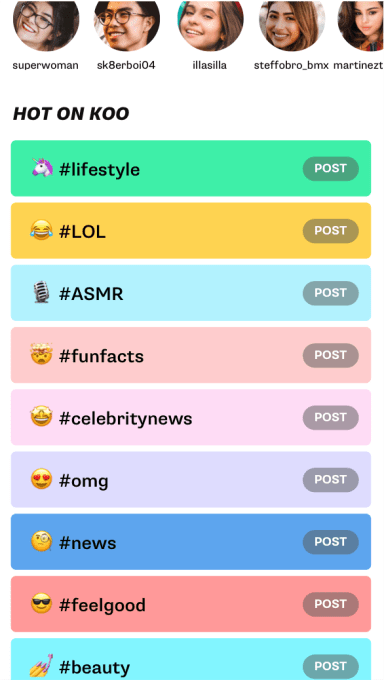
He immediately went to work on Koo!, a short-form podcast app aimed at young people. Koo! lets users record up to one minute of audio, add “sound stickers” like a drum roll or a poop sound, and share the “Koo” in a feed with their friends and followers.

Meregan believes that some young people are hesitant to share their thoughts on social media, which is mostly picture or video-based, because of the quantification of their self-worth through Like counters. With Koo! users can simply speak their thoughts without having to share a picture or video.
“At Koo! we believe a lot of great content is being held back by teenagers due to insecurities that comes with photo and video,” said Meregan onstage at TechCrunch Disrupt Berlin on the Startup Battlefield. “We feel that what you say should be more important than how you look.”

Like most social networks, Koo! is primarily focused on acquiring new users before focusing on a revenue model. Ad-supported revenue is the most obvious option to make money, but Meregan says that the team has been floating around a few other ideas, as well.

[gallery ids="1752074,1752075"]

One user-acquisition tactic, according to Meregan, is to target YouTube content creators and give them a complimentary service to share their thoughts and voice.

A handful of startups have tried their hand at audio-based social networks, but few have managed to gain much traction.

Koo! is backed by Sweet Studio, though Meregan declined to share the amount of funding the company has received to date.


https://ift.tt/2SiiwDu

Legacy freezes your sperm so you don’t have to

Legacy is tackling an interesting problem: the reduction of sperm motility as we age. By freezing our sperm, this Swiss-based company promises to keep our boys safe and potent as we get older, a consideration that many find vital as we marry and have kids later. Legacy, which exhibited in Startup Alley at Disrupt Berlin 2018, was chosen as the wildcard company to present its services onstage during Startup Battlefield.

How does it work? Well, the company delivers a system for grabbing sperm. The material is kept in a specially made container and shipped to a nearby clinic where they then test the sperm and place it in cryogenic storage. You can then make a withdrawal when you’re ready for babies.

“Our unique at-home solution allows men to have their sperm analyzed and frozen at a clinic without leaving their home or having to meet with a physician,” said founder Khaled Kteily. “All clients receive a full fertility analysis, including personalized recommendations using our machine learning-driven technology.”

Kteily ensures us that our special sauce will stay safe over the years.

“Our core values of privacy, quality, and security ensure discretion, anonymity, and the highest level of quality for all our clients, including multi-site storage, whereby our clients’ deposits are stored in multiple tanks in multiple locations at high security.”

[gallery ids="1752635,1752630,1752631,1752632,1752633"]

The company offers three packages: Bronze, Gold and Platinum. The $1,000 Bronze package requires you to take your sperm to a clinic where it will be tested and cryogenically stored. The Platinum plan costs $10,000 and ensures the company will keep up to six samples of your swimmers indefinitely, affording your genetic material practical immortality.

Kteily founded the company after a friend looked for solutions to sperm storage while facing cancer treatment. Realizing there was nothing that looked trustworthy or usable, he used his background in health and entrepreneurship to build Legacy.

The company has raised $250,000 and they are profitable. Kteily sees his company as the “Swiss Bank” of sperm storage.

“Male fertility has declined by 50 percent. Every 8 months, men produce a new genetic mutation that gets passed on to their children. Birth rates around the world are plummeting and men are responsible for infertility in 30-50 percent of couples. Meanwhile, you can freeze sperm indefinitely with no loss in quality — through Legacy, without having to leave your home and at a tenth of the cost of egg freezing,” he said. “We treat our clients as a private bank would — our core values of quality, privacy and security ensure our clients are taken care of at every level.”

https://ift.tt/2PafM8Y

Spike Diabetes applies social pressure to keep patients safe

It can be tough for diabetes patients to keep a constant eye on their glucose levels. Spike Diabetes lets family and doctors lend a hand by sending them real-time alerts about the patient’s stats. And the app’s artificial intelligence features can even send helpful reminders or suggest the most diabetes-friendly meals when you walk into a restaurant.

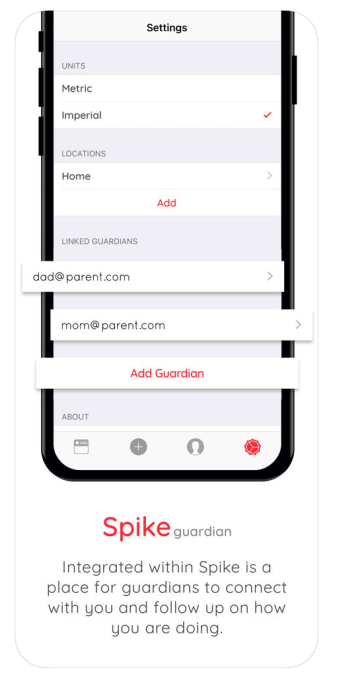
Today onstage at the TechCrunch Disrupt Berlin Startup Battlefield, Spike Diabetes is launching its Guardian Portal so loved ones with permission can get a closer look at a patients’ data and coach them about staying healthy.

“Diabetes is an incurable chronic disease that forces diabetics to live a life of carb-counting and insulin injections. Since diabetics are forced to do those mundane tasks for the rest of their lives, they tend to fall off the tracks sometimes simply because of how demanding those tasks can be,” says Spike co-founder Ziad Alame. “As for guardians and parents, they are left in the dark about their loved ones.” With doctors often only getting data during quarterly or semi-annual checkups, patients are often left on their own. A lifetime of management is very stressful, especially if your life depends on it.”


The startup faces stiff competition from literally hundreds of apps claiming to help patients monitor their vitals. MySugr, Diabetes Connect and Health2Sync are amongst the most popular. But Alame says many require users to track their levels through complex spreadsheets. Spike offers customizable mobile charts, and will even read users their stats out loud to make staying safe an easier part of daily life. Spike is invite-only and just on iOS, but it also touts an Apple Watch app plus optimized engineering to minimize battery usage.

“Spike started off as a personal project to help myself adhere better to my medication after reaching critical times in my diabetic life,” Alame tells me. Now he’s bringing to the problem his experience as CTO of the GivingLoop charity platform, TeensWhoCode summer camp and Zoomal crowdfunding site for the Arab world. Alame has assembled a team of diabetics, engineers and PhDs, plus $200,000 in seed funding from MEVP, Cedar Mundi and Phoenician Funds. They hope to see the premium paid version of Spike’s freemium app overtake longstanding competition through word-of-mouth triggered by bringing loved ones and doctors into the loop.

One of the app’s most interesting features is the proactive info it delivers. “For example, you walk into McDonald’s around 2 PM. Spike would automatically know it’s lunch time for you and suggest the top three options you can have with approximate carb counts,” Alame tells me. “After some time (~25 minutes) Spike automatically reminds you of your insulin and syncs with your diabetic devices to log all the details. With time, as the app gets to know the diabetic’s taste more, Spike would be able to suggest small behavioral tweaks to enhance lifestyle such as walking routes suggestions or new places similar to the diabetic’s taste but with a lower insulin consumption rate.”

Alame jokes that “The biggest risk [to Spike] is the best thing that can happen — which is finding a cure for diabetes.” But even if that happens, he believes Spike’s app for tracking and actively coaching users could be relevant to other diseases, as well. For now, though, it will have to convince users that an app could make managing diabetes simpler rather than more complex.


https://ift.tt/2P7sdT5

Looking back at Readdle’s journey from zero to hero

Readdle launched its first app on the App Store ten years ago and recently celebrated 100 million downloads. Readdle’s Denys Zhadanov came to TechCrunch Disrupt to look back at the past ten years.

“I think it's about timing. Back in 2007 when the iPhone was launched for the first time, there was no app or no App Store,” Zhadanov said. “And then we got a call from Apple that said: ‘Hey guys, we're launching the App Store.’”

One of the reasons why Readdle ended up on Apple’s radar is that they started working on a solution to read books and documents even before the App Store. It was a web app and it was already listed on Apple’s website.

This web app alone attracted 60,000 users — again, that was before the App Store and with a small iPhone install base.

Today, Readdle has eight productivity apps. If you have an iPhone, chances are you’re using some of them, such as Scanner Pro, Documents, PDF Expert and Spark.

And it says a lot about Readdle’s skills. When you’re building productivity apps, you’re competing with built-in apps. There’s already a calendar app and an email app on your iPhone when you first set it up.

“The way we look at this, if our work can inspire one of the biggest companies to move into this area, we're doing something right,” Zhadanov said. “But we have to be very fast and move and run faster because there is no way you can compete with giants like Apple, Google and Microsoft.”

What’s next for Readdle now? The company has received acquisition offers in the past. “We've had offers from different partners but we never discuss and disclose publicly either these talks or our revenues because we're still private,” Zhadanov said.

But it doesn’t mean that Readdle is standing still. When Readdle released Spark four years ago, it was a free app from day one. Spark now has 500,000 daily active users.

“Now we're at this stage where we are trying to accomplish a much bigger challenge than ever before, which is reinventing email,” Zhadanov said.

You can now use Spark to share inboxes with your team. It lets you comment on an email thread, assign emails to team members and more. If you want to unlock all the collaborative features, you need to pay a premium subscription.

It’s still the very beginning of the team product. “I think we have thousands of teams but only tens or hundreds are paying,” Zhadanov said.

Eventually, Readdle could end up raising money to iterate faster — maybe, maybe not. “I'm not saying we need [to raise money ]. I'm saying we might raise money next year to scale faster,” Zhadanov said.

Being a bootstrapped company has some great advantages for now. Readdle doesn’t feel any pressure from investors saying that they need to launch something now. The company can spend more time refining products.

Finally, TechCrunch’s Ingrid Lunden asked about the political climate in Ukraine. A few days ago, a presidential decree introduced martial law in some parts of Ukraine due to tensions with Russia.

“We're trying not to comment on political issues as well. But, right now, we're not affected as a company, as a business,” Zhadanov said. "I think the perception from outside might be affected.”

According to him, Readdle has already thought about “plan B and plan C” in case it gets worse.

https://ift.tt/2BGehvS

Facebook exempts news outlets from political ads transparency labels

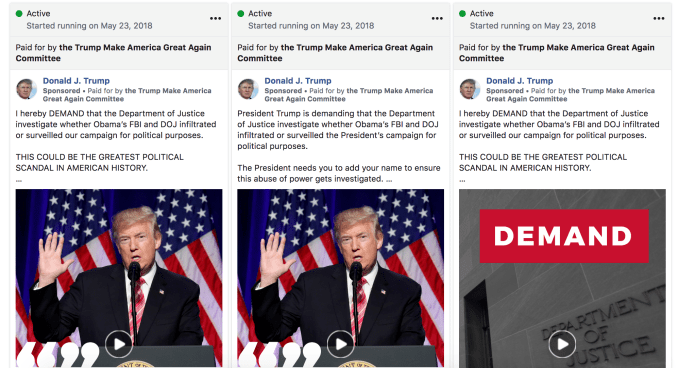
Facebook pissed off journalists earlier this year when it announced that ads run by news publishers to promote their articles involving elected officials, candidates, and national issues would have to sport “paid for by…” labels and be included alongside political campaign ads in its ads transparency archive that launched in June, albeit in a separate section. The News Media Alliance representing 2000 newspapers including the New York Times and NewsCorp plus other new organizations sent a letter to Mark Zuckerberg in June protesting their inclusion. They claimed it would blur the lines between propaganda and journalism, and asked Facebook to exempt news publishers.

Now Facebook has granted that exception. Next year once Facebook has figured out more ways to verify legitimate news organizations who publish with bylines and dates, cite sources, and don’t have a history of having stories flagged as false by third-party fact checkers, they’ll no longer have their US ads appear in the Ads Archive. They also won’t have to carry a “Paid for by…” label when they appear in the News Feed or Instagram. News organizations will still have to verify their identity, but not through the political ads process. This exemption will roll out today in the UK.

The change will also allow news outlets to run “dark post” ads that target specific users but don’t appear on their Pages. This will allow them to secretly test different ad variants without being exposed to potential criticism or competitors looking to copy their ad strategies.

Facebook’s political ads archive of campaign ads will no longer include publications promoting articles about politics or issues

Facebook will be using its recently built news publisher index that outlets can apply to to decide which ad buyers are exempt. That index is up and running in the US and will expand to other countries, but Facebook still wants to build more safeguards against fake news outlets before starting the exemption in the US. For now Facebook is using a third-party list of legitimate UK news outlets who’ll be exempted starting today. Jason Kint of publishers association Digital Content Next tells TechCrunch “We are pleased that Facebook understands and values the important role of news organizations. We have worked cooperatively with Twitter who understood this from the beginning. We look forward to working in a similar fashion with Facebook.”

Facebook’s “Paid For By…” labels will no longer appear on news publishers’ ads on Facebook or Instagram

The change comes as Facebook rolls out enforcement of its political ads transparency rules in the UK today. “Now political advertisers must confirm their identity and location, as well as say who paid for the ad, before they can be approved to run political ads on Facebook and/or Instagram” Facebook tells TechCrunch. These ads will also feature the “Paid for by…” label. Facebook hoped that by self-regulating ads transparency, it might avoid more heavy-handed government regulation, such as through the US’s proposed Honest Ads Act that would bring internet political advertising to parity with transparency rules for television commercials.

The hope is that by determining who is paying for these ads, properly labeling them, and exempting journalists, Facebook will be able to better track foreign misinformation campaigns and election interference. Meanwhile, users will have a better understanding of who’s funding the political and issue ads they see on Facebook.

[Update: This story has been updated to reflect that the news publisher exemption won’t roll out for US outlets until next year.]


https://ift.tt/2DRGXni

Rolling, hopping robots explore Earthly analogs of distant planets

Before we send any planet-trotting robot to explore the landscape of Mars or Venus, we need to test it here on Earth. Two such robotic platforms being developed for future missions are undergoing testing at European Space Agency facilities: one that rolls, and one that hops.

The rolling one is actually on the books to head to the Red Planet as part of the ESA’s Mars 2020 program. It’s just wrapped a week of testing in the Spanish desert, just one of many Mars analogs space programs use. It looks nice. The gravity’s a little different, of course, and there’s a bit more atmosphere, but it’s close enough to test a few things.

The team controlling Charlie, which is what they named the prototype, was doing so from hundreds of miles away, in the U.K. — not quite an interplanetary distance, but they did of course think to simulate the delay operators would encounter if the rover were actually on Mars. It would also have a ton more instruments on board.

Exploration and navigation was still done entirely using information collected by the rover via radar and cameras, and the rover’s drill was also put to work. It rained one day, which is extraordinarily unlikely to happen on Mars, but the operators presumably pretended it was a dust storm and rolled with it.

Another Earth-analog test is scheduled for February in Chile’s Atacama desert. You can learn more about the ExoMars rover and the Mars 2020 mission here.

The other robot that the ESA publicized this week isn’t theirs but was developed by ETH Zurich: the SpaceBok —  you know, like springbok. The researchers there think that hopping around like that well-known ungulate could be a good way to get around on other planets.

It’s nice to roll around on stable wheels, sure, but it’s no use when you want to get to the far side of some boulder or descend into a ravine to check out an interesting mineral deposit. SpaceBok is mean to be a highly stable jumping machine that can traverse rough terrain or walk with a normal quadrupedal gait as needed (well, normal for robots).

“This is not particularly useful on Earth,” admits SpaceBok team member Elias Hampp, but “it could reach a height of four meters on the Moon. This would allow for a fast and efficient way of moving forward.”

It was doing some testing at the ESA’s “Mars Yard sandbox,” a little pen filled with Mars-like soil and rocks. The team is looking into improving autonomy with better vision — the better it can see where it lands, the better SpaceBok can stick that landing.

Interplanetary missions are very much in vogue now, and we may soon even see some private trips to the Moon and Mars. So even if NASA or the ESA doesn’t decide to take SpaceBok (or some similarly creative robot) out into the solar system, perhaps a generous sponsor will.

https://ift.tt/2Aw5T0c