Thursday, 12 November 2026

Microsoft Outlook is down for many: Here's what we know

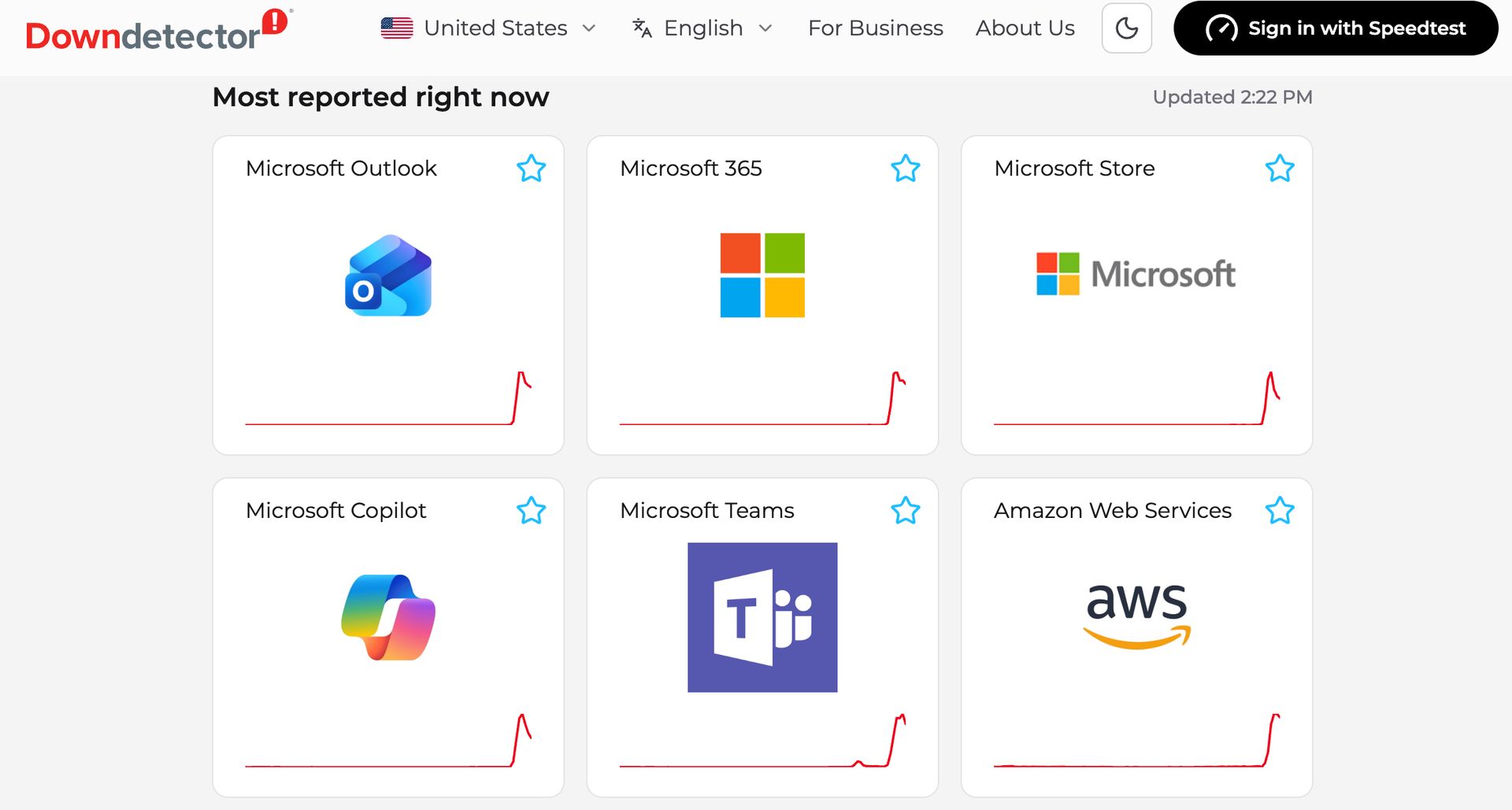
Microsoft Outlook might be down for many. Reports of outages from across the US started coming in around 12:30 PM ET. On DownDetector, there are over 120,000 concurrent reports.

Other connected services like Microsoft Teams. Microsoft 365, Copilot, and Ondreive are also gettign reports. More tellingly,. we could not open Microsoft's own services status ((https://ift.tt/Dv9Nx7z) page to check on the status of Microsoft services.

Microsoft's cloud services, Azure, also had reports of service issues, which may account for the wide-spread nature of these outages.

On social media, people have bene reporting their inability to reach the services like Outlook. On X (formerly Twitter) is where we saw evidence that the outage may extend globally.

Follow along as we track this continuing, and apparently widespread Outlook outage.

Our first indication that something was awry with Outlook was on Downdetector, which noted a sharp rise in reports of service outages for Outlook. Microsoft 365, Microsoft Store, Microsoft Copilot, Microsoft Teams, OneDrive, and Microsoft Azure.

It's worth noting that users report these issues to Downdetector. Microsoft has yet to comment or confirm any of this.

We've contacted Microsoft for comment and will update this live blog when they reply.
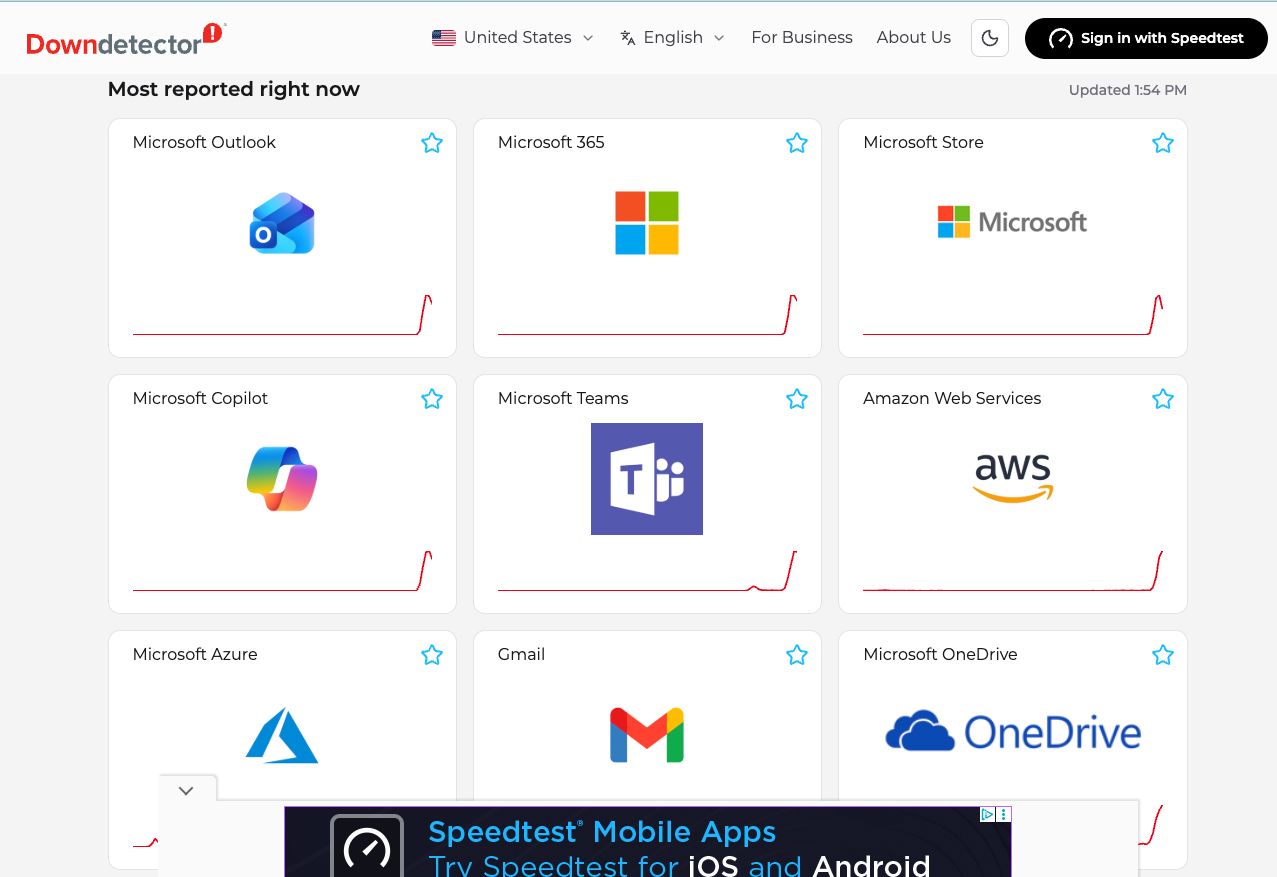
Outlook outage

(Image credit: Future)

Not everything is offline

There are some indications that the situation is worsening. While we were able to access OneDrive online 30 minutes ago, the site is no longer responding.

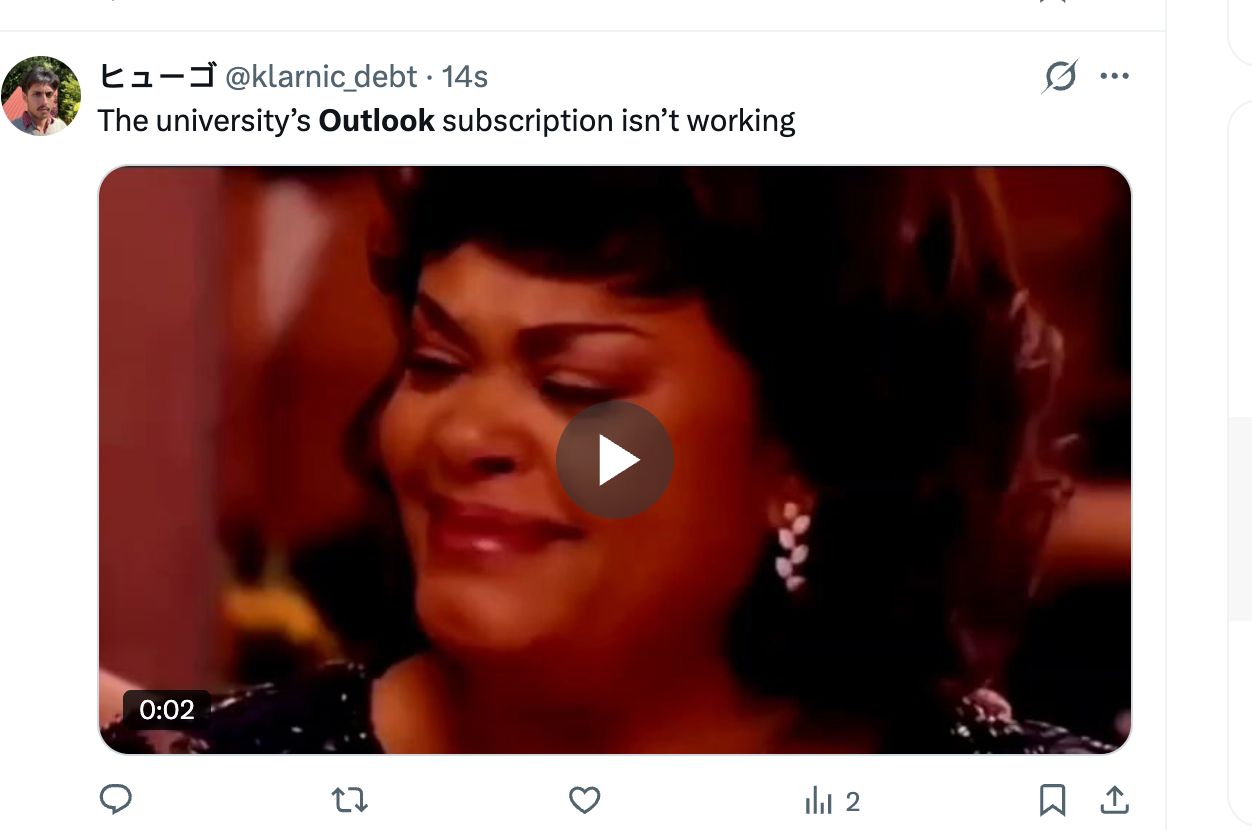
The pain is being felt by individuals and organizations, such as universities, where entire email systems are now inaccessible.
Outlook outage

(Image credit: Future)

When one service catches a cold...

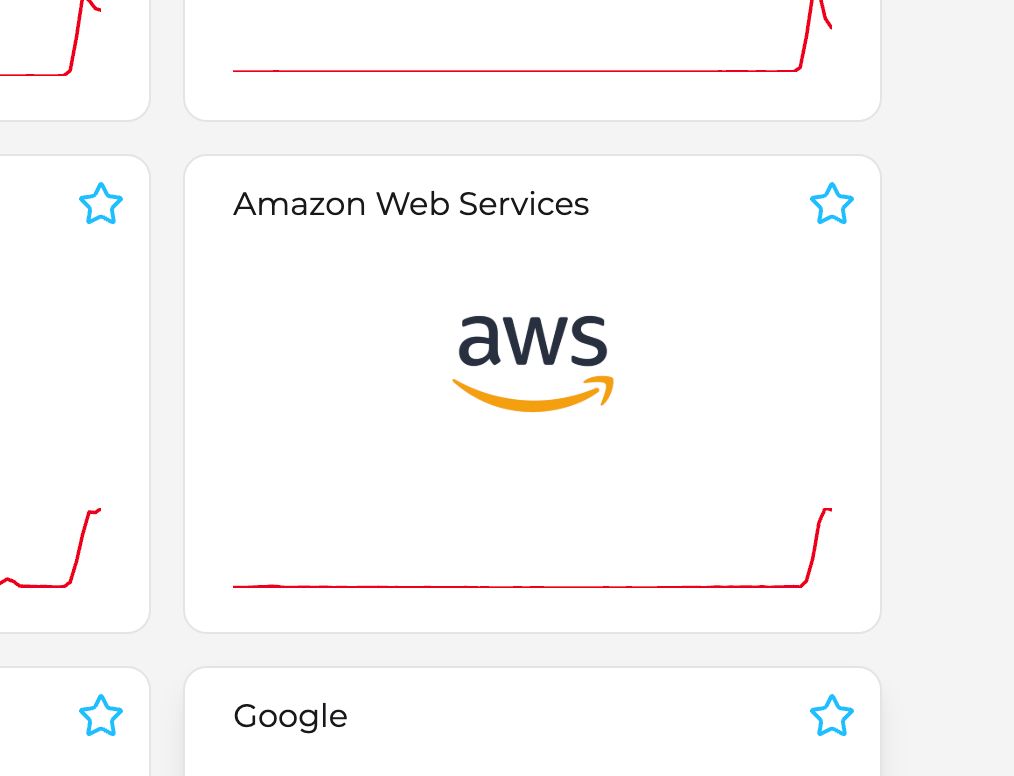
A look at DownDetector indicates that it's not just Outlook and Microsoft services that are struggling. However, these user-based reports can be misleading. Sometimes when people can't access one service connected to larger services, they assume it's their local one.

We checked, for instance, AWS's status page and found no widespread reports of outages.
Outlook outage

(Image credit: Future)

Microsoft knows

A Microsoft 365 support account has acknowledged the issues across "the Americas" and wrote, "We're investigating reports of users experiencing issues accessing Exchange Online mailboxes through multiple connection methods in the Americas. More details can be found in the Microsoft 365 admin center under EX1550543."

So they're investigating, but there's no news of a fix, just that they're working to mitigate it.

What, we work?

Millions rely on Microsoft tools like Outlook and OneDrive to get work done. When they're offline, well, as you can see below, things kind of slow down.

We're still not here

By 2:25 PM ET, DownDetector was showing a small slowdown in outage reports across Microsoft services, but social media is still filled with posts about the ongoing Outlook outage that is across the US and the rest of the Americas.
Outlook outage

(Image credit: Future)

Some perspective

Sure, millions can't access work and personal emails, but they still have social media where they can complain or at least take their minds off the fact that a huge chunk of Microsoft products are currently not functioning. As this X user notes, at least social media isn't out.

What is real

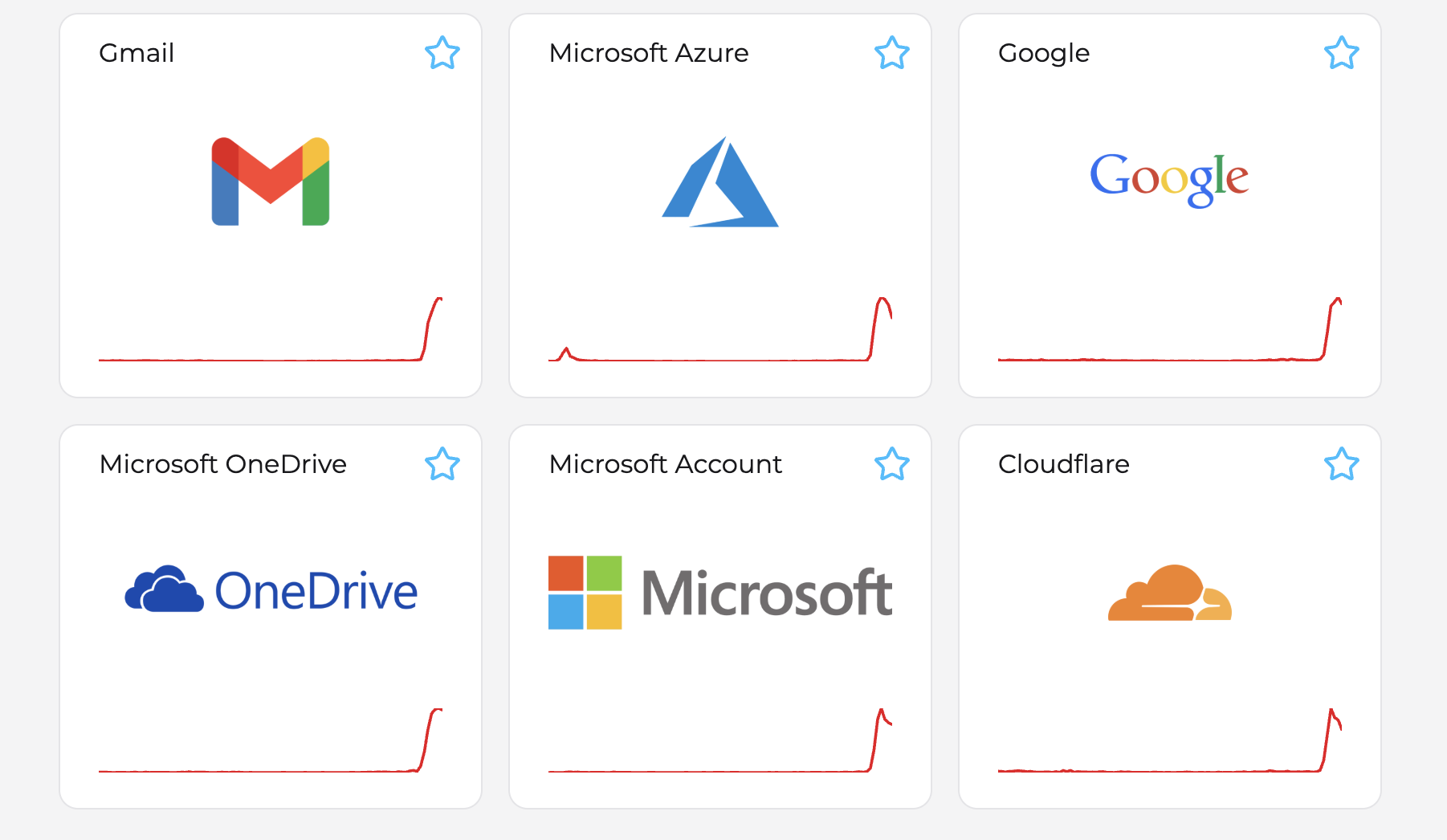
As we noted earlier, big outages like this can have a knock-on effect. That's likely why cloud provider Cloudflare has popped up here on DownDetector, along with Google and Gmail. To be clear, there's no other indication that these services are experiencing similar outages.
Outlook down

(Image credit: Future)

Microsoft's status page still isn't loading

We're still waiting for another update from Microsoft 365 Status on X (formerly Twitter), but if you're hoping to check the company's direct status page, you'll hit a roadblock. Why? Well, the actual status page appears to be down as well and will not load.

Let's take a look at Down Detector

Alright, it's clear that the main services seeing outages, and in turn being effectively down for users right now, are Outlook as well as Microsoft 365, but Down Detector is currently showing a slight dip towards recovery. Even so, many users are still reporting errors.

In fact, even with the dip, Microsoft Outlook still shows over 77,000 reports. That is down from the high, as of yet, of over 131,000 reports.
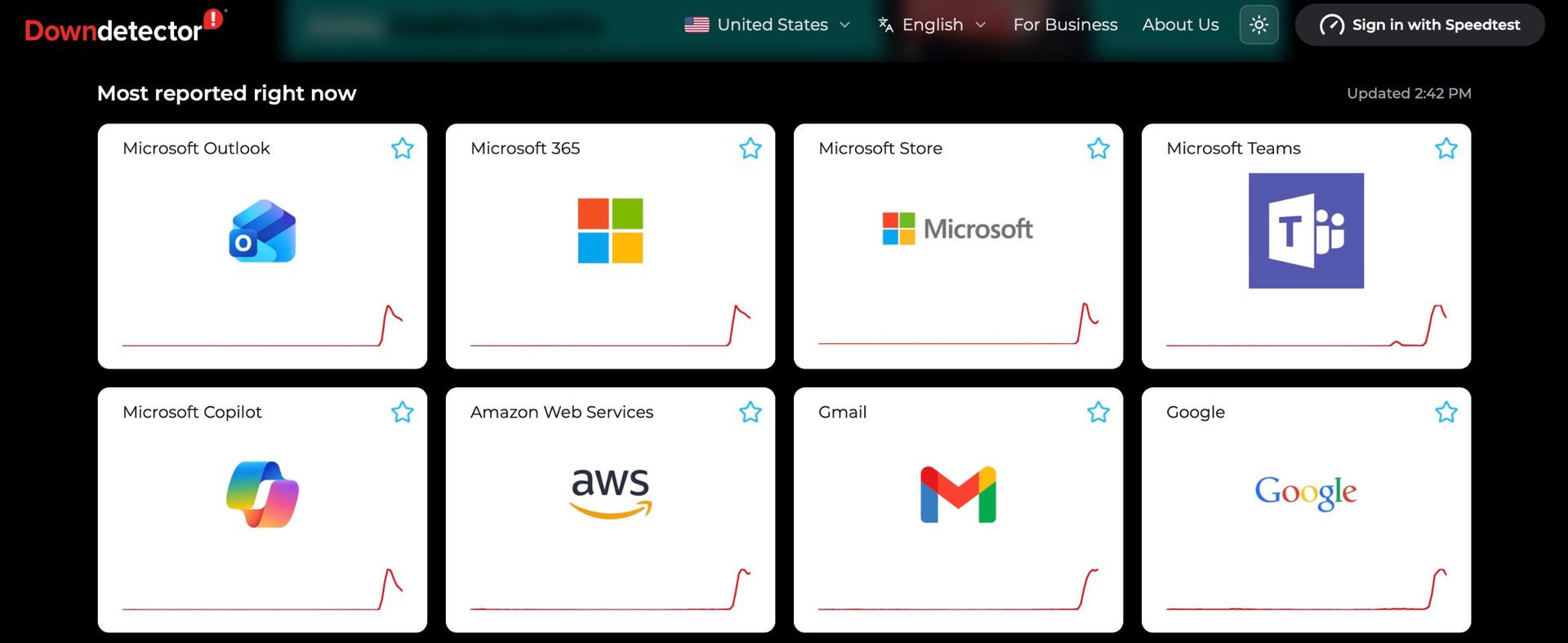
Down Detector Microsoft Outlook

(Image credit: Down Detector)

Microsoft is rolling out a fix or two

Some good news correlating with that slight dip on Down Detector: it appears that Microsoft's team is on the case and is now testing a fix, well, more specifically, two fixes concurrently. It seems that a main culprit was servers failing automated health checks and, as a result, becoming unavailable to users.

To address that, Microsoft is testing a configuration change and, at the same time, restarting each affected service to let them 'return to service.' That's a good sign all around.

While Microsoft's teams are working on a fix, impacted folks are still taking to social networks like X and Threads to comment and even offer a bit of joy in light of not being able to use Outlook or other 365 essentials.

Microsoft's 365 Status page is back online

This is likely a good sign — Microsoft's own 365 Status Page is back up and loading again, confirming the active issue: "Service degradation on Microsoft 365 (Business or Enterprise)."

The message reads in full:

User impact: Users may be unable to connect to multiple Microsoft 365 services. 

More info: Potentially impacted services include:
- Exchange Online

- Microsoft Teams

- SharePoint Online

- Microsoft Copilot 365

- Microsoft Defender XDR 

Current status: We're aggressively pursuing all pathways to reduce impact. As a precaution, we've paused all deployments and configuration changes while we review recent changes for any correlation to this event. We've determined that the elevated load isn't driven by an overall increase in traffic, but by a large number of servers being unexpectedly unavailable, which is shifting load onto the remaining infrastructure. We're investigating what's causing these servers to become unavailable while we work to safely return them to service. 

Scope of impact: This issue may affect users attempting to access the affected Microsoft 365 services. 

Next update by: Thursday, November 12, 2026, at 10:00 PM UTC

https://ift.tt/8oVieW0

Wednesday, 11 November 2026

Chinese researchers set new data records for 'hollow-core' fiber tech

  • Chinese researchers report major hollow-core fiber upgrades
  • Transmission capacities of 64Tbps were reached
  • The technology could replace solid-core fiber in infrastructure networks

No matter how fast your broadband (or 5G) connection is, it could always be faster, and 'hollow-core' fiber could help. Researchers in China have now set new records for the technology, demonstrating two-way, high-speed data transmission across a distance of 1,007 kilometers (626 miles).

As reported by CCTV (via Interesting Engineering), a transmission capacity of 64 terabits per second (Tbps) was achieved in each direction, enough to download 160 films in 4K resolution (50GB each) every second — so perfect for movie night. Individual signals took just 3.43 milliseconds to travel the whole length of the link.

The transmission distance is some 50 times greater than previous hollow-core trials of the same type, while latency was reduced by 30%, too. Signal-to-noise ratios and loss margins were also improved, according to the team from the China Telecom Research Institute, Yangtze Optical Fibre and Cable (YOFC), and ZTE Corporation.

It's a technology that companies are already investing in. For example, last year Microsoft signed a deal with Corning and Heraeus to scale up production of hollow-core fiber in order to upgrade its Azure cloud platform. By the end of this year, around 15,000 kilometers (9,321 miles) of hollow-core fiber should be in place supporting Azure.

A core change

Microsoft Hollow Core Fibre

Microsoft is one of the companies already investing in hollow-core fiber (Image credit: The Silicon Review)

As you can guess from the name, hollow-core fiber replaces the glass of solid-core fiber with air that has a glass lattice surrounding it. The glass edges keep optical signals heading in the right direction, but the hollow core means there's less resistance to the light — which results in faster transmission speeds and lower latency.

The technology is better suited to large infrastructure projects than the cabling that connects your broadband network to your home, but you'll still feel the benefit in the coming years: data centers are already making use of the technology, and it's been tipped to support cellular networks too in the future.

Several challenges remain, because hollow-core fiber is more challenging to make and install than solid-core fiber, the current norm. However, as this latest demonstration in China shows, scientists are gradually overcoming some of the problems that remain, making the tech more commercially viable all the time.

The glass lattice that acts as the container for the data transmissions is particularly important, with recent improvements being made in the design and composition of this glass to reduce lag and increase stability. All of which means, we can expect to hear a lot more about hollow-core fiber going forward.

https://ift.tt/9GrHD6u

Apple pulls the plug on its Support Community forums after 28 years

  • Apple is closing its official support forums
  • The site will shut its doors on November 20
  • You can no longer make new posts or reply to existing threads

If you’ve ever had a problem with an iPhone, Mac or other Apple device, chances are you’ve gone to the official Apple Support forums for help. Well, not for much longer, as Apple has just announced it is closing the message boards with almost immediate effect — marking the end of almost 30 years of people helping each other find solutions to their iDevice issues.

Users visiting the forums are now greeted with the following message from Apple:

“The AppleCare Support Community will permanently close on November 20, 2026. Starting today, the site will no longer accept new posts and is available in a read-only state. You can continue to find trusted guidance and support on the official Apple Support site.”

The post finished by saying: “We want to thank the community members who have contributed their time and expertise to help others with their Apple products.”

Apple has already barred people from making new posts or replying to existing threads, meaning the support forums are essentially in a state of suspended animation. There was no warning of the move and Apple didn’t give a reason for the closure, making it an abrupt ending for a resource that has existed in one form or another since 1998, when it was known as the Apple Tech Exchange.

A mixed response

Various Apple feature logos against a blue background.

(Image credit: Apple)

For many people, Apple’s official support forums were a good place to find answers to their tech problems. Not only were they frequented by knowledgeable customers, but company representatives often chimed in with helpful advice and suggestions.

Now that’s been suddenly shut down, leaving many people disappointed. “A shame. Some good stuff on there when Googling for help” said one user on Reddit, for example. “There was so much good advice on there” added another.

However, some Reddit users weren’t sad to see the community go, with many commenting on their poor experiences and the lack of helpful responses they received when turning to the Apple Support forum. "Good riddance" as one commenter put it, while another said the forum was "routinely a useless top hit on Google". While we can’t know Apple’s reasoning for sure, perhaps the forums’ limited utility played into it.

Whatever the case, the official Apple Support community is on the way out. You’ve only got until November 20 to find an answer there before it goes offline for good, taking with it 28 years of tech support knowhow.

https://ift.tt/Ven5iq8

Tuesday, 10 November 2026

Disney Imagineering has a new idea for keeping you off your phone at Disneyland

  • Disney's new AI guide could make navigating Disneyland easier
  • Works with Ray-Ban Metas, AirPods, and your iPhone
  • Coming soon in beta for Magic Key holders through Imagineering Labs

When you're at a Disney park, or really any theme park, the idea is to be immersed in the experience, right? But there's also no sugarcoating the fact that a phone, especially one equipped with the Disneyland app, My Disney Experience for Walt Disney World, or any other park app, is pretty essential for planning and making the most of your day.

The app is essentially the brain of your visit, letting you check wait times for attractions, meet-and-greets, and other experiences, but also helping you find your way to food — I mean, we're all after a corn dog or a churro, right? — other services, and entertainment. But as we've heard from Disney Parks leaders in the past, constantly looking down at your phone can break the immersion.

Now, we're getting a glimpse at a potential alternative, and it's coming soon for a select group of Disneyland guests through a new Disney Imagineering app that's set to offer a rare peek behind the curtain.

Dubbed Imagineering Labs, the opt-in experience won't replace the main Disneyland app, but it will give guests the chance to try select experiences before they're fully developed or even guaranteed to launch. It's a pretty exciting approach, especially since feedback from guests could help shape what Imagineers ultimately bring to life.

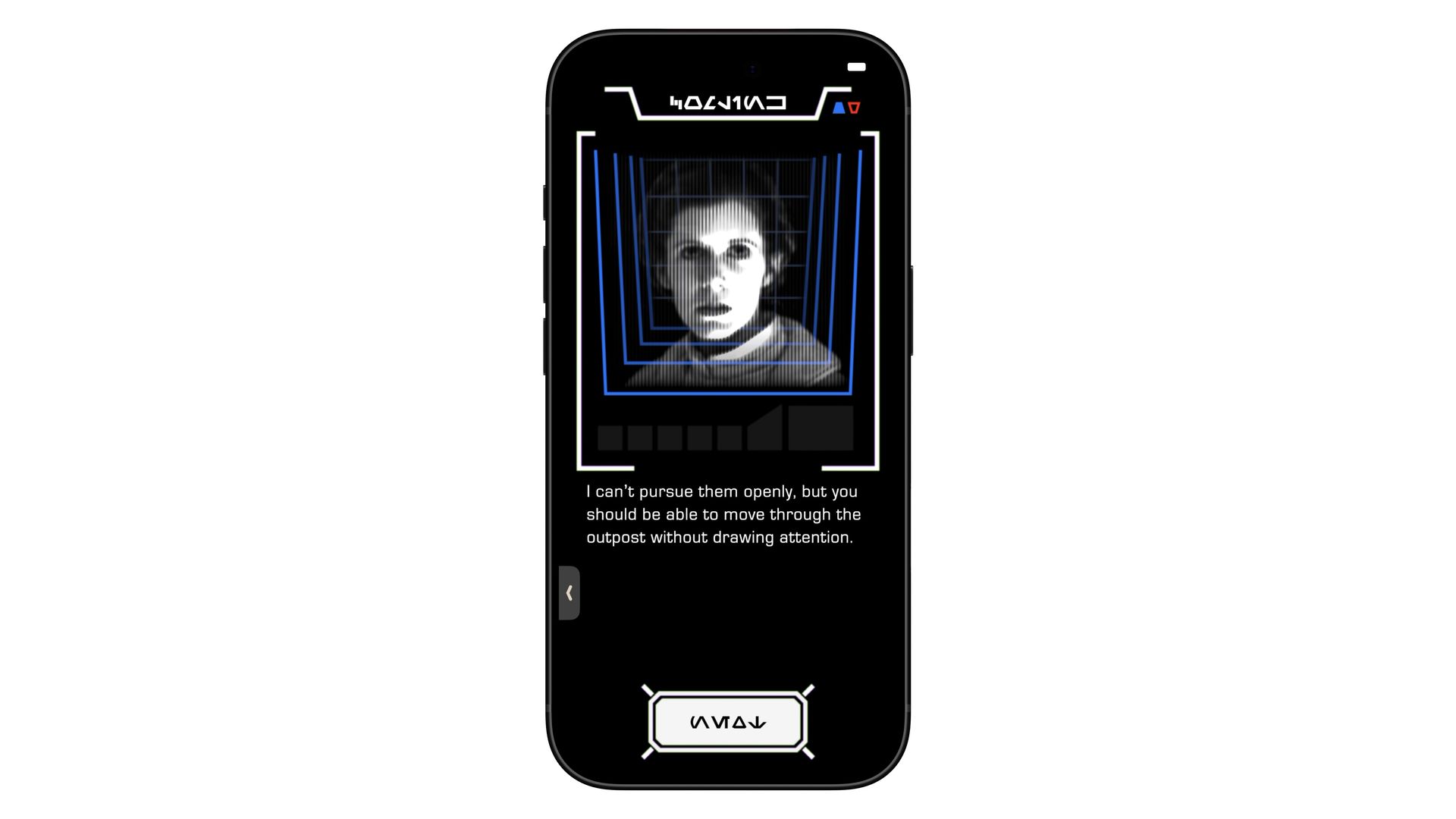
The first experiment is an augmented reality Star Wars adventure called Secrets of the Spire, which is decidedly entertainment-focused and uses your iPhone's camera to overlay digital elements onto the environment and trigger physical reactions throughout Galaxy's Edge.

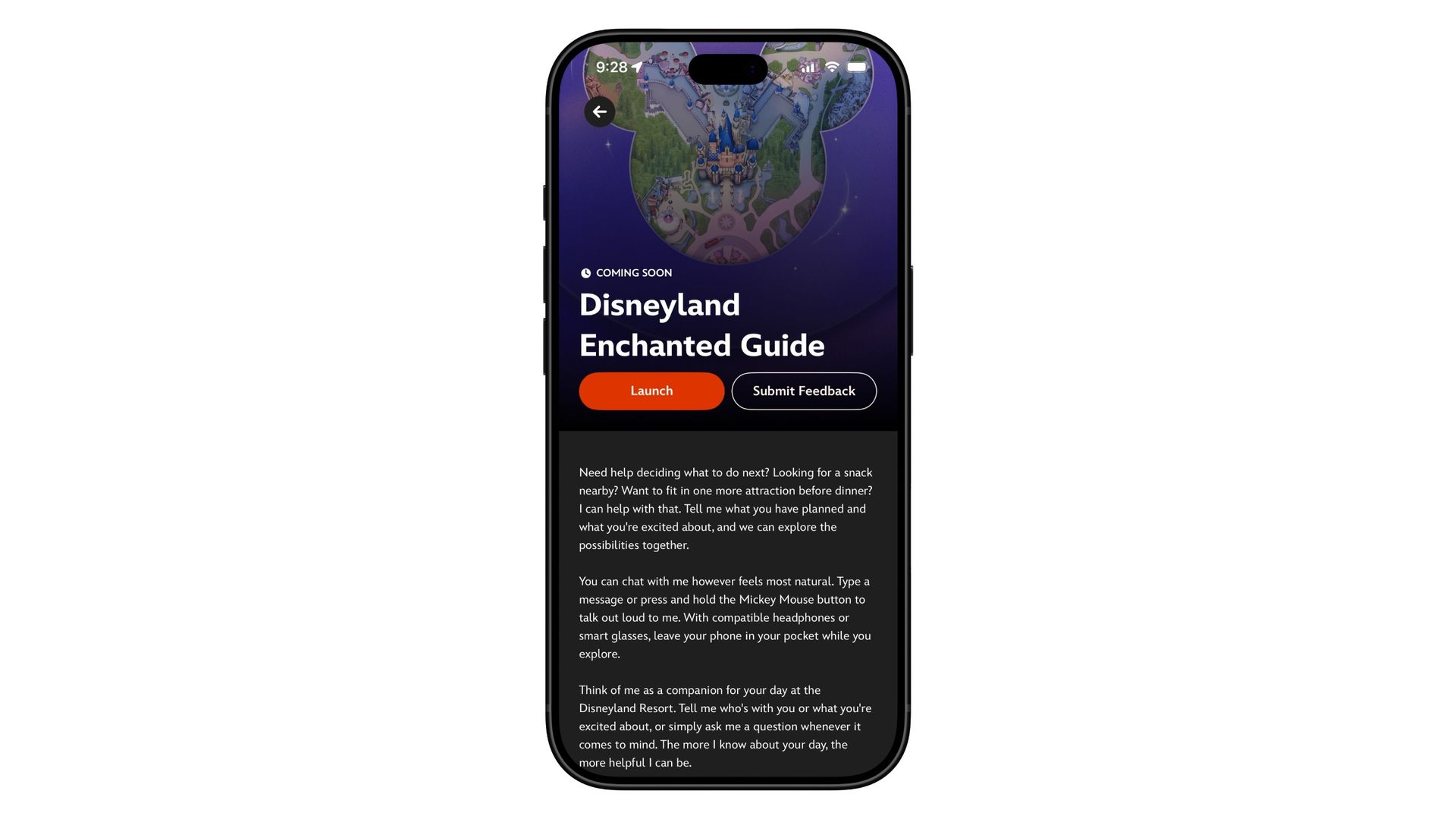
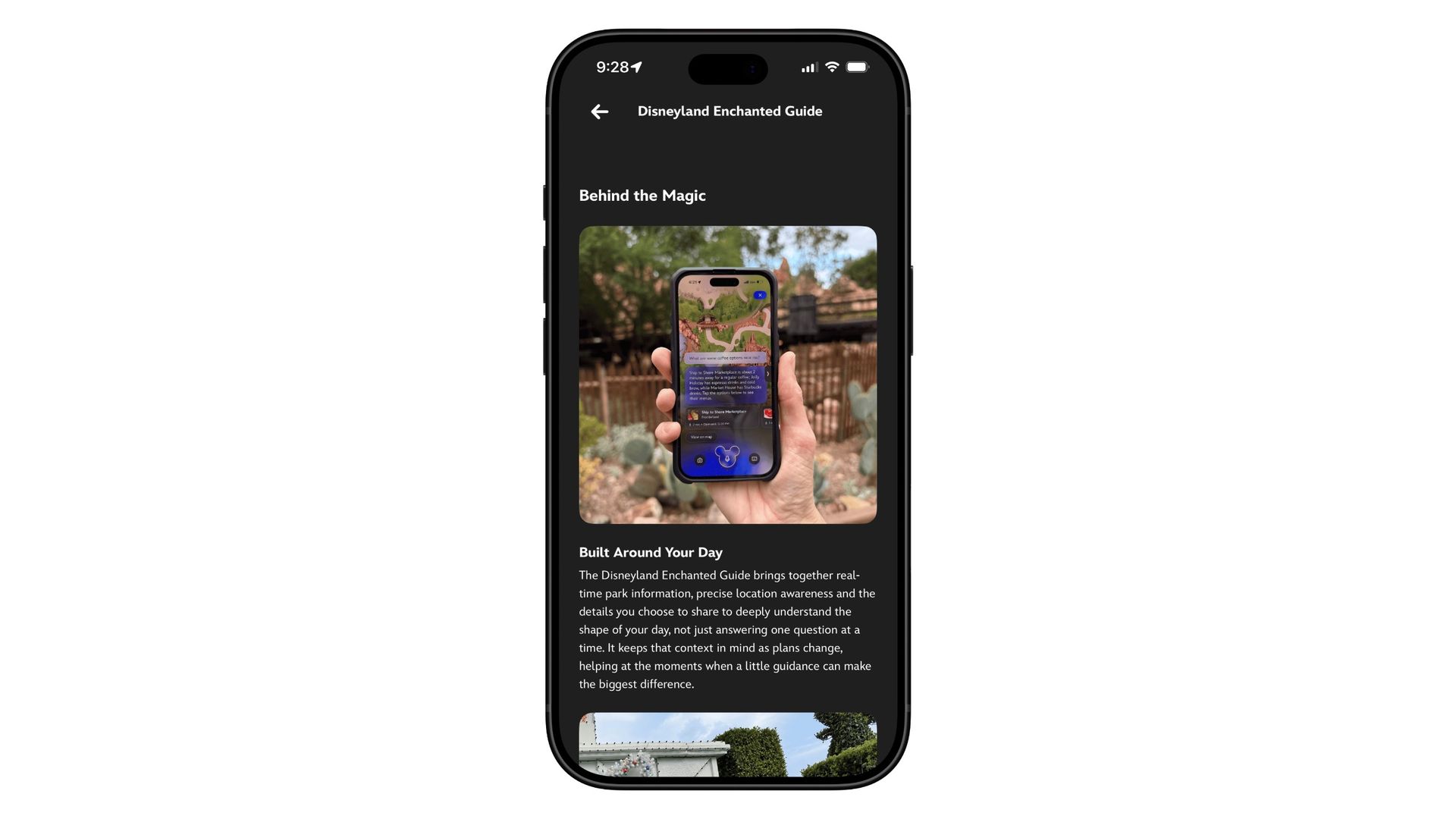
But the Disneyland Enchanted Guide is a bit more utility-focused, and it's seriously piquing my interest. It's an AI-powered assistant that lets you ask questions in natural language, like, 'Where's the nearest Dole Whip?' 'How long is the wait for Rise of the Resistance right now?' or whether you should come back later if the line is too long. It's also multimodal, meaning you can point your phone's camera at something in the park and ask about it.

Disneyland Enchanted Guide in Imagineering Labs beta app

(Image credit: Disney)

Asa Kalama, Vice President and Executive Creative Director at Walt Disney Imagineering, described the thinking behind it to TechRadar: “Some of us are lucky enough to have that, you know, big Disney Parks fan as a friend, and there's no better park-going adventure than alongside them. They know all the tips, they know all the tricks, they can help you navigate your day. Well, what if we were able to provide that to every single guest that came to the park?”

And that's really the idea here. Rather than digging through menus or bouncing between different parts of an app, you can simply ask the Enchanted Guide and get an answer.

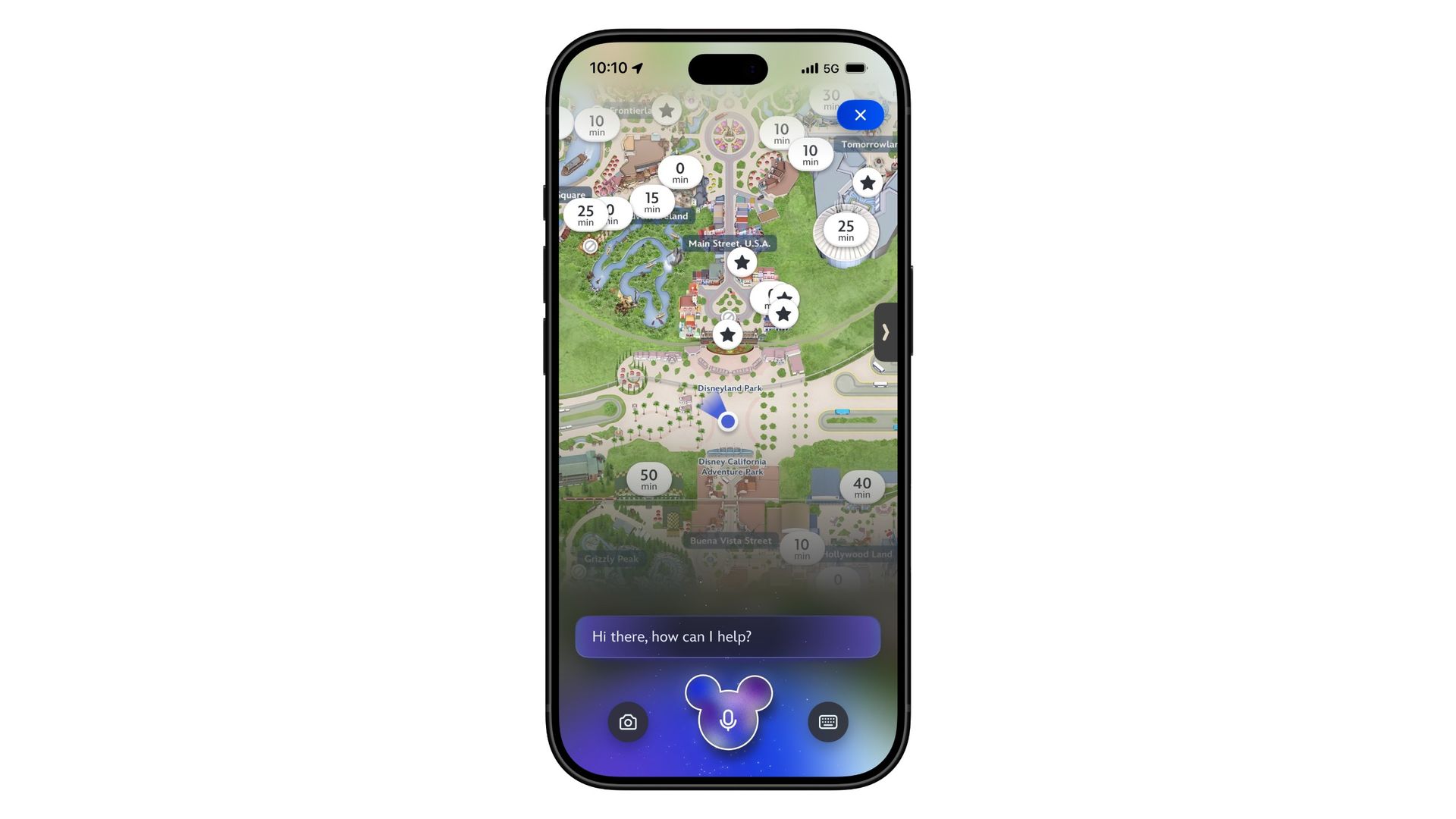
The interface is pretty neat, too. Rather than a traditional chatbot screen, the Enchanted Guide puts a familiar Disneyland map front and center, complete with attraction wait times and a glowing Mickey-shaped button at the bottom for asking questions. There are also buttons to type or use your camera, and the Guide can take into account your location, plans, and details you choose to share to make its recommendations more useful throughout the day.

It's using a combination of AI models to power the intelligence behind the Enchanted Guide, but there's been a whole host of customizations to make it feel uniquely Disney. Kalama explained that the team has worked to ensure the information comes from Disney's trusted sources, including real-time park information, and is delivered in a way that feels like the Disney voice, both literally and figuratively. From the pre-recorded preview I saw, it almost feels like chatting with a Cast Member you might stop on Main Street.

It gets even more interesting, though, when you can use another device to interact with it.

Disneyland Enchanted Guide in Imagineering Labs beta app

(Image credit: Disney)

You might recall that at Meta Connect 2025, Disney Imagineering showed off an early tease of an experience at Disneyland using Ray-Ban Meta smart glasses, letting guests look at their surroundings, ask questions, and hear responses through the glasses. And while that was just an early glimpse, the Disneyland Enchanted Guide is bringing that idea to life, letting you interact with Disney's new AI assistant without constantly reaching for your phone.

Essentially, you can connect the Disneyland Enchanted Guide within the Imagineering Labs app to compatible Meta smart glasses using Meta's Wearables Device Access Toolkit. Once that's enabled and you're rocking the shades, you can chat with the Guide through the glasses without necessarily needing to pull out your connected phone.

The Enchanted Guide can make use of the glasses' microphones, speakers, and cameras. That means you could look at an attraction, ask about it, and get real-time information without even knowing its name.

Speaking with TechRadar, Chris Barbour, Director, Content & Ecosystem, Meta, explained that the partnership with Disney Imagineering started with a pretty simple idea: “The best of keep me immersed, keep me not having to look down at my phone, but also give me all the advantages of the technology being present for me.”

As Chris explained, one of his favorite parts is “being able to look at an attraction and get real-time information about that,” with the Guide using what the camera sees to understand what you're asking about.

On paper, and without having tested it yet, that could be incredibly handy within the park.

Meta Ray-Ban Gen 3

(Image credit: Future/Jacob Krol)

For instance, Asa shared a few examples, from checking the current wait time for an attraction to something a little more useful, like getting an alert when that wait drops below a certain threshold.

“Can you let me know when Dumbo the Flying Elephant has a wait time of under 10 minutes?”

The Enchanted Guide could then deliver a notification when that condition is met, leaving you free to enjoy other parts of the park in the meantime.

Imagine if it could also remind you when your next Lightning Lane reservation is coming up or if a slot opens for an attraction you want to experience. That's the kind of functionality I'd love to see. While Asa didn't confirm either capability, he did note that some features, including actually making Lightning Lane reservations, still live within the core Disneyland app. For now, the Enchanted Guide can explain how Lightning Lanes work, but will send you over to the main app when it's time to book one.

“There are certain capabilities that are on our roadmap that aren't yet currently implemented,” Kalama explained.

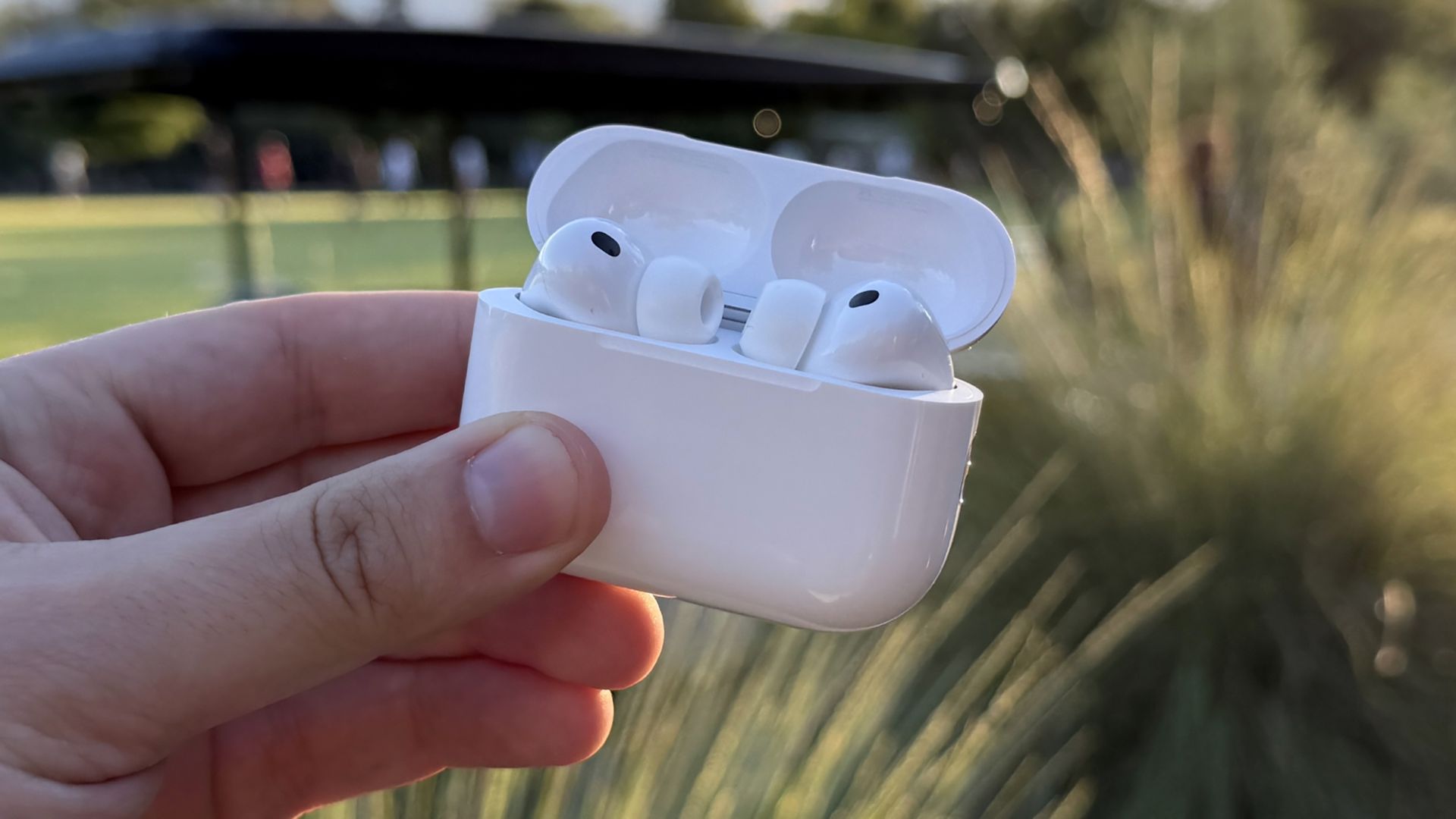
And while the Meta Ray-Ban integration is especially interesting, you don't necessarily need smart glasses to go hands-free with the Enchanted Guide. Bluetooth earbuds, including Apple's AirPods, will also work, letting you keep your iPhone tucked away while exploring Disneyland. AirPods won't support multi-modal on their own, as they don't have cameras ... yet.

Of course, wearing camera-equipped smart glasses in the parks could raise some privacy concerns. Meta Ray-Ban glasses have a built-in capture LED that indicates when the camera is in use, but that might not be immediately obvious to everyone around you. Guests are already accustomed to seeing phones and earbuds throughout the parks, so just be prepared for some looks.

Apple AirPods Pro 3

(Image credit: Future)

There will even be a dedicated wake word for the Enchanted Guide, though it's still being finalized ahead of launch. That means you won't need to pull out your phone and tap the Mickey-shaped microphone button every time you want to ask a question. I'm especially curious to see what Disney lands on for the wake word.

And given that this is an AI assistant capable of understanding images and voice prompts, privacy is another important consideration. Both prompts and images are processed and then deleted, and the Enchanted Guide doesn't support video. So while it can use a camera to understand what you're looking at, it isn't designed to continuously analyze a live video feed.

Of course, this is still an experiment, and there's plenty we don't know about how well it will all work. I'm especially curious to see how quickly the Enchanted Guide responds, how accurately it understands what's happening around you, and whether it really can make navigating Disneyland easier.

And we'll have to wait a little longer to find out.

The Disneyland Enchanted Guide is still listed as coming soon within Imagineering Labs, and when it does launch, it'll initially be limited to Disneyland Magic Key holders. The experience will live within the Imagineering Labs app, where you'll sign in with your Disney account. With an eligible Magic Key linked to your profile, you'll be able to access the Guide once it's available for testing.

Disneyland Enchanted Guide in Imagineering Labs beta app

(Image credit: Disney)

There will likely be some bugs, hiccups, or slowdowns along the way, but that's part of the whole Imagineering Labs approach. Rather than waiting until an experience is completely finished, Disney is opening up the development process and letting guests help shape what comes next.

A wider rollout is planned, though there's no firm date just yet, and for now, this is very much a Disneyland-focused experience.

But the goal behind it all is one that I think makes a lot of sense.

As Kalama put it, “The goal here really is to keep you invested and engaged with the physical world around you and the friends and family that you've brought to the park, to get you out of your device and back to your vacation as quickly as possible.”

And that's what has me excited about the Disneyland Enchanted Guide. Disney isn't trying to replace the magic of being in the parks with another screen or another digital experience. Instead, it's exploring how technology can help you make the most of your day without constantly having to reach for your smartphone.

There's still plenty to prove, especially when it comes to how well the AI works in a busy, sometimes unpredictable theme park environment. But if Disney can pull this off, the Enchanted Guide could become the kind of park companion you don't realize you need until you've spent a day with it.

And if it means more time enjoying Disneyland and less time staring at my iPhone, I'm all for it.

https://ift.tt/QzCUTaW

Disney Imagineering is giving Disneyland guests the chance to help shape its next big ideas

  • The Imagineering Labs app lets Disneyland guests test experimental experiences
  • Star Wars: Galaxy's Edge gets an AR adventure featuring Leia
  • Guest feedback will help Imagineers shape future Disney Parks experiences

If you’ve ever wanted to get a peek at what Disney Parks is building next — or even help Imagineers shape new experiences — the House of Mouse is starting to open up its creative process a bit more.

We’ve already had a glimpse behind the scenes with the Disney+ series We Call It Imagineering; and now, through a new app, select guests will be able to try new experiences before they’re fully signed, sealed, and delivered.

Asa Kalama, Vice President, Executive Creative Director at Walt Disney Imagineering, told TechRadar, “rather than waiting for an experience to be fully complete and polished, we're actually offering guests the opportunity to try out new experiences, whether they be entertainment-focused or maybe more utility in nature.”

It’s a different approach, and one Kalama was quick to note is new for Disney.

Disney Imagineering Labs Secrets of the Spire

(Image credit: Disney)

At its heart is a new Disney Imagineering Labs iOS app, which will sit alongside the already-available Disneyland Resort app. An Android app is coming at a later date, but for now you'll need an iPhone.

You’ll need to sign in with your Disney account, and initial access to the experiments within Imagineering Labs will be reserved for Disneyland Magic Key holders — essentially the resort’s annual passholders and some of its biggest fans. A broader rollout to other Disneyland guests is “coming soon,” though there’s no exact timeframe just yet.

The idea is that new experiences, or parts of them, will be available for guests to test while they're still in development. It's certainly exciting, especially for someone like me who's fascinated by how Imagineering blends technology and storytelling.

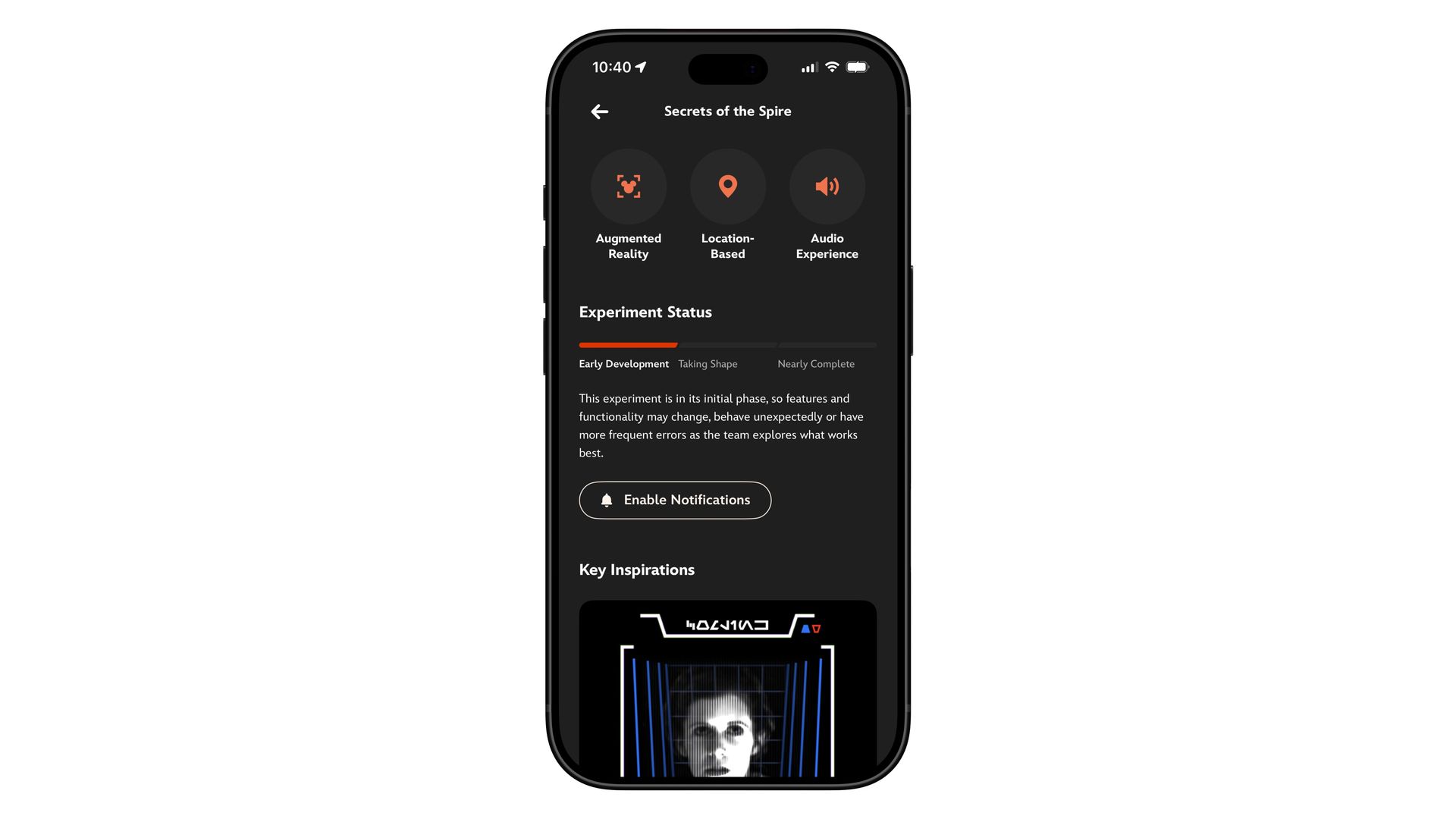
As Kalama explained, “We love this because it allows designers and project teams to get meaningful feedback while the paint is still wet.” It gives Imagineers the chance to make important decisions about what ultimately gets developed, shipped, or potentially scrapped. It’s also clear these aren’t finished experiences, and within the app you’ll get a sense of each project's phase, with labels ranging from 'Early development' to 'Taking shape' and 'Nearly complete.'

And while Disney isn't committing to a regular schedule of new experiments or updates, guest feedback will help Imagineers decide whether an idea is worth pursuing further, or if it's time to move on to something else.

A new Star Wars adventure

Secrets of the Spire scanning

(Image credit: Disney)

So, what's first? Well, we're heading to a galaxy far, far away, and an experience that seems pretty well thought-out. It also sees Disney heading back down the road of AR. Secrets of the Spire is a new augmented-reality experience that will take place inside Star Wars: Galaxy's Edge at Disneyland, specifically Black Spire Outpost, home to the Millennium Falcon: Smugglers Run attraction and the TIE Echelon.

And if you've ever used the original Star Wars Datapad or enjoyed Batuu Bounty Hunters, this might sound familiar. Kalama even described it as “a spiritual successor to the Datapad experience that used to exist within the land,” calling it “the next chapter” of that adventure.

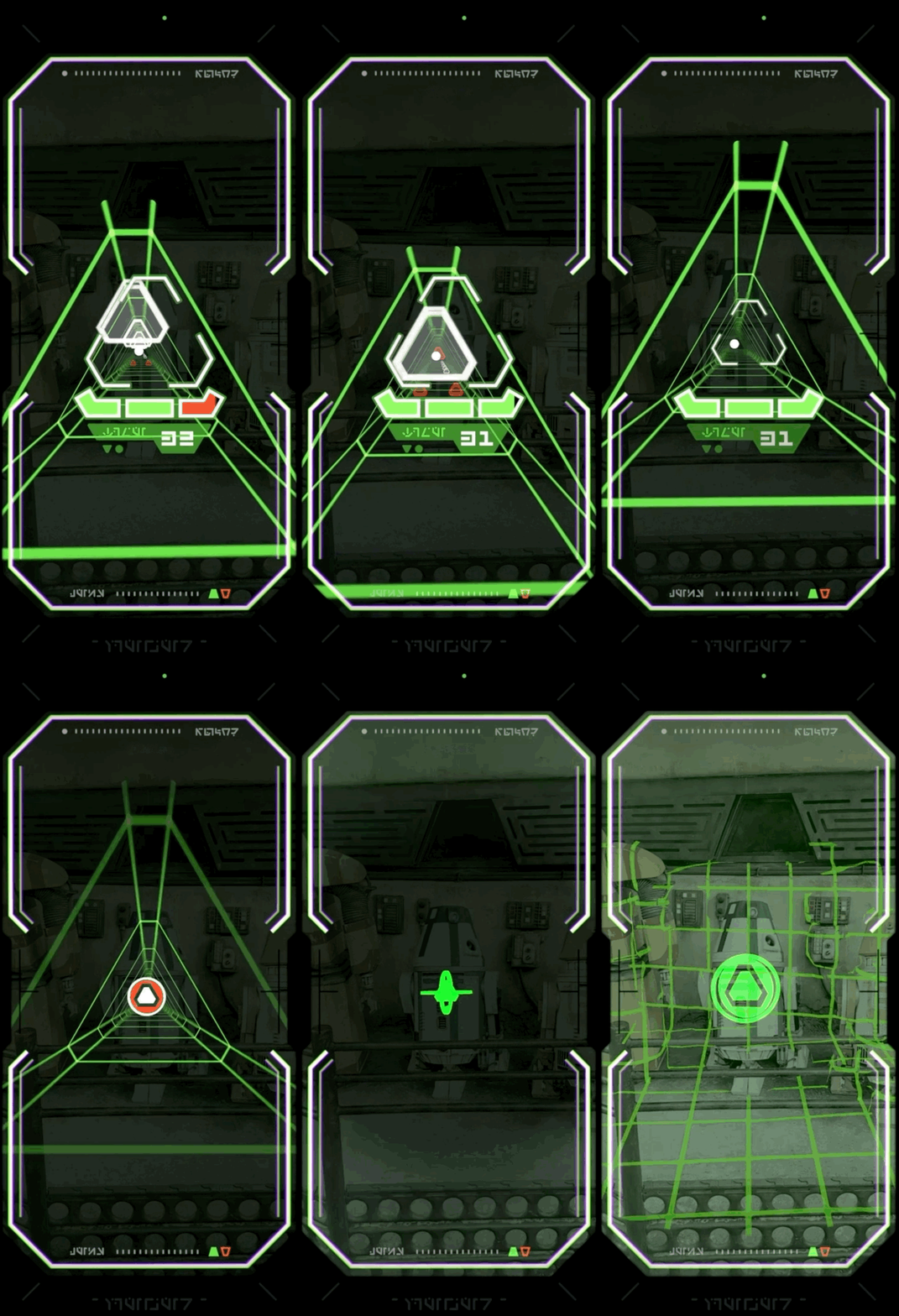
This time around, you'll receive a transmission from Leia Organa, who needs your help supporting the Rebellion. Your iPhone effectively becomes a pair of Star Wars quadnoculars (aka space binoculars), letting you track down signals across Black Spire Outpost, scan your surroundings, and slice into systems — essentially the Star Wars equivalent of hacking.

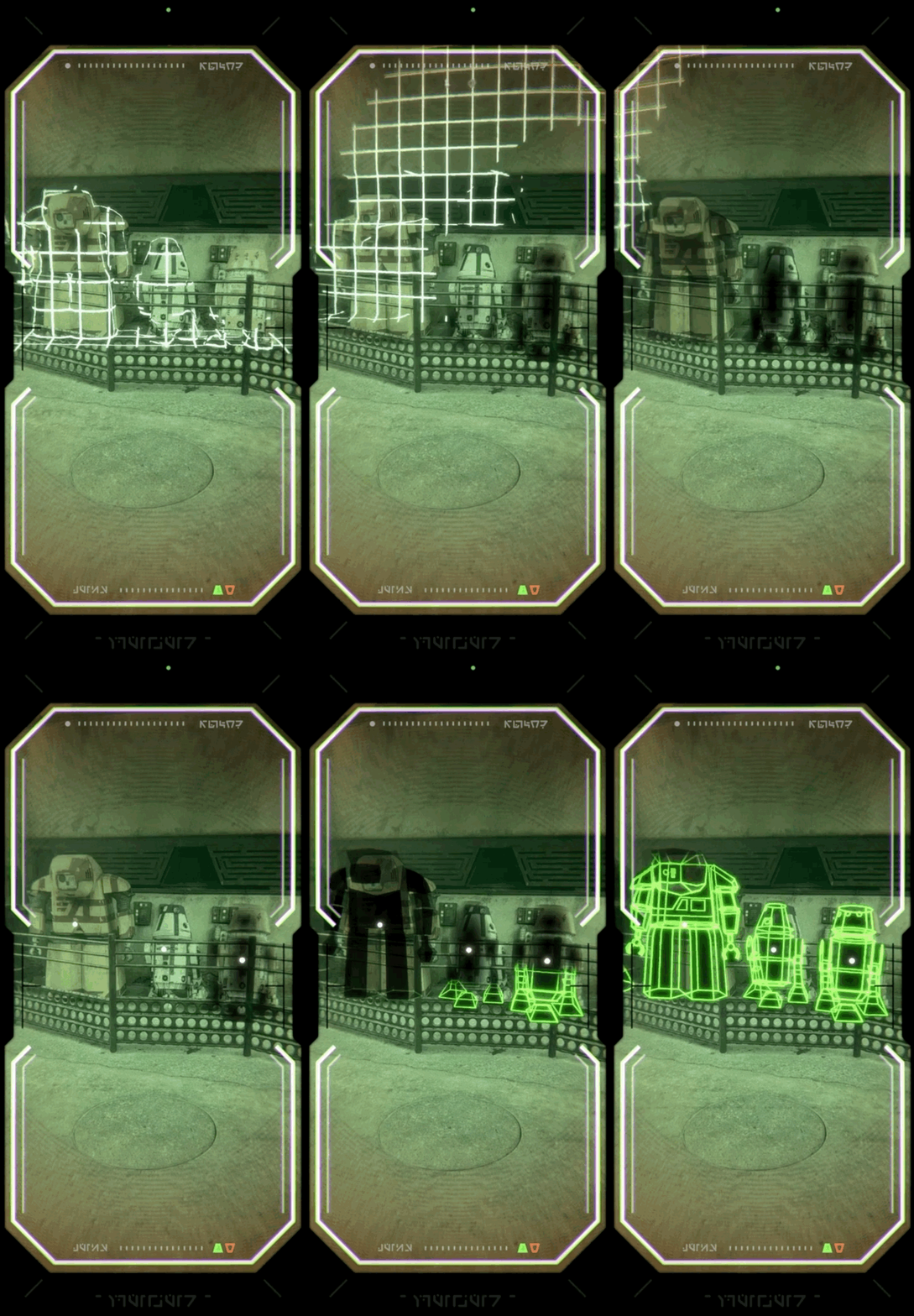
Rather than just standing and scanning with your phone, the experience is testing a more involved AR gameplay mechanic. Once you reach a location, your quadnoculars activate a scan mode that creates a grid-like mesh over the real-world environment, helping you hone in on the source of a transmission. From there, you'll reposition your device to locate the signal and begin slicing into a system, whether that's connected to a ship or a droid on land.

And there's a real-world ending here, too. As Kalama explained, “each of these slicing moments is then connected to a physical effect, so there's a physical payoff for that interaction.” In the preview I saw, successfully slicing into a droid brought it to life, with its head spinning in response.

You’ll play Spires of the Outpost in six locations throughout the land, potentially bridging classic attractions, shopping, or chatting with roaming characters. I like the notion of bridging digital and physical further in an already themed land, though.

Secrets of the Spire gameplay

(Image credit: Disney)

And, in a particularly fun twist, you'll eventually get to decide whether to remain loyal to Leia and the Rebellion or betray her and side with the Empire. Depending on your choice, the experience culminates near either the Millennium Falcon or the TIE Echelon.

There is an important distinction here, though. Secrets of the Spire isn't a full-fledged adventure just yet. Disney describes this initial release as more of a prologue, designed to test a specific AR gameplay mechanic and learn how guests interact with it.

And the feedback Disney is looking for goes beyond whether you enjoyed the adventure. Kalama raised questions like, “Does it feel like there's too much plot? Is there not enough plot?” Imagineers are also interested in the difficulty and duration of the interactions, with those insights helping to inform subsequent versions of the experience.

There are also some requirements and expectations here. Disney says it's designed for daytime use and requires an iPhone 14 or newer. To its credit, Disney is upfront about what you're getting — you might encounter more errors than usual, and functionality, gameplay, or features could change or even be removed.

Disney Imagineering Labs Secrets of the Spire

(Image credit: Disney)

Hopefully just the beginning

Even so, this is an exciting development for Imagineering, and Disney at large. It's another rare look into the creative process, and rather than simply stumbling onto a potential play-test inside the park, Disney is deploying a dedicated app and giving guests a chance to try new experiences while they're still being developed.

It makes sense that Disney is starting with a select group, and arguably some of the biggest fans of the parks, in Disneyland Magic Key holders. But I do hope we see a wider release sooner rather than later. After all, part of the excitement here is getting a look at what Imagineers are dreaming up, even if some of those ideas never ship.

There's also the question of where Imagineering Labs goes next. For now, the focus is firmly on Disneyland, and with Secrets of the Spire, that makes sense. Star Wars: Galaxy's Edge at Disneyland has seen its timeline reworked to make room for classic characters, including Leia Organa. Still, as someone who's spent plenty of time exploring Galaxy's Edge on both coasts, I'd love to see experiments like this eventually make their way to Disney World, too.

And while Secrets of the Spire is the first experiment, it won't be the only one. It's very much focused on storytelling and immersion, effectively turning your iPhone into a Star Wars gadget that you can use while exploring Batuu. It's additive to the experience, giving you another way to interact with Galaxy's Edge if you choose so.

But Disney Imagineering is also exploring something more utility-focused; and interestingly, something that could help you spend less time looking at your phone while visiting the parks.

Disney Imagineering Labs Secrets of the Spire

(Image credit: Disney)

You might recall that at Meta Connect 2025, Disney Imagineering and Meta teased the possibility of using Meta Ray-Ban glasses within Disney Parks. And this next experiment does take advantage of wearable technology in a pretty similar fashion.

Dubbed the Disneyland Enchanted Guide, it's an AI-powered assistant designed to help you navigate Disneyland, check attraction wait times, get recommendations, and more. You can talk to it or type questions on your iPhone, and it's multimodal, meaning it can also understand images. But perhaps most interestingly, you can interact with it hands-free through devices like Meta Ray-Ban smart glasses or Bluetooth earbuds, such as AirPods.

It's a pretty interesting contrast to Secrets of the Spire. One encourages you to pull out your iPhone and immerse yourself even further in the world of Star Wars, while the other aims to help you put it away and get back to enjoying the parks.

And I think that's what makes Imagineering Labs so interesting. We're getting a look at two very different approaches to technology in Disney Parks. I'm especially curious to see what Imagineering dreams up next — and hopefully, more of us will get the chance to try these experiments for ourselves soon.

https://ift.tt/2HvzKDh

Monday, 9 November 2026

Some United Airlines flights now let you sign into Spotify on your flight — and it's totally free

  • United Airlines now lets you stream Spotify on its in-flight entertainment system
  • Available on some flights now, but rolling out to wider destinations in 2027
  • Doesn't cost you for in-flight Wi-Fi (although you'll need a Spotify account)

Passport: check. Boarding pass: check. Water bottle you'll forget to empty until the security gate and will therefore have to drink in one go? Check. But have you remembered to download your Spotify playlists so you can listen while your phone is in airplane mode? Probably not — I always forget until the flight's boarding too.

Well, Spotify says there's no such thing as too late, because its new partnership ensures you can listen when you're at cruising altitude. This collab is with United, a US-based airline which the music streaming giant worked with before.

Rolling out immediately, but only to certain flights, you'll now be able to access your Spotify account via the plane's in-flight entertainment system. Initially, this'll just apply if the plane has a Starlink connection, but apparently in 2027 more of its fleet will support the function.

This is the second stage of United's Spotify collab. The first part put limited Spotify account libraries onto the airline's in-flight entertainment machines, with 450 hours of podcasts and playlists accessible — but if you share my views on what the streaming site tries to push, you'll agree that it's much better to be able to choose what you listen to.

Hitting those Wrapped numbers

You won't need to pay for in-flight Wi-Fi access to be able to use the United Spotify terminals. Otherwise, why wouldn't you pay for Wi-Fi and use it on your phone? However Spotify's press release didn't say if it's for all users, or just paid-for Premium accounts.

Instead, you need to log into your flight's United Wi-Fi network, open Spotify on the seat-back screen, and use your phone's camera to scan a QR code to log in. You'll quickly have access to all of your Spotify playlists and podcasts to enjoy on your flight. Presumably, you'll be automatically logged out once your flight ends.

Of course, the caveat here is that in-flight entertainment generally requires a wired headphone connection, but thankfully there are receivers which let you use your wireless headphones on flights and we covered some new ones recently.

Personally, when I'm not reading on a flight, I like to use those seat-back screens to smash through some recent movies I haven't seen before — watching them on a 240p display that judders in turbulence is probably just what the director intended. But if you prefer to be listening to music non-stop, or have a go-to napping playlist which you've forgotten to download, this'll be a useful addition to your journey.

With Spotify wrapped coming up, if you've got an intended result in mind, it's time to start playing that track on repeat so it's top of your charts. United's making that easy: log in, put Mmmbop on repeat, and nap through it for your 12-hour flight.

https://ift.tt/kr4IJRg

Tuesday, 3 November 2026

Safari finally gets vertical tabs — and a new way to make any site dark, all thanks to iOS 27.3

  • Safari is getting some useful updates
  • Vertical tabs will arrive for iOS, iPadOS, and macOS, but it's only in the dev betas for now
  • Other features like Adaptive Dark Mode and Siri AI browser tools are coming, too, along with our first glimpse of the new Audio Intelligence capabilities

On the global web browser stage, Safari lags behind Chrome, but when it comes to Apple's 2.5 billion customers, it reigns supreme. Yet, even those devoted users might've noticed that their favorite browser was lacking at least one long-sought feature. Now, with the introduction of Dev Betas for iOS 27.3, iPadOS 27.3, and macOS 27.3, they're getting their wish.

In beta today, the platform upgrade actually brings a series of relatively small but important updates to Safari across the iPhone Duo, iPad, and Mac, but chief among them is vertical tabs.

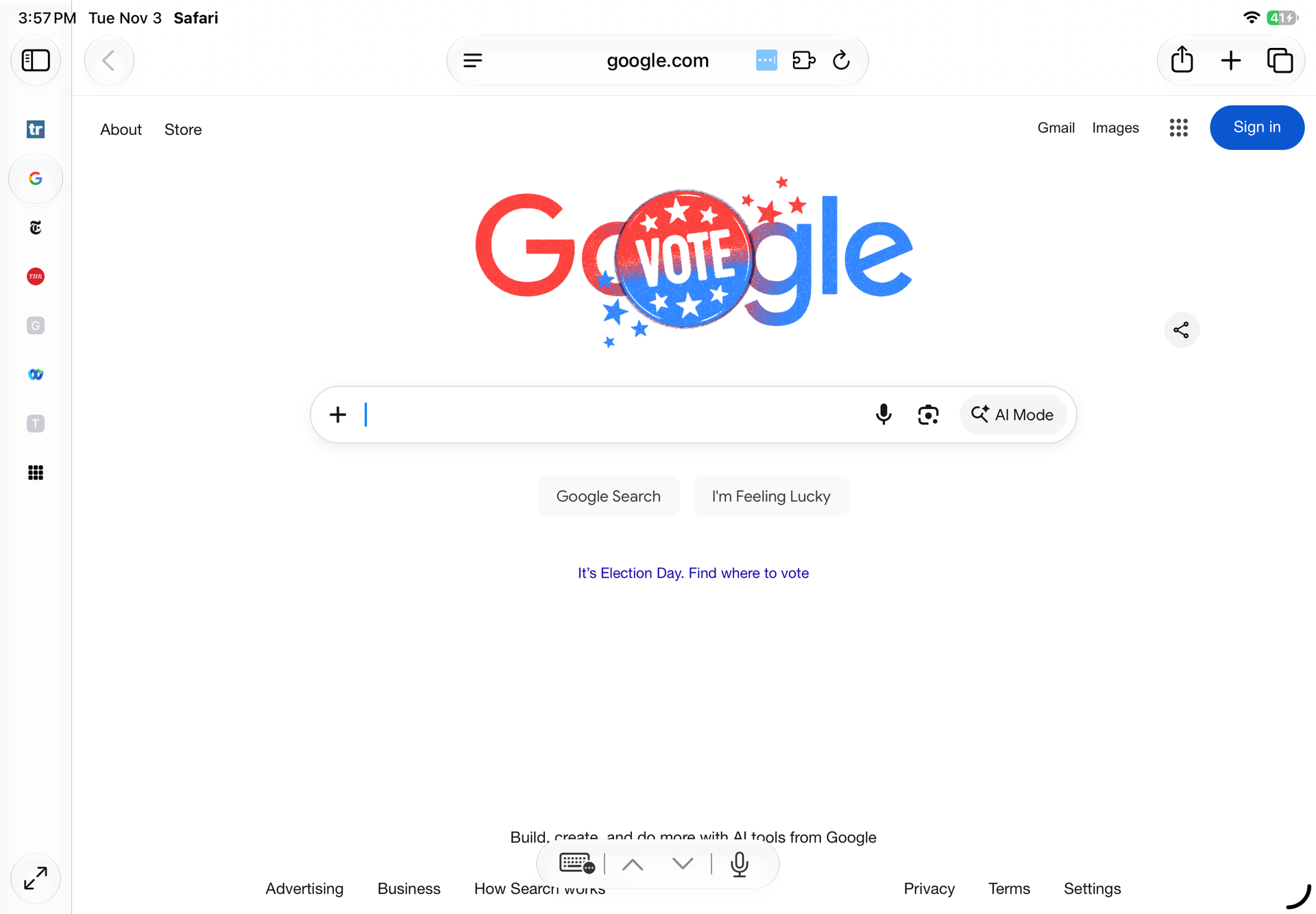
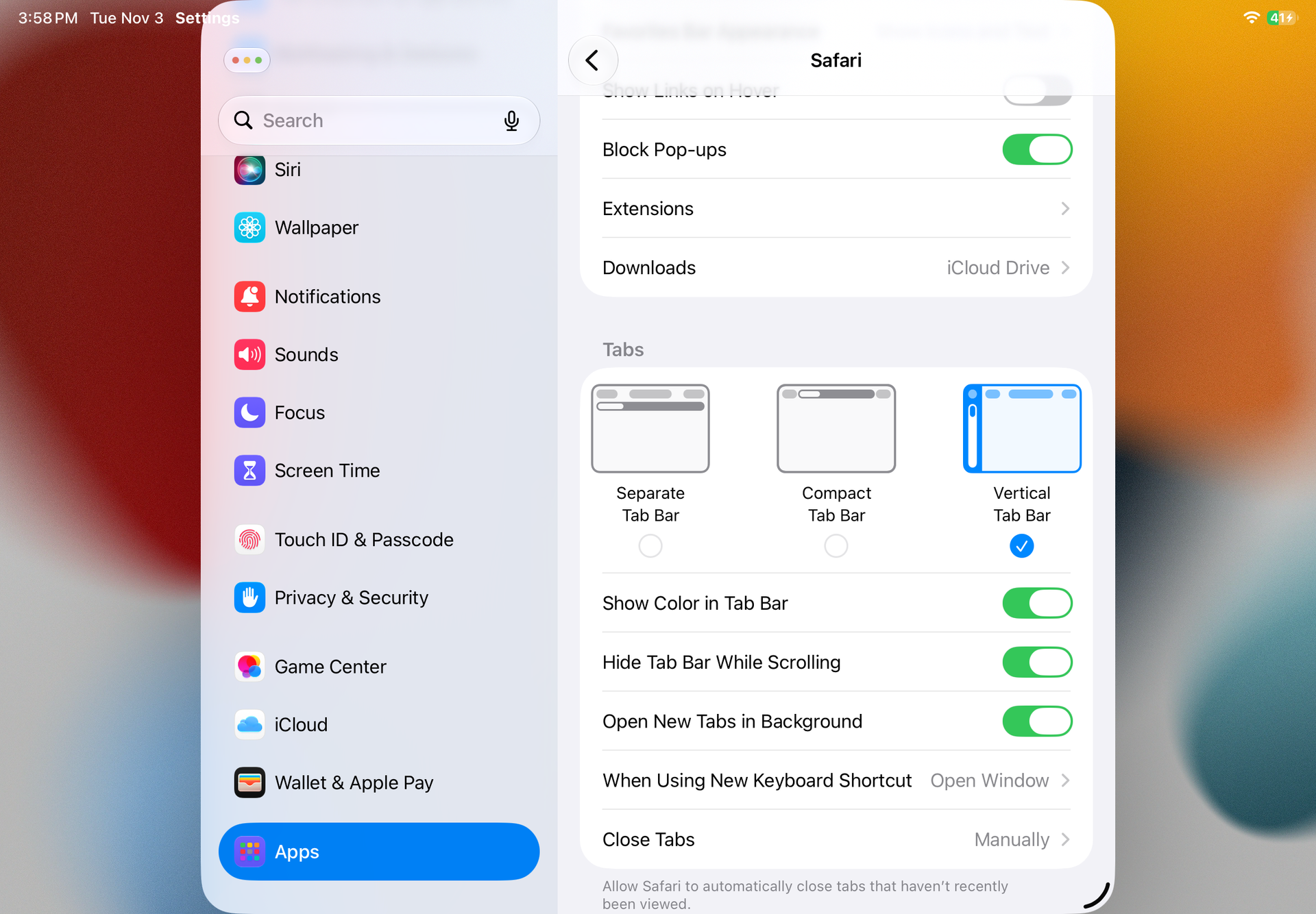
As is often the case, Apple didn't invent this idea. I started using vertical tabs in, of all things, Microsoft Edge years ago, and even Chrome recently added them. Now, with the Safari update, you can open the Safari View Menu or hop into Settings and select vertical tabs.

iOS 27.3 Vertical Tabs in Safari
Future
iOS 27.3 Vertical Tabs in Safari
Future

By default, the tabs, which will live on the left side of your browser window in iPadOS and macOS (and iOS for the iPhone Duo), appear as icons — a space-saving measure. You can hover over any of them for a quick look at the hidden browser window.

There are other vertical tab features like the ability to pin tabs at the top of your list by dragging and dropping them, and tab groups. The tabs will work on the iPad and, yes, the new iPhone Duo in portrait and landscape mode.

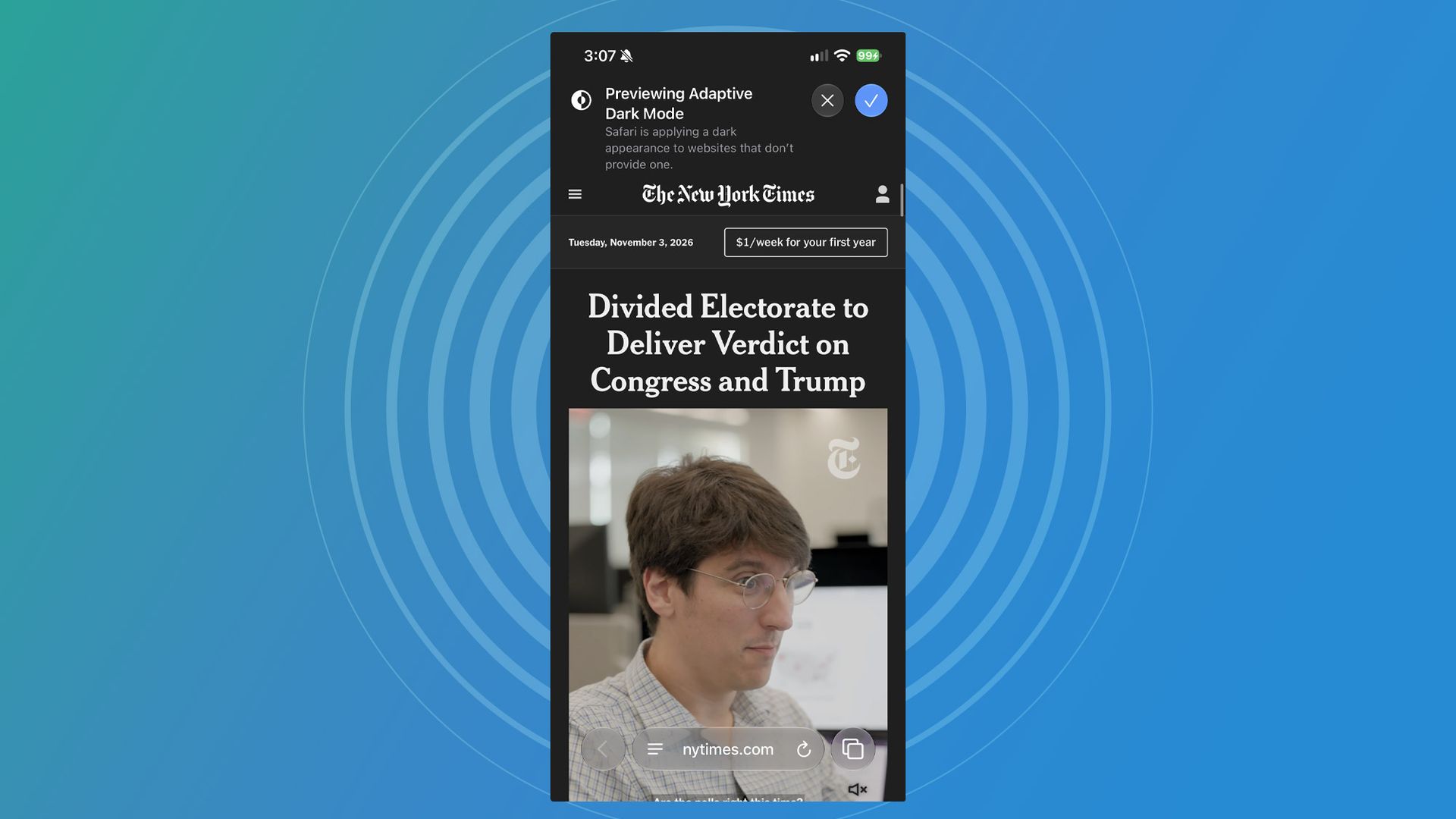
iOS 27.3 Adaptive Dark Mode

(Image credit: Future)

The platform updates also bring a new kind of Dark Mode. Instead of only showing the mode on web pages that support it, Safari will offer to tune unsupported pages to Dark Mode too, but in a way, Apple promises, that won't ruin the sites. The Adaptive Dark Mode will automatically darken light backgrounds, invert logos and graphics, recolor vector artwork, lift raised surfaces, and even detect shadows and adjust them. It will not touch already darkened sites. For developers, there are new tags they can use that will prevent Adaptive Dark Mode from adjusting them.

The update is also bringing some Siri AI browser tools to Safari for hardware that supports Apple Intelligence.

Siri AI already has, with your permission, an awareness of what's on your screen, but with this update, it'll see entire web pages (beyond what you see in the screen frame) and even hidden tabs.

This can be useful when you want to do wholesale organization and group tabs. Say you want all tabs relating to a trip to Malta sorted by activity, or you need all your car shopping tabs grouped and organized by car price.

Siri AI can, with new Custom Actions, do your bidding on the browser and clean up your history by topic, site, and time period. It might be useful when you don't want someone seeing that you've been shopping for the last few days on a particular site for that coveted gift. There might be other reasons for targeted history scrubbing, but no need to get into that here.

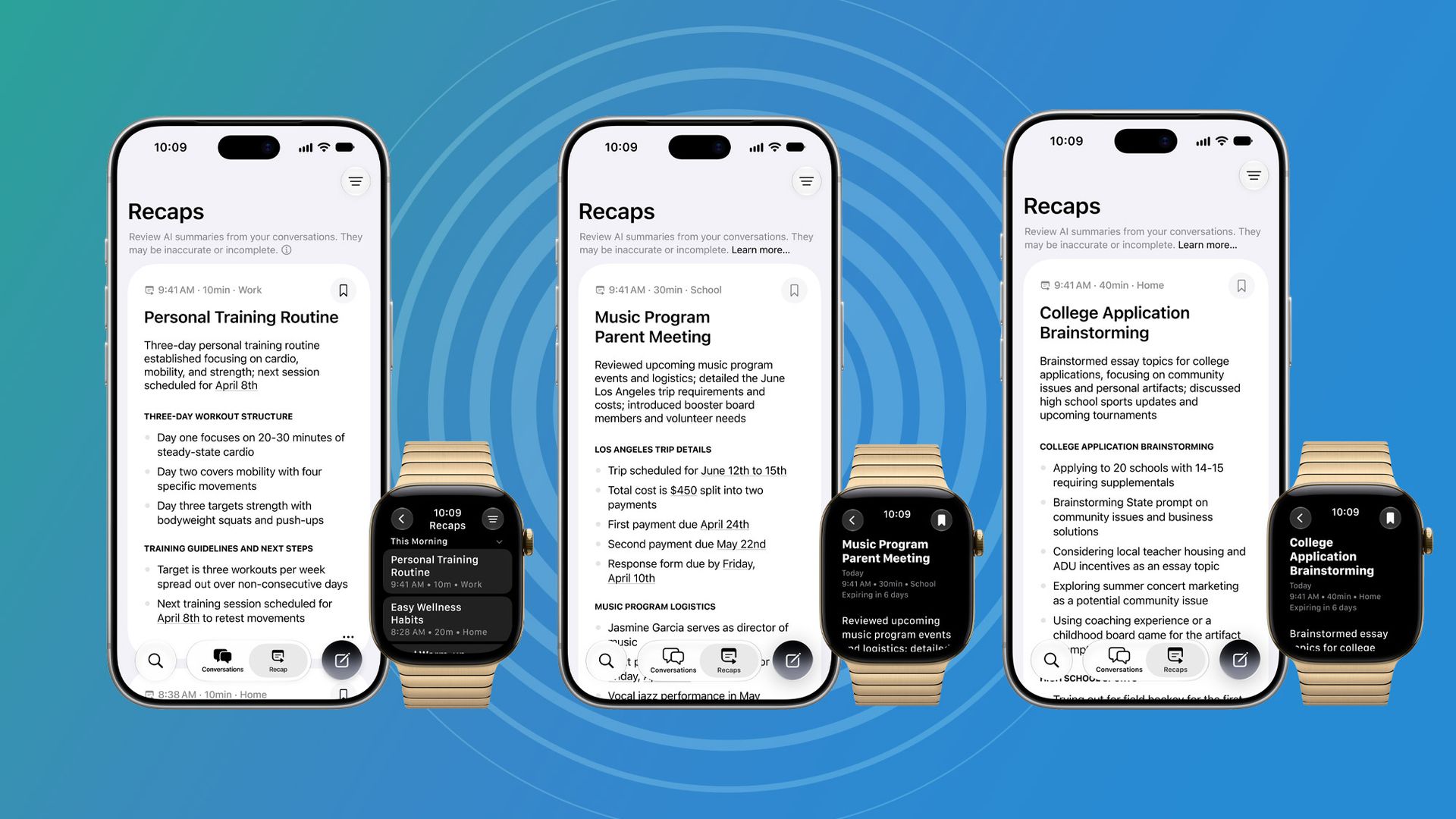
iOS 27-3 Siri Recap

(Image credit: Apple)

Other notable updates arriving in iOS 27.3, iPadOS 27.3, macOS 27.3, watchOS 27.3 Dev Beta 1 include:

  • Siri App Actions will let Siri AI dig even more deeply into your system by organizing files, making trip plans, creating playlists, scheduling group messages, and finding the best photos to share.
  • The promised Apple Health app overhaul, which uses Apple Intelligence, will give you more insights from your health data.
  • The pair of Audio Intelligence features that will work with your Apple Watch Series 12:
  • Live rewind, for recalling what was said in conversation (you have to double-press the watch crown to read the last snippet of conversation). It might be a great tool for settling he said/he said arguments.
  • Siri Recap, which, when enabled, can use Apple Intelligence to recap and summarize an entire talk, speech, lesson, or maybe a TED Talk.

The changes are coming to 27.3 betas first and will eventually roll out to the other platforms in a full release. For now, though, all of these updates are found only in the Dev Betas, which are typically the earliest and potentially buggiest releases before Apple moves on to Public Betas ( that anyone can install) and the final releases. There's no word on when the full releases will arrive, and we would caution you against installing Developer betas on any of your everyday Apple devices.

https://ift.tt/JNTLERt

Reddit is challenging Australia’s ‘inept’ social media ban for under-16s

  • Reddit wants to overturn Australia’s social media ban for under-16s
  • It is challenging the law in the Australian High Court
  • Government says it’s defending the law from "sustained ideological attack"

In late 2025, Australia became the first nation in the world to ban social media for under-16s — and as you would expect, that hasn’t gone down particularly well with the app makers affected. Reddit, for example, has issued a stinging rebuke to the Australian government and is in the process of challenging the ban in court.

A lawyer representing Reddit called the ban “ill thought out” (via Reuters) and said it was a “profound ‌restriction on political debate.” The attorney was speaking at the Australian High Court, where Reddit is seeking to contest the country’s new law.

Together with a libertarian advocacy group, Reddit claimed in court that the social media ban was “a very substantial restriction on what young people can now do” and that it could stifle political debate. It added that the restrictions may stop users creating content and responding to posts.

Although Reddit said it supported the aims of the law, it branded the legislation “inept,” saying that it did not have any specific means to keep minors off social media and failed to regulate other platforms where cyberbullying might take place, such as on gaming websites. And the fact that users who were not logged in could still view huge amounts of material undermined the law, Reddit argued.

Could Reddit overturn the ban?

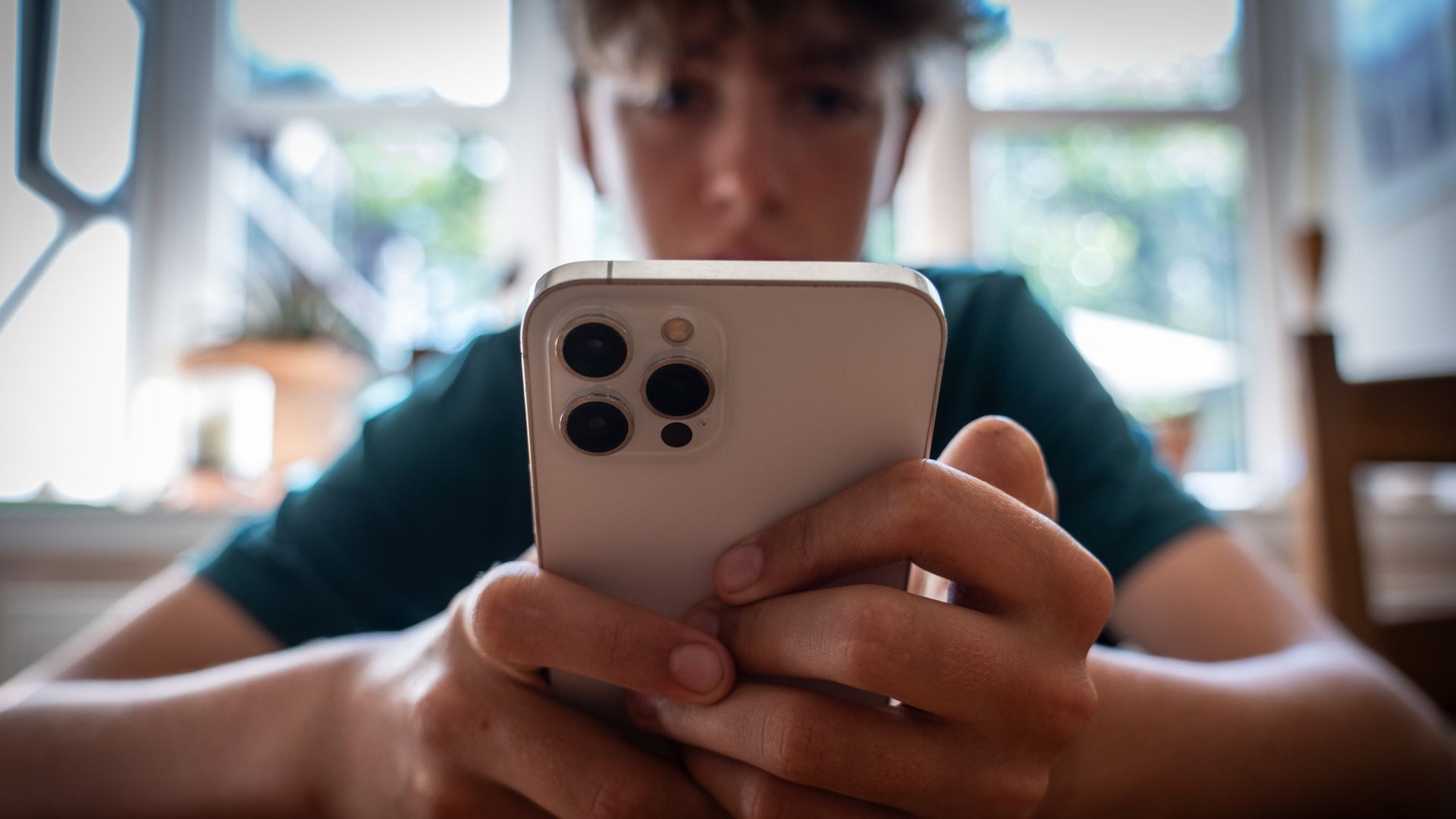
A child holding an iPhone in their hands

(Image credit: Getty Images / Anna Barclay)

Since the Australian law came into effect, several studies have shown that large numbers of teenage users targeted by it are still able to access restricted material. Sometimes, that might be as simple as using a VPN service to disguise your location, while at other times, social media firms are simply not taking action to restrict usage by under-16s.

Despite Reddit’s criticism, the Australian government has said it will defend its legislation. In court, the state’s lawyer, Joanna Davidson, said that children were more vulnerable to harmful online content because their brains were not fully developed compared to those of adults.

And speaking outside the High Court, communications ⁠minister Anika Wells ​said: “We ​are here to defend a fundamental tenet of Australian democracy, which is an Australian’s right, and particularly an Australian child’s right, to be free from harm. We seek ​to defend that from sustained ideological attack.”

The government has doubled the maximum fine for non-compliance with the law to AU$99 million (about $69.5 million / £51.5 million), increased the discovery powers of the eSafety Commissioner, and said it is preparing enforcement action against some of the largest social media platforms operating in Australia.

Whatever side you take on this matter, it’s clear that neither the Australian government nor Reddit are preparing to back down anytime soon. And with other nations considering similar laws, many people around the world will be watching closely.

https://ift.tt/P8Xtm2U

Friday, 30 October 2026

Reddit users criticize plan to require account logins

  • Reddit has announced plans to switch to a primarily logged in experience
  • This would mean most of the site won't be accessible without creating and logging in to an account
  • Reddit users seem almost universally unhappy about this planned change

Reddit — a site that once had the tagline “the front page of the internet” — looks set to become a lot less accessible, and therefore far less of a front page, as the company plans to require users to be logged in.

Currently, you can access pretty much the entire site without having to log in or create an account, and this has a lot of upsides. It means people who get there through search results can find the information they’re looking for more easily and seamlessly, and it means you can browse Reddit without giving the site any information about yourself, or being subject to any personalization algorithms.

But in a post on the site, CEO Steve Huffman (known as Spez on Reddit) has explained that the site will now evolve to become a primarily logged-in experience.

Tests of this change will begin in select markets outside the US in the coming months, but once the details have been ironed out and tested, it sounds like this shift will become global and permanent.

According to Huffman, this is being done because it’s “better for user experience, better for our ads business, is more in line with safety regulations, and more protective of Reddit data,” but despite Huffman's claims, it’s a change that isn’t going down well with users.

Heading down a worrying path

A phone screen showing a sad version of the Reddit logo

(Image credit: Future)

Responses to Huffman’s post include “hard disagree,” “knew it was going to get worse,” and “truly fascinating to witness a CEO consistently act against their company's interests,” among many others. In fact, just about every reply to the post is negative.

Beyond not wanting to be forced to log in for all the reasons above, users also worry that this change will lead Reddit down the same road as Pinterest. As one commenter said: “this sounds like exactly what Pinterest did... and then Pinterest kinda died.”

So, this sounds like it’s going to be a bad change for just about everyone other than Reddit’s C-suite, though if it does die, then it’s bad for them too. Hopefully, though, if this does lead to a meaningfully worse experience, we’ll see an alternative rise up to take its place, much as the likes of Bluesky and Threads did when Twitter became X. Still, it would be sad to see Reddit go.

https://ift.tt/mipPovB

Tuesday, 27 October 2026

Apple is making Creator Studio an even better deal with new AI features and creative tools

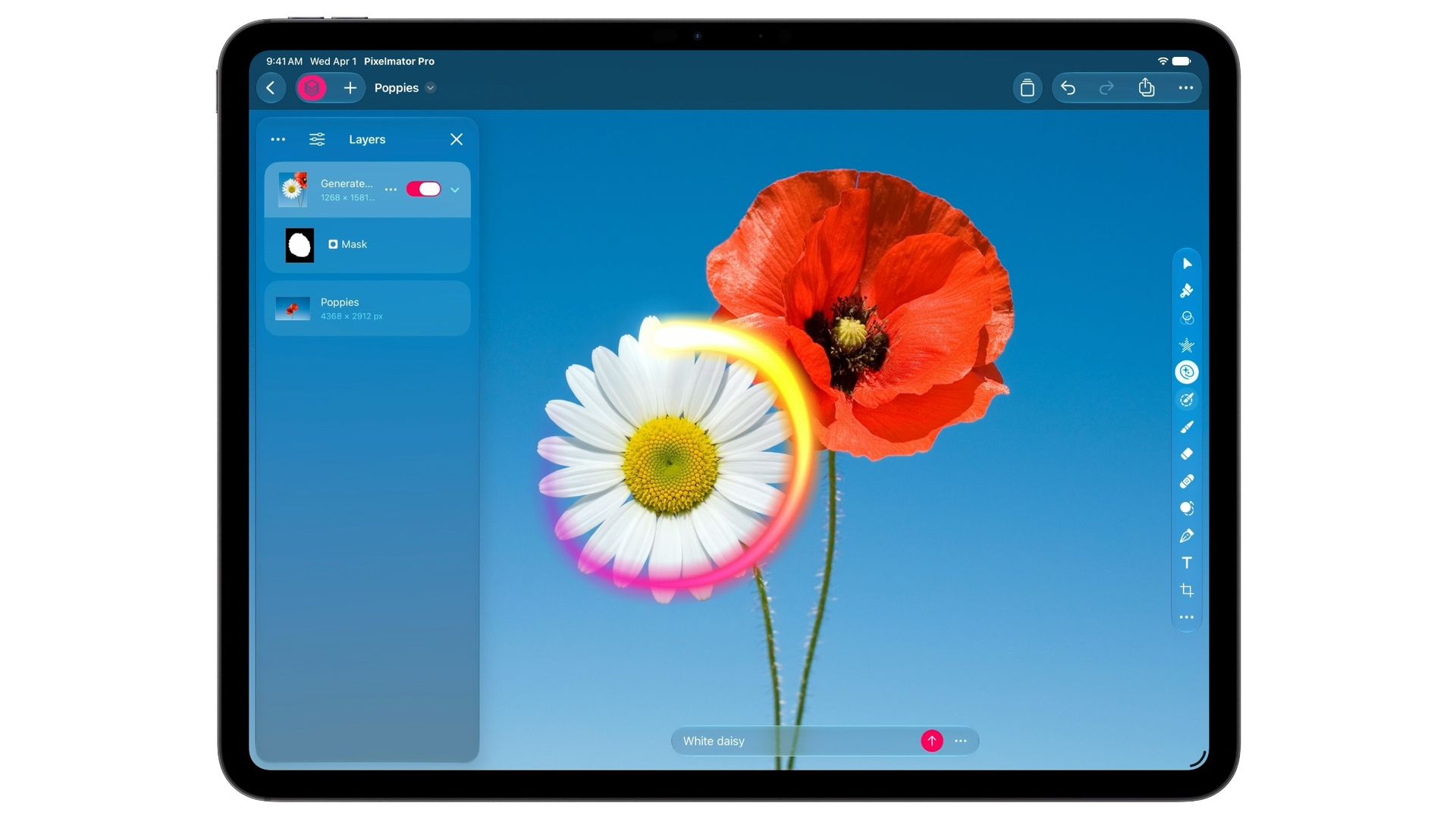
  • Pixelmator Pro gets a new AI-powered Generate Fill tool
  • Keynote, Pages, and Numbers add AI assistants and OpenAI model support
  • Final Cut Pro gains thousands of MotionVFX creative assets in November

Apple's Pro and Tell week is marching on, and alongside the reveal of the M6-powered iMac and 14-inch MacBook Pro, the Cupertino-based giant is also shining a spotlight on software. Specifically, Apple Creator Studio is getting a wide-ranging update that brings a fresh batch of features and, ultimately, packs in more value.

As it stands, Apple Creator Studio is a software subscription priced at $12.99 / £12.99 / AU$19.99 a month or $129 / £129 / AU$199 per year, giving you access to Pages, Numbers, Keynote, Pixelmator Pro, Final Cut Pro, and Logic Pro across Mac, iPad, and iPhone. All that stays the same, including the especially excellent education discount — $2.99 / £2.99 / AU$4.99 per month or $29.99 / £29.99 / AU$49.99 per year — but there are some pretty big updates here, with AI playing a starring role.

Leading the charge is Pixelmator Pro, which is getting a new Generate Fill tool. This lets you select an area of an image, describe what you want to add or change, and let AI do the heavy lifting. It's the kind of feature that could come in handy when you're editing a photo and don't want to jump between apps to get the result you're after. It'll also help level the playing field between Pixelmator Pro and Adobe Photoshop by filling a feature gap.

Apple Creator Studio October 2026

(Image credit: Apple)

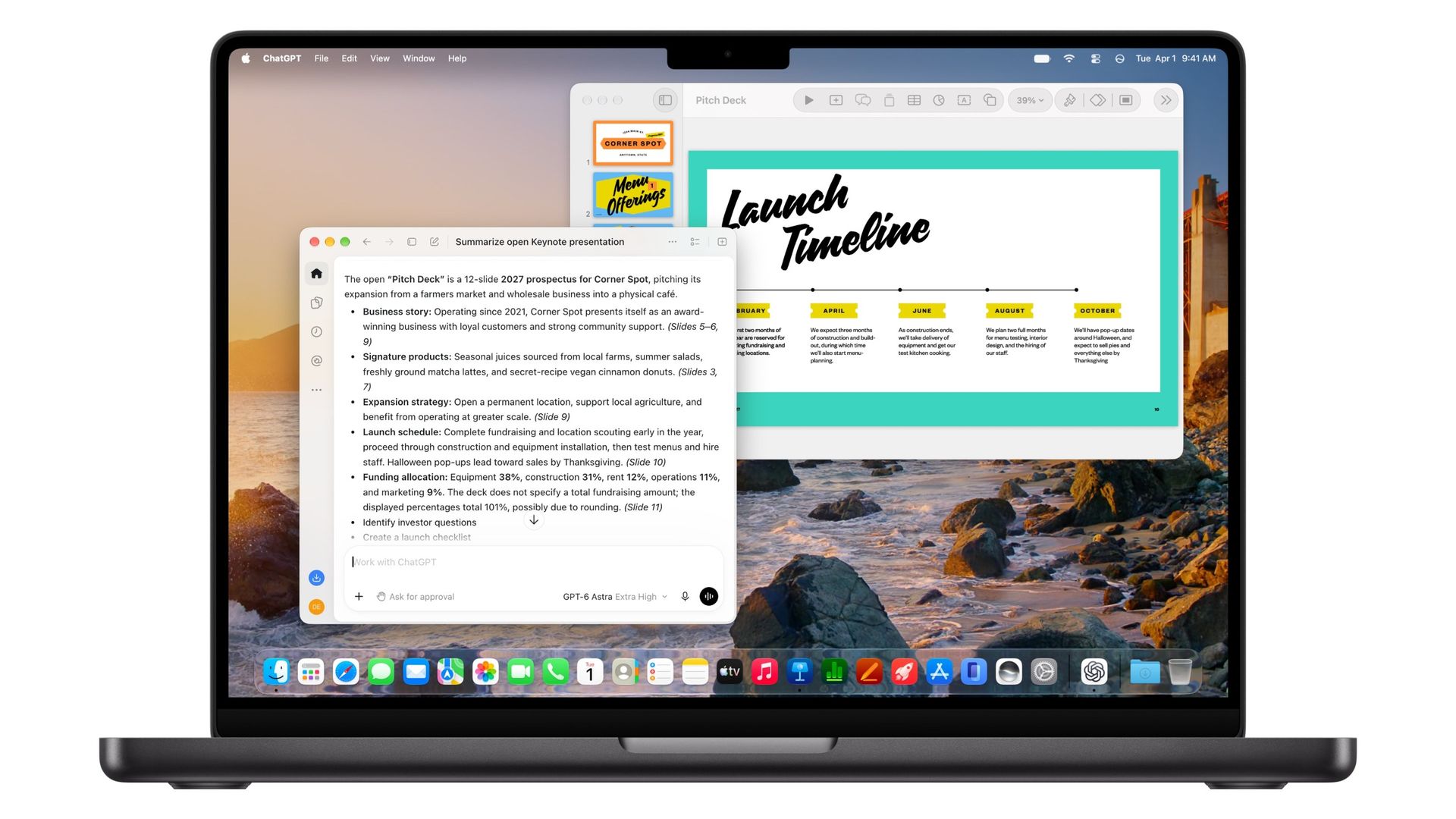
Keynote, Pages, and Numbers are also getting AI assistants designed to help you create presentations, write documents, and work with spreadsheets. Most interestingly, you'll be able to use OpenAI models alongside Apple's own, opening up more possibilities for working with AI in these apps. The apps also support compatible external AI tools, potentially making them a more useful part of your broader workflow.

Apple Creator Studio October 2026

(Image credit: Apple)

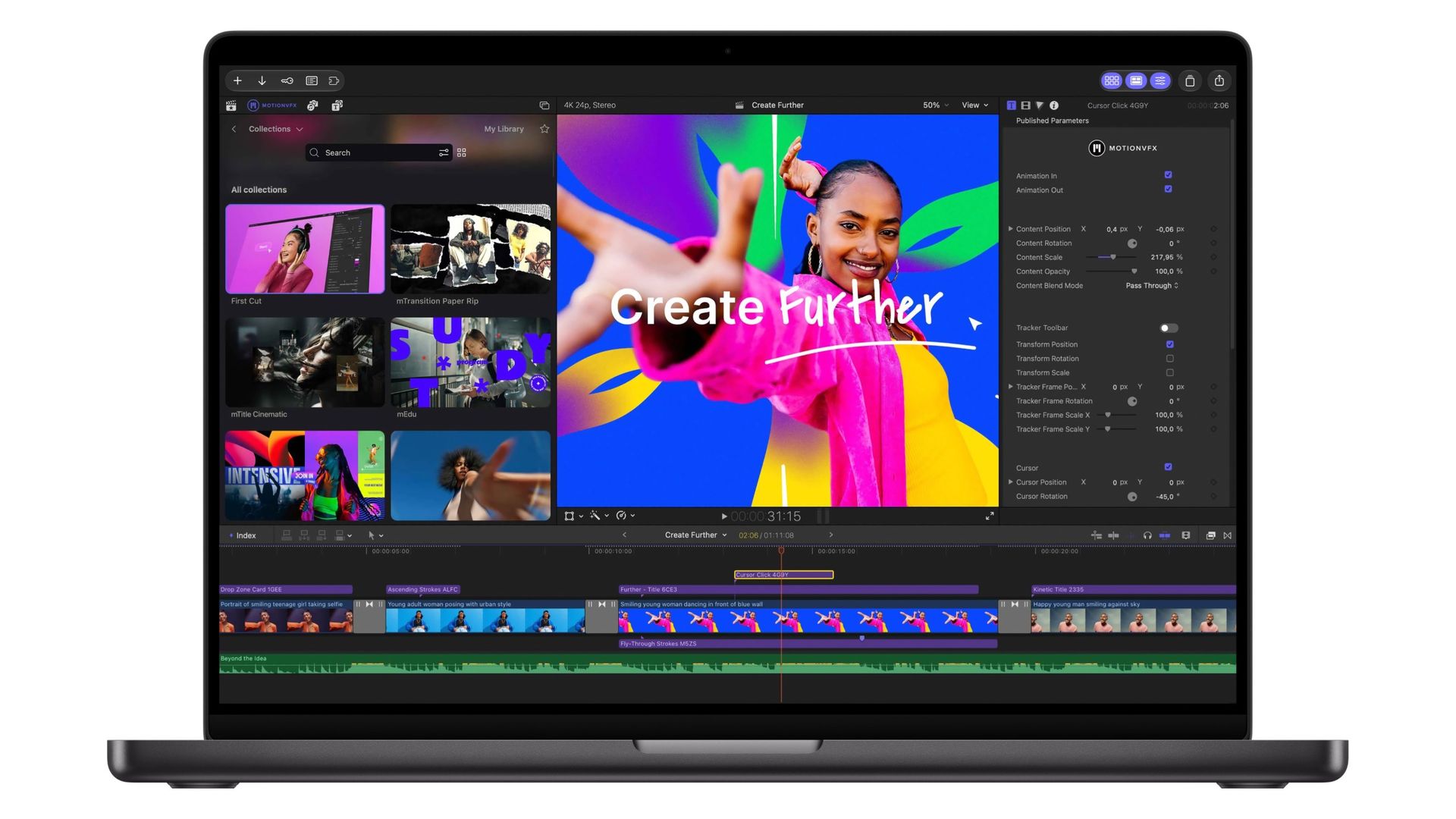
With Final Cut Pro, Apple is bringing MotionVFX content directly into its pro video editing suite, making thousands of creative elements, including transitions, templates, effects, and titles, available for use in your projects. It's another welcome addition that should let you get more done directly inside Final Cut Pro, rather than having to rely on other tools.

Apple Creator Studio October 2026

(Image credit: Apple)

All of this is coming in November as a free update for existing subscribers, though Apple isn't sharing specific timing just yet. These updates should also be right at home on the new Macs announced this week, but I'm curious to see if Apple introduces any more surprises, like the much-rumored touchscreen MacBook Pro, during its Pro and Tell event tomorrow.

https://ift.tt/GdEOzo7

Monday, 26 October 2026

Fake TikTok Shops now fuel one in five phishing blocks — and Black Friday could make it worse

  • Surfshark data shows blocks of a single suspected fake TikTok Shop domain rose 638% between May and September.
  • The domain was behind roughly one in five phishing blocks worldwide and is still active in October.
  • Phishing exposure also climbed across Europe and the US, with France seeing the sharpest rise.

New data from Surfshark shows that a single domain linked to a suspected counterfeit TikTok Shop operation generated 320,007 phishing blocks between May and September 2026.

That's 19% of the roughly 1.6 million phishing-category blocks recorded worldwide by the company's web content blocker over those five months. The operation isn't slowing down either: in the first 20 days of October, the domain triggered another 96,711 blocks.

The findings come weeks before the busiest shopping period of the year. They're also a reminder that even the best VPN can only do so much if you type your card details into a convincing fake.

One fake storefront, a fifth of all phishing blocks

Monthly blocks tied to the domain jumped from 16,995 in May to 125,413 in September, peaking at 22.2% of all phishing blocks in August.

It's part of a much broader spike. Total phishing-category blocks rose 524% between April and September, and blocks per protected device climbed 83%, so the growth isn't just down to more people using the tool.

"Data clearly shows users are being unknowingly rerouted to fraudulent stores designed to steal money and personal information rather than sell genuine products," said Justas Pukys, Senior Product Manager at Surfshark.

Phishing exposure rises across Europe and the US

Between April and September, blocks per protected device rose 159% in France, 99% in Italy, 86% in Spain, 54% in the UK, and 38% in Germany.

In the US, exposure nearly doubled. Blocks per protected device rose 87%, while total phishing blocks grew almost sixfold, from 20,519 to 122,580.

How to stay safe this Black Friday

Surfshark expects phishing to rise again as Black Friday approaches. Pukys recommends checking that every site is official, typing a trusted address manually if a redirect looks suspicious, and ignoring promotional links sent by SMS or messaging apps. He also suggests paying with single-use virtual cards.

Security tools can help catch what you miss. Surfshark's own web content blocker, the tool behind this data, lets you block site categories, including phishing, even with the VPN switched off. NordVPN's next-gen antivirus blocked 94% of phishing sites in AV-Comparatives' latest test, and VPN providers are hardening connections too, with Surfshark recently bringing full post-quantum security to WireGuard.

https://ift.tt/O9C7PEM

Wednesday, 21 October 2026

Wikipedia was down for many—here's what we know about the outage

Wikipedia went down for many users around the world today, according to Downdetector — but the issues now seem to be resolved.

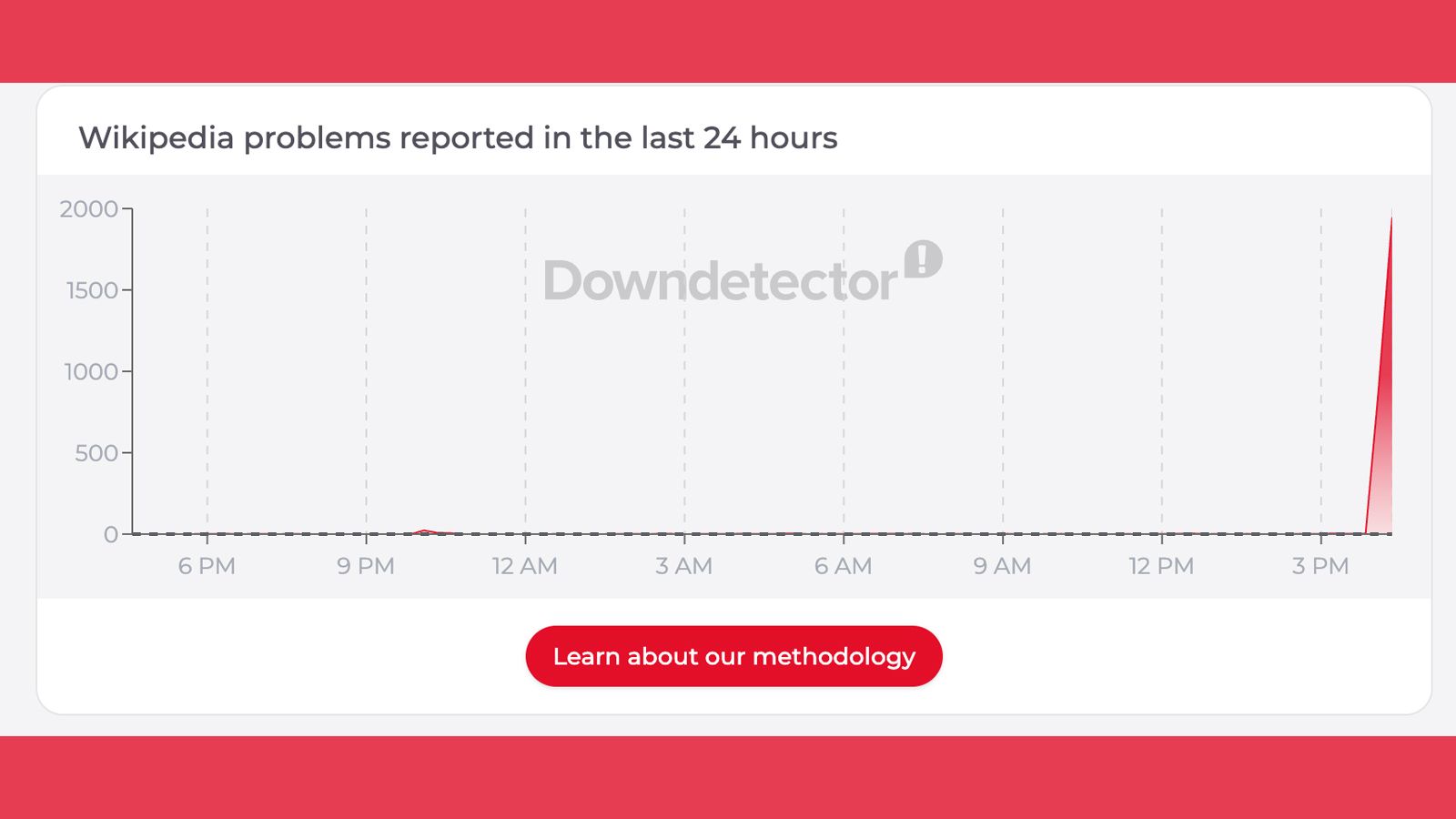
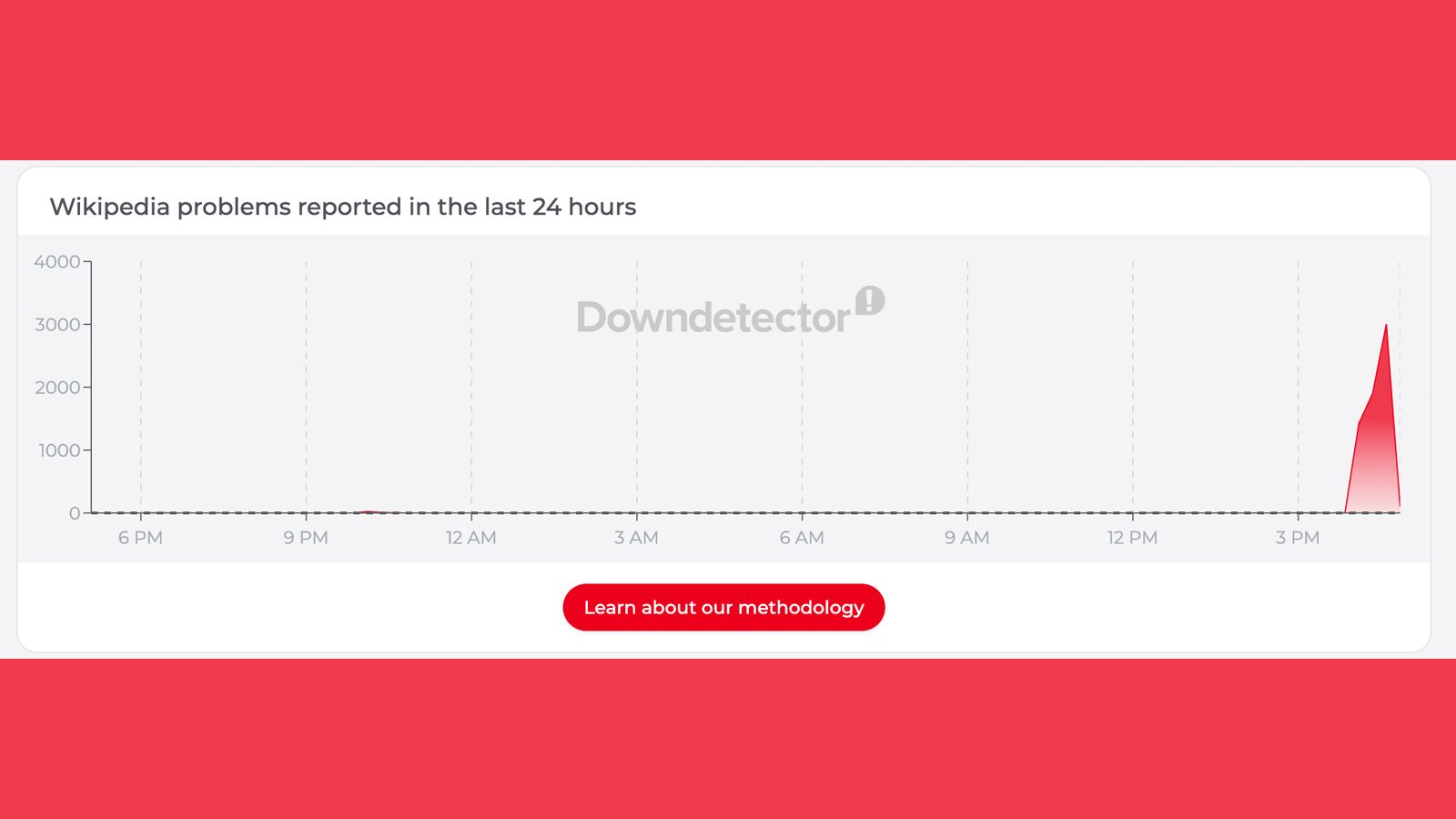
The problems started at around 10.51am ET / 3.51pm BST, when a large spike in reports appeared on the outage-tracking website — the reports peaked at just over 2,000 in the US and 850 in the UK.

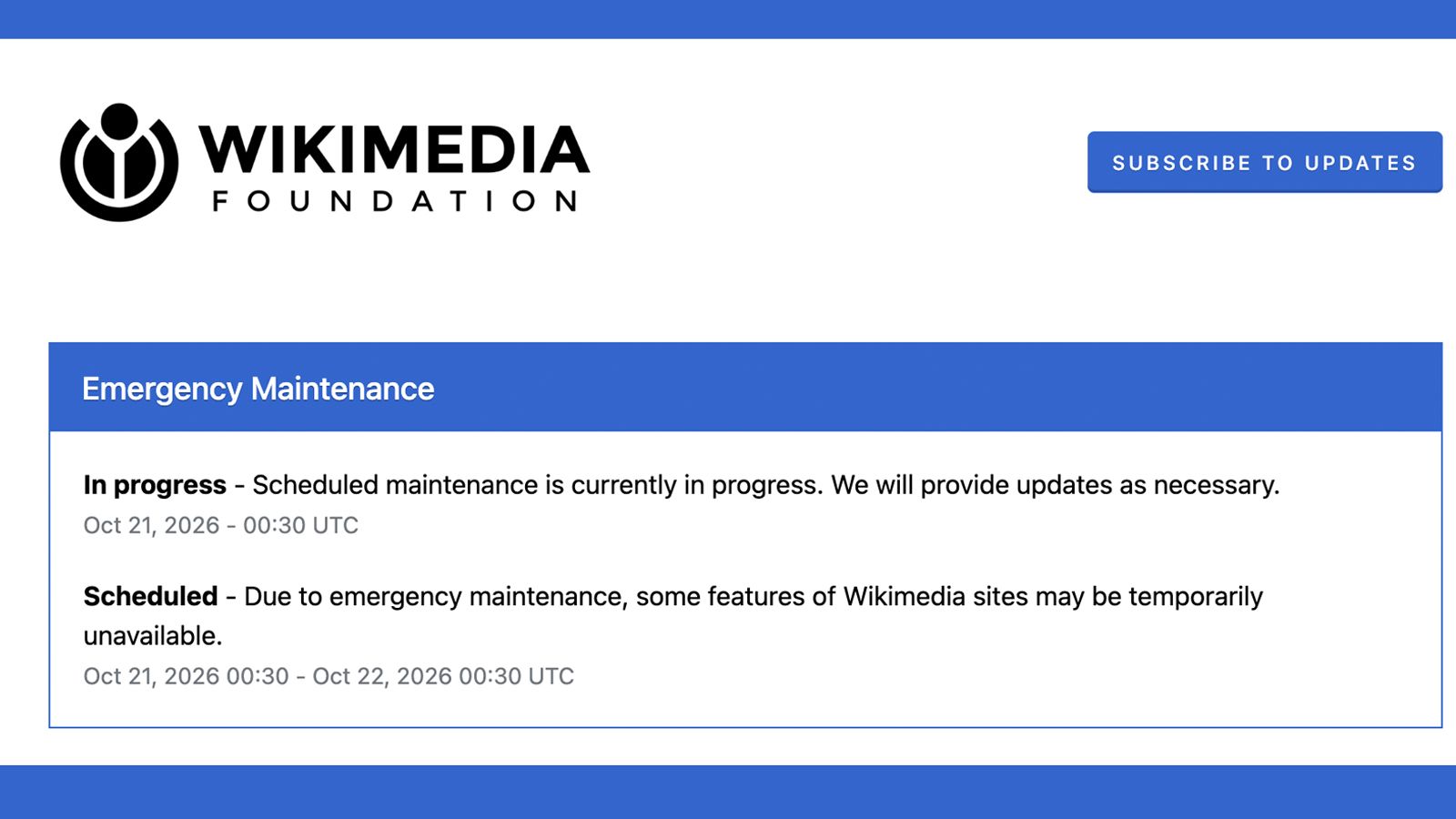
It appears that some 'emergency maintenance' from Wikimedia was the culprit and appears to have now finished — but you can follow what happened in our liveblog below...

A sharp spike in reports

A Downdetector graph showing a Wikipedia outage

(Image credit: Downdetector)

Wikipedia is working okay for me here in the UK, but it isn't for thousands of users right now — the reports graph on Downdetector is now over 3,000 in the US, and it's climbing in the UK too.

The cause is so far unclear, as there are no current issues at the major cloud providers like AWS, Google Cloud or Cloudflare. I'll be digging into this and reporting back shortly...

Please try again later...

This is what Wikipedia and Wikimedia currently look like for many users — an "error" page with a "please try again later" message. I've also never seen it go down like that, although it's working fine for me in the UK.

Strangely, there are a few other outages running concurrently right now, including Asana and the Internet Archive. It isn't yet clear if they're related, but they did start at very similar times (around 10am ET / 3pm BST). Wikipedia is certainly the worst-hit, though.

'Emergency maintenance'

A Wikimedia note about scheduled maintenance

(Image credit: Wikipedia)

This probably explains today's Wikipedia issues — the Wikimedia Foundation status page says 'emergency maintenance' is in progress.

The foundation hasn't explained how long the maintenance will last or what it's for, but that should hopefully mean it's pretty short-lived...

Phew, it's back

A Downdetector graph showing a Wikipedia outage

(Image credit: Downdetector)

Good news, it looks like the Wikipedia outage was indeed short-lived — or at least only lasted an hour.

The Downdetector reports have plummeted back down to zero, which suggests that 'emergency maintenance' is now finished.

Fortunately, that was all a lot more straightforward than the major PHP flaw that's turned government websites dark and sent website admins scambling...

https://ift.tt/LKiUtow

Tuesday, 20 October 2026

Zoom's new Unified Context Layer unlocks all of your company's complex conversations and video calls for AI agents to use

  • Zoom is packaging up conversations and calls into a Unified Context Layer
  • APIs mean third-party AI agents can get direct access to this source of data
  • Humans can now spend less time explaining context to AI agents

In recognition that increasingly siloed and complex systems are making it harder for companies to keep track of all their data, making it difficult to deploy effective AI on top of existing tech stacks, Zoom has launched its Unified Context Layer (UCL).

UCL works by bringing together meeting conversations, chats, documents and other business data into one connected system, which it hopes will make it easier for AI agents to work across.

This marks an important step in the company's much broader transition from the video conferencing platform we grew to love during the now-distant pandemic to a full productivity suite that spans both human and agentic users.

Zoom's Unified Context Layer

"This new layer brings together conversations with near real-time activity across Zoom and connected third-party applications, giving people and AI agents access to business context that might otherwise be lost or siloed," the company said in an announcement.

But in a world of increasing interoperability, the company is also adding new APIs to allow external AI tools to query its Unified Context Layer directly, which means ChatGPT, Claude, Gemini, Muse and other AI agents can see straight into the core data that Zoom holds.

The biggest impact is on productivity, where human workers will need to spend far less time fetching different parts of context to give an AI agent the best chances of success.

Of course, Zoom isn't the first platform to be introducing a Unified Context Layer, but being that the software is still primarily used for communications both within organizations and with external clients, Zoom's UCL should be able to unlock some pretty serious unstructured data for future AI agents.

With Zoom now betting on conversations as a vastly underused source of intelligence, its early adoption of a UCL should play an integral role both in its own roadmap, but also how enterprises benefit from agentic AI on the whole.

Google logo on a black background next to text reading 'Click to follow TechRadar'

https://ift.tt/l958F4N

Think social media protects your data? Platforms have racked up $26 billion in privacy penalties since 2020

  • Social platforms have incurred over $26 billion in privacy fines and settlements globally since 2020.
  • Meta platforms (Facebook and Instagram) accounted for $23.7 billion (91%) of all penalties.
  • The US led enforcement with $20.9 billion in fines, followed by European regulators at $5.16 billion.

Social media platforms thrive on personal data, but failing to protect it is proving exceptionally costly. Since 2020, the world’s top 10 social networks have accumulated more than $26 billion in privacy-related fines and regulatory settlements worldwide.

According to a study published by cybersecurity firm Surfshark, the lion's share of this astronomical financial penalty belongs to one parent company: Meta.

Between Facebook and Instagram, Mark Zuckerberg’s tech empire is responsible for an overwhelming 91% of the worldwide total, racking up $23.7 billion in penalties.

Meta dominates the penalty board

Facebook alone accumulated $14.3 billion in penalties, while Instagram accounted for $9.4 billion. TikTok placed a distant third, tallying $1.6 billion in fines across global jurisdictions.

Other familiar platforms also faced notable regulatory actions. LinkedIn accrued $360 million, YouTube followed with $222 million, and X (formerly Twitter) totaled $151 million. Further down the list, Snapchat recorded $35 million in fines, Reddit registered $19 million, and Discord logged $928,000. Pinterest stood out as the sole platform in the study with zero qualifying privacy penalties.

The United States spearheaded the financial enforcement, imposing $20.9 billion, roughly 80% of all global fines examined. The single largest penalty came from a massive $17.1 billion US settlement involving Facebook and Instagram over allegations that inadequate safeguards exposed minors to deliberately addictive product features.

American authorities also levied $3.69 billion strictly for data-processing offenses, led by Facebook ($2.9 billion), TikTok ($593 million), and X ($150 million). TikTok additionally received an independent $100 million penalty in 2026 over inadequate security safeguards.

European regulators target cross-border transfers and GDPR

Across the Atlantic, European authorities have imposed $5.16 billion in fines under the General Data Protection Regulation (GDPR) and national frameworks.

Ireland served as the focal point of enforcement, issuing $4.87 billion, or 94% of Europe’s total, largely because many tech giants maintain their regional headquarters in Dublin. France trailed at $245 million, followed by the UK at $36 million.

Europe’s two heaviest individual fines stemmed from unauthorized international data transfers:

Facebook received a $1.39 billion fine for transferring EU user data to US servers.

TikTok was hit with a $615 million fine for transferring European user data to China, echoing wider scrutiny surrounding apps with ties to foreign jurisdictions.

European regulators also penalized platforms $1.22 billion for unlawful data processing, $1.09 billion for data breach incidents, and $594 million for insufficient technical security safeguards. Regulatory bodies in South Korea and Australia added further pressure, issuing $62.4 million and roughly $50.5 million in fines, respectively.

As lawmakers worldwide tighten regulations, whether battling data misuse or debating proposals that weaken encryption, these multi-billion-dollar sums send an unmistakable message: user privacy can no longer be treated as an afterthought.

https://ift.tt/7Lcr2CD

Thursday, 15 October 2026

NYT Strands hints and answers for Friday, October 16 (game #957)

Looking for a different day?

A new NYT Strands puzzle appears at midnight each day for your time zone – which means that some people are always playing 'today's game' while others are playing 'yesterday's'. If you're looking for Thursday's puzzle instead then click here: NYT Strands hints and answers for Thursday, October 15 (game #956).

Strands is the NYT's latest word game after the likes of Wordle, Spelling Bee and Connections – and it's great fun. It can be difficult, though, so read on for my Strands hints.

Want more word-based fun? Then check out my NYT Connections today and Quordle today pages for hints and answers for those games, and Marc's Wordle today page for the original viral word game.

SPOILER WARNING: Information about NYT Strands today is below, so don't read on if you don't want to know the answers.

NYT Strands today (game #957) - hint #1 - today's theme

What is the theme of today's NYT Strands?

• Today's NYT Strands theme is… Just a little bit

NYT Strands today (game #957) - hint #2 - clue words

Play any of these words to unlock the in-game hints system.

  • PILL
  • STATE
  • LAME
  • SALT
  • LOCAL
  • WORM

NYT Strands today (game #957) - hint #3 - spangram letters

How many letters are in today's spangram?

• Spangram has 10 letters

NYT Strands today (game #957) - hint #4 - spangram position

What are two sides of the board that today's spangram touches?

• First side: left, 5th row

• Last side: right, 5th row

Right, the answers are below, so DO NOT SCROLL ANY FURTHER IF YOU DON'T WANT TO SEE THEM.

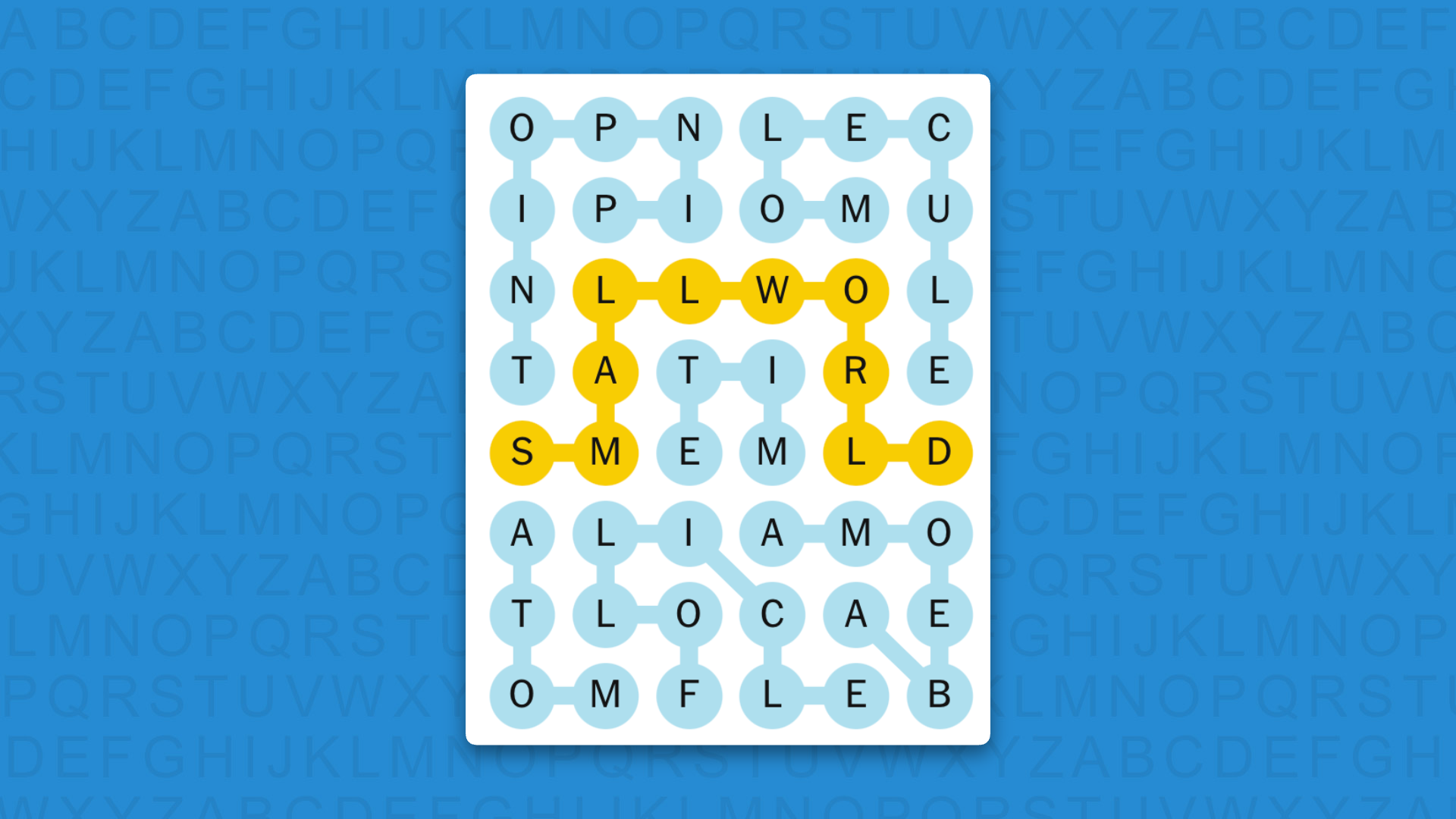
NYT Strands today (game #957) - the answers

NYT Strands answers for game 957 on a blue background

(Image credit: New York Times)

The answers to today's Strands, game #957, are…

  • PINPOINT
  • MOLECULE
  • ATOM
  • MITE
  • FOLLICLE
  • AMOEBA
  • SPANGRAM: SMALLWORLD
  • My rating: Easy
  • My score: Perfect

Yet again, looking in the top left-hand corner paid off. However, it was at the expense of a fairly easy-to-spot spangram — congratulations if you got a Spangram First today.

After spotting PINPOINT and SMALLWORLD (did everyone have the Disney ride theme tune churning around their heads afterwards?) I was convinced that MINIATURE would be lurking on the board somewhere.

Instead, the remaining words were all scientific leaning, with only the spelling of AMOEBA causing me pause.

Yesterday's NYT Strands answers (Thursday, October 15, game #956)

  • BEACON
  • STAIRCASE
  • DOME
  • LANTERN
  • GALLERY
  • SPANGRAM: LIGHTHOUSE

What is NYT Strands?

Strands is the NYT's not-so-new-any-more word game, following Wordle and Connections. It's now a fully fledged member of the NYT's games stable that has been running for a year and which can be played on the NYT Games site on desktop or mobile.

I've got a full guide to how to play NYT Strands, complete with tips for solving it, so check that out if you're struggling to beat it each day.

https://ift.tt/7mztZBh